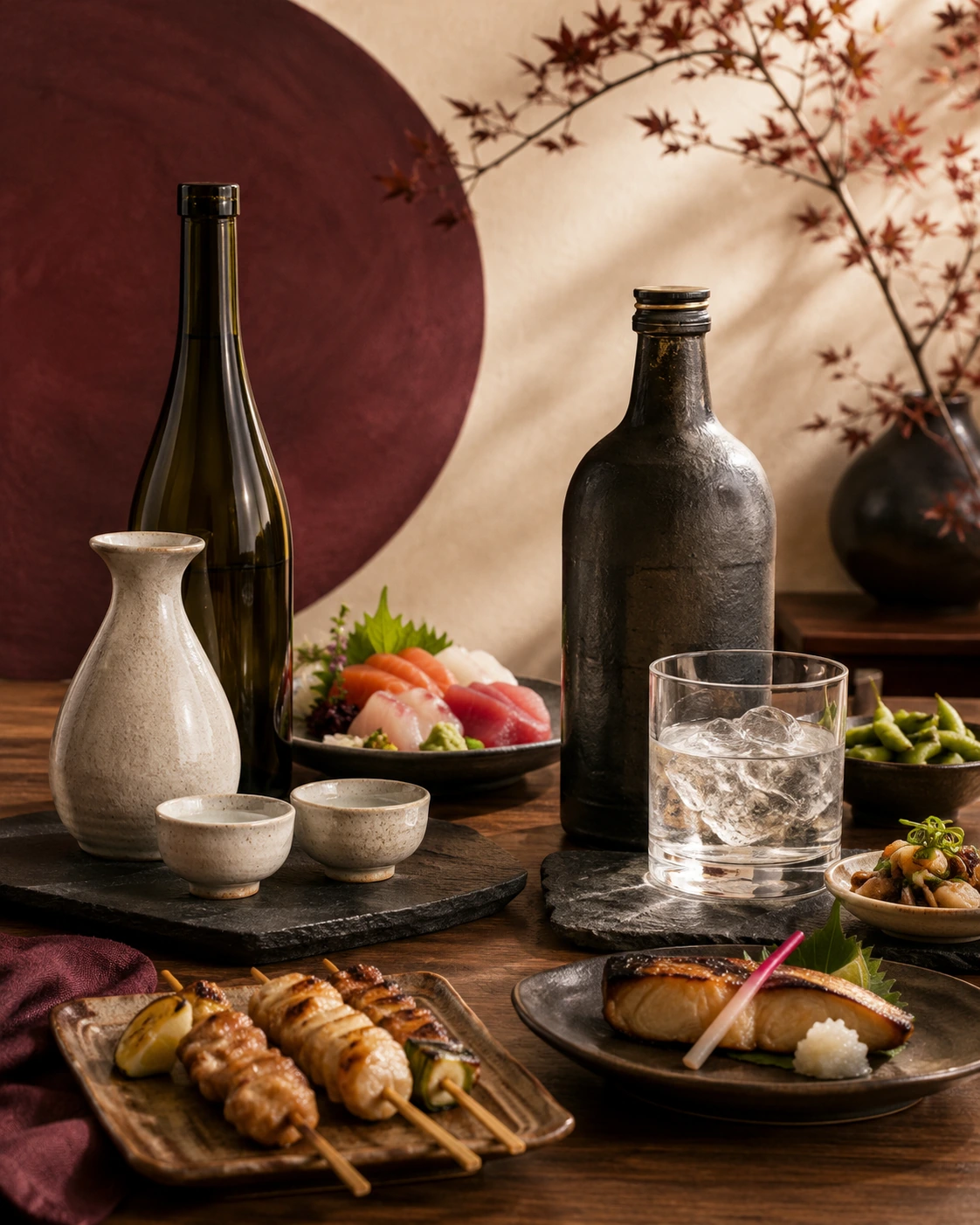

Japanese sake and shochu finder
This Japanese sake and shochu finder helps you choose a drink by taste, style, aroma, prefecture, and best use.
Instead of listing every Japanese alcohol category, this guide focuses on two drinks where style and regional character strongly affect taste: sake and shochu. Use the filters to look for dry sake, fruity sake, rich junmai styles, clean rice shochu, roasted barley shochu, or earthy sweet potato shochu.
Brand and product names are included as search hints to help visitors recognize names on menus, in shops, at tasting rooms, or while planning travel. They are examples, not rankings or endorsements. Actual taste, availability, and serving style vary by maker, product, storage, temperature, and food pairing.
Quick Summary
| Best use | Find sake and shochu examples by style, taste, aroma, prefecture, and pairing. |
|---|---|
| Main drink types | Sake and shochu. |
| Most useful filters | Best For, Alcohol Type, Subcategory, Taste, and Prefecture. |
| For sake lovers | Use Subcategory for Daiginjo, Ginjo, Junmai, Honjozo, Kimoto, Yamahai, and Nama. Use Taste for dry, very dry, balanced, or slightly sweet. |
| For shochu lovers | Use Subcategory for Imo, Mugi, Kome, and Aged. These base ingredients strongly shape the flavor. |
| Legal note | Alcohol in Japan is for people aged 20 and over. Drink responsibly and follow local rules. |
How to Use This Finder
Start with how you want to use the drink. If you want something for sushi, seafood, a gift, a beginner-friendly choice, or a richer meal, use Best For first. Then narrow the results by Alcohol Type, Subcategory, Taste, or Prefecture.
For sake, subcategory is especially important. Ginjo and daiginjo styles often feel fragrant and polished, while junmai, kimoto, and yamahai styles may feel more rice-like, savory, or food-friendly. For shochu, the base ingredient matters: imo is often richer and earthier, mugi can feel cleaner or roasted, and kome may feel softer and smoother.
This finder is designed for practical discovery rather than strict scoring. Use it as a starting point, then check the specific bottle, serving style, and food pairing.
Sake & Shochu Finder Table
Search or filter by best use, alcohol type, subcategory, taste, and prefecture.
Showing 0 entries
| Prefecture | Alcohol Type | Brand / Product Name | Subcategory | Taste | Aroma / Flavor | Best For |
|---|---|---|---|---|---|---|
| Niigata | Sake | Kubota Senju(久保田 千寿) | Ginjo-style / Honjozo-style | Dry | Clean / crisp | Beginner-friendly, sushi, seafood, dry sake lovers |
| Niigata | Sake | Hakkaisan(八海山) | Junmai / Honjozo / Ginjo range | Dry to very dry | Clean / refreshing | Sushi, seafood, dry sake lovers |
| Niigata | Sake | Koshino Kanbai(越乃寒梅) | Ginjo / Junmai Ginjo range | Dry | Elegant / clean | Sushi, seafood, gift, dry sake lovers |
| Yamaguchi | Sake | Dassai 45(獺祭 45) | Junmai Daiginjo | Slightly sweet / balanced | Fruity / floral | Beginner-friendly, gift, fruity sake lovers, celebration |
| Yamaguchi | Sake | Toyo Bijin(東洋美人) | Junmai Daiginjo / Ginjo range | Slightly sweet / balanced | Fruity / elegant | Fruity sake lovers, gift, celebration |
| Yamagata | Sake | Dewazakura Oka Ginjo(出羽桜 桜花吟醸) | Ginjo | Slightly sweet / balanced | Fruity / floral | Beginner-friendly, chilled sake, fruity sake lovers |
| Yamagata | Sake | Tatenokawa(楯野川) | Junmai Daiginjo | Balanced | Clean / fruity | Gift, polished sake lovers, celebration |
| Miyagi | Sake | Urakasumi(浦霞) | Junmai / Honjozo / Ginjo range | Dry / balanced | Clean / umami | Sushi, seafood, food pairing |
| Miyagi | Sake | Ichinokura(一ノ蔵) | Junmai / Honjozo range | Dry / balanced | Clean / rice-like | Sushi, seafood, everyday sake, food pairing |
| Akita | Sake | Aramasa(新政) | Modern Junmai-style sake | Balanced / slightly sweet | Fruity / bright acidity | Modern sake lovers, fruity sake lovers, light food |
| Akita | Sake | Yuki no Bosha(雪の茅舎) | Junmai Ginjo / Ginjo range | Balanced | Elegant / aromatic | Gift, balanced sake, food pairing |
| Iwate | Sake | Nanbu Bijin(南部美人) | Junmai Ginjo / Daiginjo range | Balanced | Fruity / clean | Beginner-friendly, gift, fruity sake lovers |
| Fukushima | Sake | Daishichi Kimoto(大七 生酛) | Kimoto / Junmai | Dry / umami | Rice-like / umami | Rich food, warmed sake, umami dishes |
| Tochigi | Sake | Senkin(仙禽) | Modern Junmai / Junmai Ginjo range | Slightly sweet / balanced | Fruity / acidic | Modern sake lovers, beginners, light food |
| Ishikawa | Sake | Tedorigawa(手取川) | Junmai / Daiginjo range | Balanced / dry | Clean / umami | Sushi, seafood, Kanazawa food |
| Ishikawa | Sake | Tengumai(天狗舞) | Yamahai / Junmai range | Dry / umami | Rice-like / earthy / umami | Rich food, warmed sake, umami dishes |
| Ishikawa | Sake | Kikuhime(菊姫) | Junmai / Yamahai range | Dry / umami | Deep / rice-like / savory | Sake fans, rich food, umami dishes |
| Fukui | Sake | Kokuryu(黒龍) | Ginjo / Daiginjo range | Balanced / dry | Elegant / clean | Gift, sushi, seafood, refined sake lovers |
| Nagano | Sake | Masumi(真澄) | Junmai / Junmai Ginjo range | Balanced / dry | Clean / umami | Food pairing, gift, sushi, seafood |
| Kyoto | Sake | Gekkeikan(月桂冠) | Fushimi sake range | Balanced / dry | Clean / soft | Beginner-friendly, sushi, seafood, accessible sake |
| Kyoto | Sake | Tamano Hikari(玉乃光) | Junmai / Junmai Ginjo range | Balanced / dry | Rice-like / clean | Food pairing, Kyoto travel, sushi, seafood |
| Hyogo | Sake | Hakutsuru(白鶴) | Nada sake / Junmai / Honjozo range | Dry / balanced | Clean / structured | Food pairing, sushi, seafood, accessible sake |
| Hyogo | Sake | Kikumasamune(菊正宗) | Honjozo / Kimoto range | Dry to very dry | Clean / crisp / savory | Dry sake lovers, sushi, seafood, warmed sake |
| Hyogo | Sake | Kenbishi(剣菱) | Classic Junmai-style sake | Dry / umami | Savory / rice-like | Rich food, traditional sake, umami dishes |
| Nara | Sake | Harushika(春鹿) | Junmai / Ginjo range | Dry to very dry | Clean / crisp | Dry sake lovers, sushi, seafood, Nara travel |
| Nara | Sake | Kaze no Mori(風の森) | Nama / Junmai range | Balanced / slightly sweet | Fresh / fruity / lively | Modern sake lovers, fruity sake lovers |
| Hiroshima | Sake | Kamotsuru(賀茂鶴) | Saijo sake / Junmai / Ginjo range | Balanced / dry | Clean / umami | Brewery town, food pairing, sushi, seafood |
| Hiroshima | Sake | Kamoizumi(賀茂泉) | Junmai / Saijo sake | Balanced / umami | Rice-like / umami | Food pairing, sake fans, umami dishes |
| Kochi | Sake | Suigei(酔鯨) | Junmai / Ginjo range | Dry | Clean / crisp | Dry sake lovers, seafood, sushi |
| Kochi | Sake | Bijofu(美丈夫) | Junmai / Ginjo range | Dry | Clean / refreshing | Dry sake lovers, seafood, light food |
| Fukuoka | Sake | Kitaya(喜多屋) | Junmai Ginjo / Daiginjo range | Balanced | Fruity / clean | Gift, Kyushu food, food pairing |
| Saga | Sake | Nabeshima(鍋島) | Junmai Ginjo / Daiginjo range | Balanced / slightly sweet | Fruity / polished | Gift, modern sake lovers, celebration |
| Kumamoto | Shochu | Hakutake(白岳) | Kome | Neutral / dry | Clean / soft | Beginner-friendly shochu, seafood, rice dishes |
| Kumamoto | Shochu | Torikai(鳥飼) | Kome | Clean / aromatic | Fruity / smooth | Beginner-friendly, gift, seafood |
| Oita | Shochu | Iichiko(いいちこ) | Mugi | Dry / neutral | Nutty / clean | Beginner-friendly shochu, izakaya, food pairing |
| Oita | Shochu | Nikaido(二階堂) | Mugi | Dry / neutral | Toasty / clean | Everyday shochu, food pairing, grilled food |
| Miyazaki | Shochu | Kuro Kirishima(黒霧島) | Imo | Dry / earthy | Earthy / sweet potato | Grilled food, rich food, local specialty |
| Miyazaki | Shochu | Hyakunen no Kodoku(百年の孤独) | Mugi / Aged | Dry / aged | Roasted / woody / aged | Gift, shochu lovers, special occasion |
| Kagoshima | Shochu | Maou(魔王) | Imo | Dry / earthy | Sweet potato / earthy | Shochu lovers, grilled food, rich food |
| Kagoshima | Shochu | Mori Izo(森伊蔵) | Imo | Dry / rich | Earthy / smooth | Gift, shochu fans, special occasion |
| Kagoshima | Shochu | Murao(村尾) | Imo | Dry / rich | Earthy / deep | Shochu fans, local specialty, rich food |
No entries match the selected filters. Try removing one filter or using a broader search word.

How to Read Sake and Shochu Styles
In this finder, Subcategory is not just a label. It is the fastest clue for understanding how a drink may taste, how aromatic it may feel, and what kinds of food it may suit. Sake styles are shaped by polishing, brewing method, rice character, aroma, acidity, and serving temperature. Shochu styles are shaped strongly by the base ingredient, such as sweet potato, barley, or rice.
Sake subcategories
| Subcategory | What it usually suggests | Food pairing direction |
|---|---|---|
| Daiginjo / Junmai Daiginjo | Highly polished, elegant, often fragrant and refined. Many examples feel fruity, floral, clean, or delicate. | Good with lighter dishes, sashimi, delicate seafood, appetizers, and celebratory meals. Avoid overpowering it with very heavy or strongly seasoned food. |
| Ginjo / Junmai Ginjo | Fragrant and polished, but often a little more flexible than daiginjo. It can feel fruity, smooth, and approachable. | Good with sushi, seafood, lightly seasoned dishes, chicken, tofu, and dishes where aroma can be appreciated. |
| Junmai | Pure rice sake with more rice character, umami, and body. It can feel savory, rounded, and food-friendly. | Good with grilled fish, simmered dishes, mushrooms, miso-based dishes, richer seafood, and everyday Japanese meals. |
| Honjozo | Often lighter and cleaner, with a smooth, easy-drinking character. It is usually practical as a food sake. | Good with sushi, seafood, izakaya dishes, fried foods, and warm-sake settings. Useful when you want something that supports the meal rather than dominates it. |
| Kimoto | Traditional brewing style that can bring depth, acidity, umami, and a firmer structure. | Good with richer food, grilled dishes, meat, mushrooms, fermented flavors, and warmed sake pairings. |
| Yamahai | Often savory, earthy, bold, and umami-rich. It can feel more distinctive than clean ginjo styles. | Good with rich food, aged cheese, grilled meat, miso, soy-based dishes, mushrooms, and warmed sake pairings. |
| Nama | Unpasteurized sake. It often feels fresher, livelier, brighter, and sometimes fruitier. | Good with fresh dishes, light appetizers, seafood, spring or summer meals, and drinkers who like a lively texture. |
Shochu subcategories
| Subcategory | What it usually suggests | Food pairing direction |
|---|---|---|
| Imo | Sweet potato shochu. Often earthy, rich, rounded, and more strongly regional in character. | Good with grilled food, pork, rich dishes, spicy food, fried food, and stronger local dishes. |
| Mugi | Barley shochu. Often clean, roasted, nutty, smooth, and easy to pair. | Good with izakaya dishes, grilled chicken, lean meat, fried foods, and casual meals. |
| Kome | Rice shochu. Often softer, cleaner, and more delicate than imo shochu. | Good with seafood, rice dishes, sushi, light dishes, and drinkers who want a gentler shochu entry point. |
| Aged | Shochu that has developed more depth, roundness, roasted notes, or woody character through maturation. | Good with richer food, special occasions, after-dinner drinking, and people who enjoy whisky-like depth. |
These pairings are starting points, not strict rules. Temperature, dilution, glassware, food seasoning, and each maker’s style can change the impression. For sake, a clean dry style may work beautifully with sushi, while richer junmai, kimoto, or yamahai styles often become more useful with deeper umami dishes. For shochu, the base ingredient is usually the first clue: imo for richer foods, mugi for casual grilled or izakaya foods, and kome for lighter seafood or rice-based meals.
EXPLORE
Popular next steps
Explore pages that fit this topic, popular picks, and useful tools to try next.
Similar articles
Popular picks
Explore more tools, stories, and travel ideas across The Wa Story.