

Watch Sumo in Japan
← Go back to Japanese Culture Guides by Theme
Watching sumo in Japan is one of the easiest ways to experience a living tradition, even if it is your first trip. This guide explains what sumo is, when and where to see it, how tickets work, when first-time visitors should go, and what kind of etiquette to expect at the arena.
Sumo is not only a sport in Japan. It is also a cultural experience shaped by ritual, atmosphere, and long tradition. At the same time, you do not need deep knowledge to enjoy it. If you know the basic schedule, ticket options, and a few simple manners, a first visit can be smooth and memorable.
For many travelers, sumo works especially well because it combines something practical and something meaningful: you can enjoy the spectacle, but you can also understand a little more about formality, rhythm, and respect in Japanese culture.
EXPLORE
Popular next steps
Explore pages that fit this topic, popular picks, and useful tools to try next.
Similar articles
Popular picks
Explore more tools, stories, and travel ideas across The Wa Story.
Contents
What is sumo in Japan?
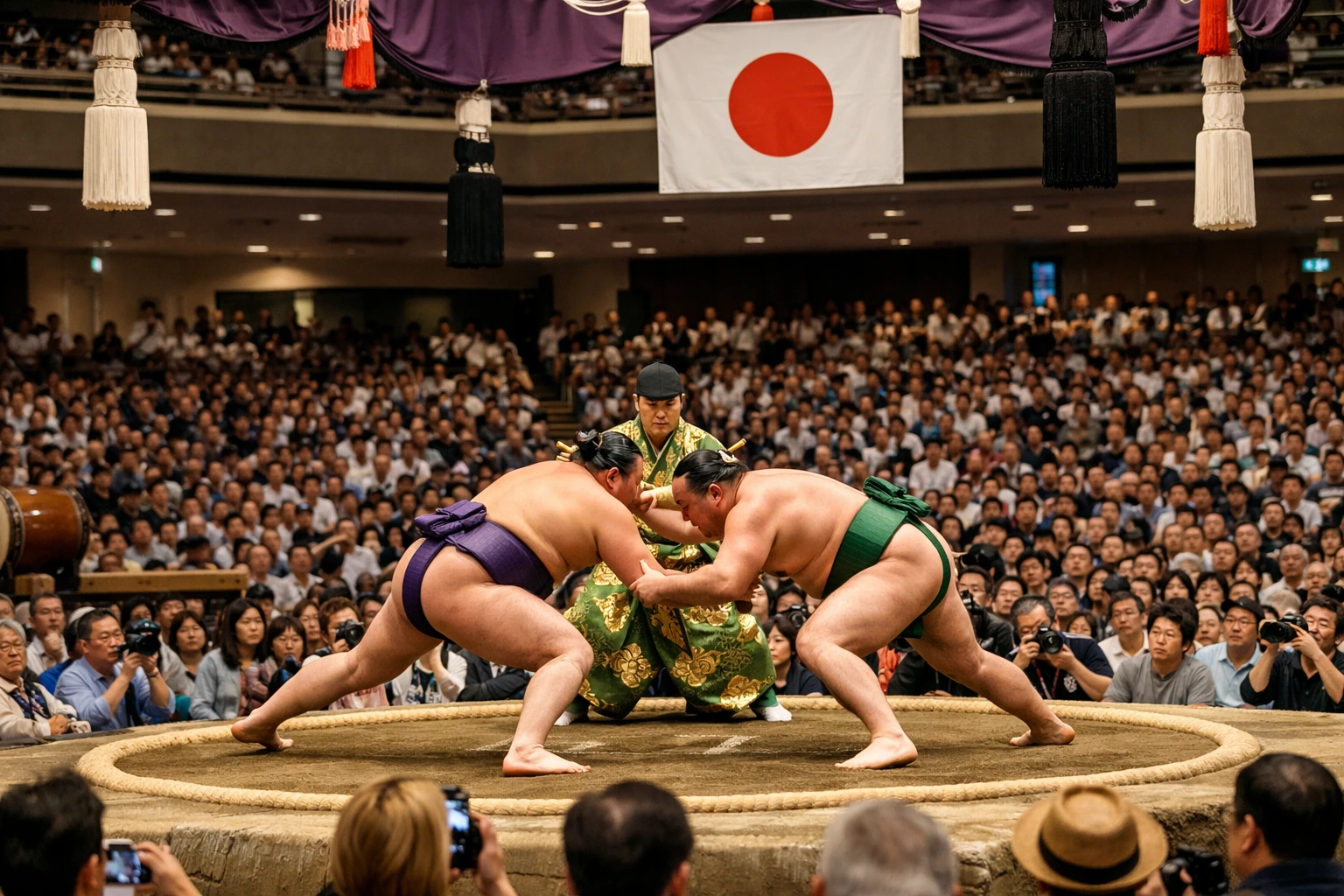
Sumo is Japan’s traditional form of wrestling and is widely seen as the country’s national sport. Professional sumo has a clear competitive structure, but what makes it different from many other sports is the importance of ritual, ceremony, and atmosphere alongside the bouts themselves.
The basic idea is simple: a wrestler loses if they step outside the dohyo (sumo ring) or touch the ground with any body part other than the soles of the feet. The wrestlers themselves are called rikishi (sumo wrestlers). However, what visitors often remember just as much as the matches are the pre-bout rituals, the clothing, the ring-entering ceremonies, and the formal pace of the event.
That is why sumo works so well for first-time visitors to Japan. You can enjoy the excitement immediately, yet the experience also reveals something deeper about discipline, presentation, and tradition.
When and where can you watch sumo in Japan?
The main professional tournaments are called honbasho (official grand tournaments). They are the easiest and most reliable way for most travelers to watch real professional sumo. Japan Sumo Association schedules are published officially in English, and the six annual tournaments are held in Tokyo, Osaka, Nagoya, and Fukuoka. Three of them take place in Tokyo, which is why many visitors first encounter sumo there.
Professional sumo has six official grand tournaments each year. Names such as Haru Basho (Spring Tournament) and Natsu Basho (Summer Tournament) refer to individual events within this annual six-tournament structure.
| Month | Tournament Name | Common Japanese Name | City |
|---|---|---|---|
| January | January Tournament | Hatsu Basho | Tokyo |
| March | Spring Tournament | Haru Basho | Osaka |
| May | Summer Tournament | Natsu Basho | Tokyo |
| July | July Tournament | Nagoya Basho | Nagoya |
| September | Autumn Tournament | Aki Basho | Tokyo |
| November | November Tournament | Kyushu Basho | Fukuoka |
This table shows the usual annual structure. Exact dates, venues, and ticket release timing may vary each year.
If you want the latest dates, venues, and sales timing, check the official English grand tournament schedule.
If your trip does not match a major tournament, there are still other ways to experience sumo culture, such as museum visits, sumo-related areas like Ryogoku, or tour-based practice viewing when available. Still, for a first experience, a main tournament is usually the clearest and easiest choice.
Quick tip: Use the official English schedule for current tournament dates, venues, and ticket release updates.
How to get sumo tickets
Tickets for professional tournaments are sold through the official English ticket information and ticket service of the Japan Sumo Association. In general, the most important thing is to check three things early: the tournament dates, the ticket sale start date, and the seat type.
Tickets often go on sale around one month before the tournament, though timing varies by event. Check the official English ticket page for the latest sales dates and updates.
The two broad seat styles most visitors notice first are:
- Box seats (masu seats): traditional floor-style seating sections sold by partitioned space rather than by a single chair. They are often intended for 2 to 4 people, depending on the tournament and venue, and they offer a classic sumo atmosphere. However, they may feel less comfortable for some visitors over a long stay.
- Arena or chair seats: individual stadium-style seats that are often the easiest option for solo travelers, first-time visitors, or anyone who prefers a more familiar seating style.
If comfort matters more than tradition, chair seats may feel easier. On the other hand, if you want the classic visual image of sumo viewing, box seating feels more distinctive. The best choice depends on your budget, flexibility, and how long you want to stay.
Popular days can sell out, so it is wise to check official sales early rather than waiting until you arrive in Japan.
What time should first-time visitors go?
In general, one tournament ticket gives you access to that day’s event. This means you can enter during the day and watch multiple divisions, rather than buying separate tickets for individual matches.
This is one of the most useful things to know before you go. A full tournament day is long, and not every visitor needs to stay from morning to evening.
For many first-time visitors, arriving later in the day gives the best balance of atmosphere and convenience. The arena becomes fuller, the higher divisions appear, and the most famous wrestlers compete later in the schedule.
| Time | What Happens | Best For |
|---|---|---|
| 8:30–12:00 | Lower division matches begin | Hardcore fans, full-day visitors |
| 12:00–14:00 | Mid-level divisions, lighter crowds | Relaxed visitors, easier arrival |
| 14:20 | Juryo (second division) ring-entering ceremony | Good time to start if you want more atmosphere |
| 14:30–15:30 | Arena fills, stronger energy | Recommended first-time arrival window |
| 15:45 | Top division ring-entering ceremony | Classic ceremonial experience |
| 15:50 | Yokozuna ring-entering ceremony | One of the highlights |
| 16:15–18:00 | Top division matches | Best for most first-time visitors |
This sample schedule is intended as a planning guide. Exact times may vary, so please confirm the latest official information when purchasing tickets.
If you only have limited time, arriving around 14:30 to 16:00 is usually the smartest choice. You will catch the atmosphere building, important ceremonies, and the most anticipated matches.
If you enjoy slower pacing and seeing the full structure of a tournament day, arrive earlier.
What to expect at a sumo tournament
First-time visitors are sometimes surprised by the rhythm of sumo. Individual bouts can be very short, but the event itself is not “short” in feeling. Much of the experience comes from the build-up, the ritual, the audience reaction, and the formal setting.
At the arena, expect a mix of sport and ceremony. You may notice:
- ritual preparation before bouts
- traditional clothing and presentation
- food, drinks, and souvenir areas inside or around the venue
- a crowd that often watches with attention rather than constant noise
- an atmosphere that becomes stronger as the higher divisions appear
In other words, sumo is not just about a sequence of matches. It is about the whole environment. Even short matches can feel meaningful because of the ritual that surrounds them.
Sumo etiquette for visitors
You do not need to feel nervous, but it helps to approach sumo with quiet respect. For travelers, the main etiquette points are simple:
- be aware of the people around you and avoid blocking views
- keep noise at a reasonable level
- follow venue rules for photography and movement
- treat the event as both entertainment and tradition
If you are watching a tournament, the mood is more accessible than a private practice visit. However, respectful behavior still matters. A stable practice visit, when available through a formal arrangement, is usually much stricter and quieter than a tournament.
Why watching sumo helps you understand Japan
One reason sumo leaves such a strong impression on travelers is that it shows several Japanese cultural values at once. You can see formality, repetition, self-control, and respect expressed not through explanation, but through action.
The appeal is not only power. It is also timing, restraint, and presentation. That combination helps many visitors understand why Japanese cultural experiences often place as much weight on how something is done as on the final result.
That is also why sumo fits naturally within a culture-first trip. It is exciting enough for casual visitors, but rich enough for people who want to understand Japan beyond surface sightseeing.
Trivia
Sumo bouts can end in seconds.
Even after long preparation rituals, some matches finish almost instantly. That contrast is part of the excitement.
Many visitors remember the atmosphere as much as the matches.
For first-time guests, the ceremonies, clothing, crowd mood, and rhythm of the day often become the most memorable part.
Tokyo hosts half of the six annual grand tournaments.
Because three tournaments are held in Tokyo, it is often the easiest city for travelers to include sumo in their itinerary.
FAQ
Is sumo worth it for first-time visitors to Japan?
Yes. It is one of the clearest ways to experience both spectacle and tradition at the same time.
Do foreign visitors usually enjoy sumo?
For many foreign visitors, yes. Sumo is often highly memorable because it combines live sport, ceremony, and Japanese tradition in one experience. Even first-time visitors with little prior knowledge often enjoy the atmosphere.
Can foreigners buy sumo tickets?
Yes. Official English ticket information is available through the Japan Sumo Association official English ticket page.
Is there an English ticket service?
Yes. Official English ticket pages are available online through the Japan Sumo Association official English ticket page, often linked as Ticket Oosumo English.
Is there English support at the venue?
Some major tournaments may offer limited English signs, printed guides, or staff assistance, but this can vary by venue and event. It is best to check official information in advance through the Japan Sumo Association English website or the official tournament schedule page.
Why do sumo wrestlers throw salt?
Salt is used as a traditional form of purification before a bout.
Is the dohyo just a sports ring?
No. The dohyo (sumo ring) is central to competition, but it also carries ceremonial and traditional meaning.
Why are Tokyo tournaments easiest for travelers?
Tokyo hosts three of the six annual grand tournaments, making it the most convenient city for many visitors.
Do I need to understand Japanese to enjoy sumo?
No. The visual structure, ritual, and atmosphere make it enjoyable even for first-time visitors.
What should I wear to a sumo tournament?
Neat, comfortable clothing is usually the safest choice.
How long should I stay?
Many first-time visitors prefer the later part of the day, when the atmosphere is stronger and the top divisions appear.
Related guides
- How to Watch Baseball in Japan | NPB Guide for Travelers
- How to Buy Baseball Tickets in Japan | NPB Guide
- Japanese Etiquette Basics
- Where Should You Go in Japan? Perfect Itinerary Quiz
- Japanese Cultural Itineraries
EXPLORE
Popular next steps
Explore pages that fit this topic, popular picks, and useful tools to try next.
Similar articles
Popular picks
Explore more tools, stories, and travel ideas across The Wa Story.
Official resources
- Japan Sumo Association (English)
- Official English Ticket Information
- Official Grand Tournament Schedule
BASEBALL FAVORITES
Explore More Baseball Stories
Start here
- Baseball in Japan: NPB Beginner’s Guide
- NPB Teams in Japan: All 12 Japanese Baseball Teams
- How to Buy Baseball Tickets in Japan
- Japanese Baseball Team Quiz: Which NPB Team Fits You Best?
Stadiums & travel
Players & culture
International events
Traditions & tournaments
SAKURA FAVORITES