

Japanese Etiquette Basics
Japanese etiquette is often described as a list of rules, but the deeper idea is simpler than that. In many situations, what matters most is awareness of others, shared space, and the atmosphere around you.
This is why etiquette in Japan can feel both detailed and flexible. The goal is not perfection. It is to show consideration, read the situation, and avoid disturbing the people around you.
Quick Summary
- Japanese etiquette is based on consideration for others and shared space.
- Many customs are less about strict rules than about awareness and quiet respect.
- Expectations change by setting, from shrines and restaurants to trains and baths.
- Visitors do not need to be perfect, but small signs of care make a strong impression.
- When unsure, observe first and follow the atmosphere around you.
Etiquette by Scene — Do / Don’t / Why
Etiquette in Japan changes slightly depending on place and context. Instead of trying to memorize every rule at once, it is often easier to think by scene. The sections below show what usually matters most and why.
Shrines & Temples
Do
- Keep to the sides on the main approach and bow lightly at a torii when appropriate.
- Purify at the basin (temizu): left hand, right hand, rinse mouth, then rinse the handle.
- Offer a small bow before or after prayer and follow donation box etiquette.
- Observe “no photo” zones and move quietly during services.
- Read local instructions and return charms or omamori to designated places when appropriate.
Don’t
- Stand in the center line of the path or cross sacred ropes.
- Step directly on thresholds of shrine or temple buildings.
- Use flash or block worshippers during rituals.
- Handle ritual objects without permission.
- Eat or drink in sanctified areas unless clearly allowed.
Why: The center path is often treated symbolically, and purification and quiet behavior help preserve the sacred atmosphere.
Origins & Philosophy: Torii mark thresholds, purification reflects ritual cleanliness, and temple decorum follows religious practice and shared reverence.
Tea Rooms & Tatami
Do
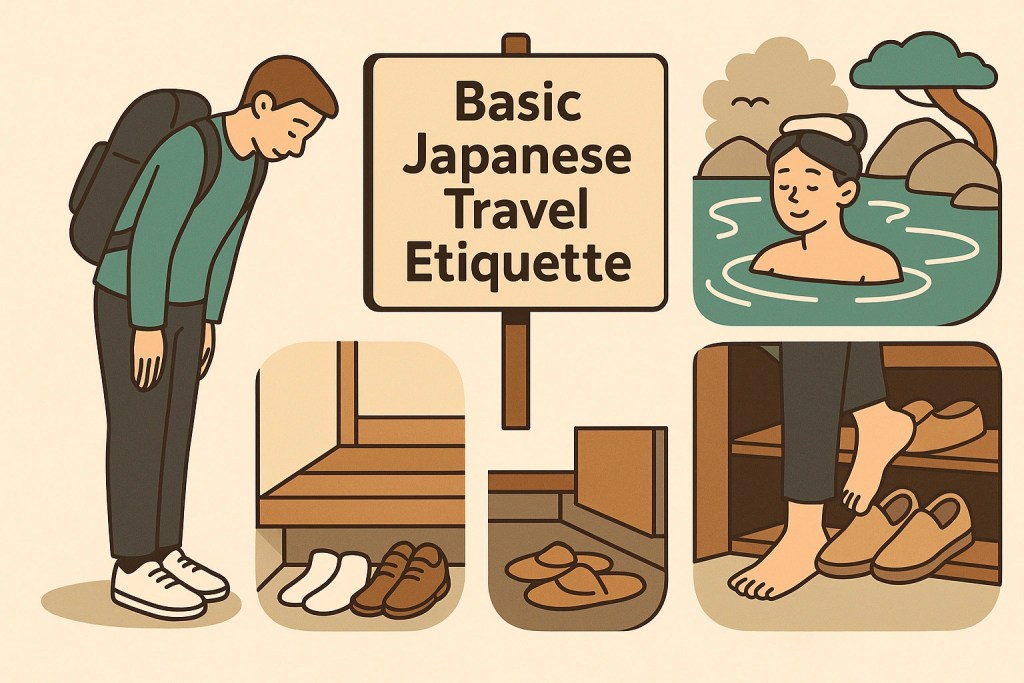
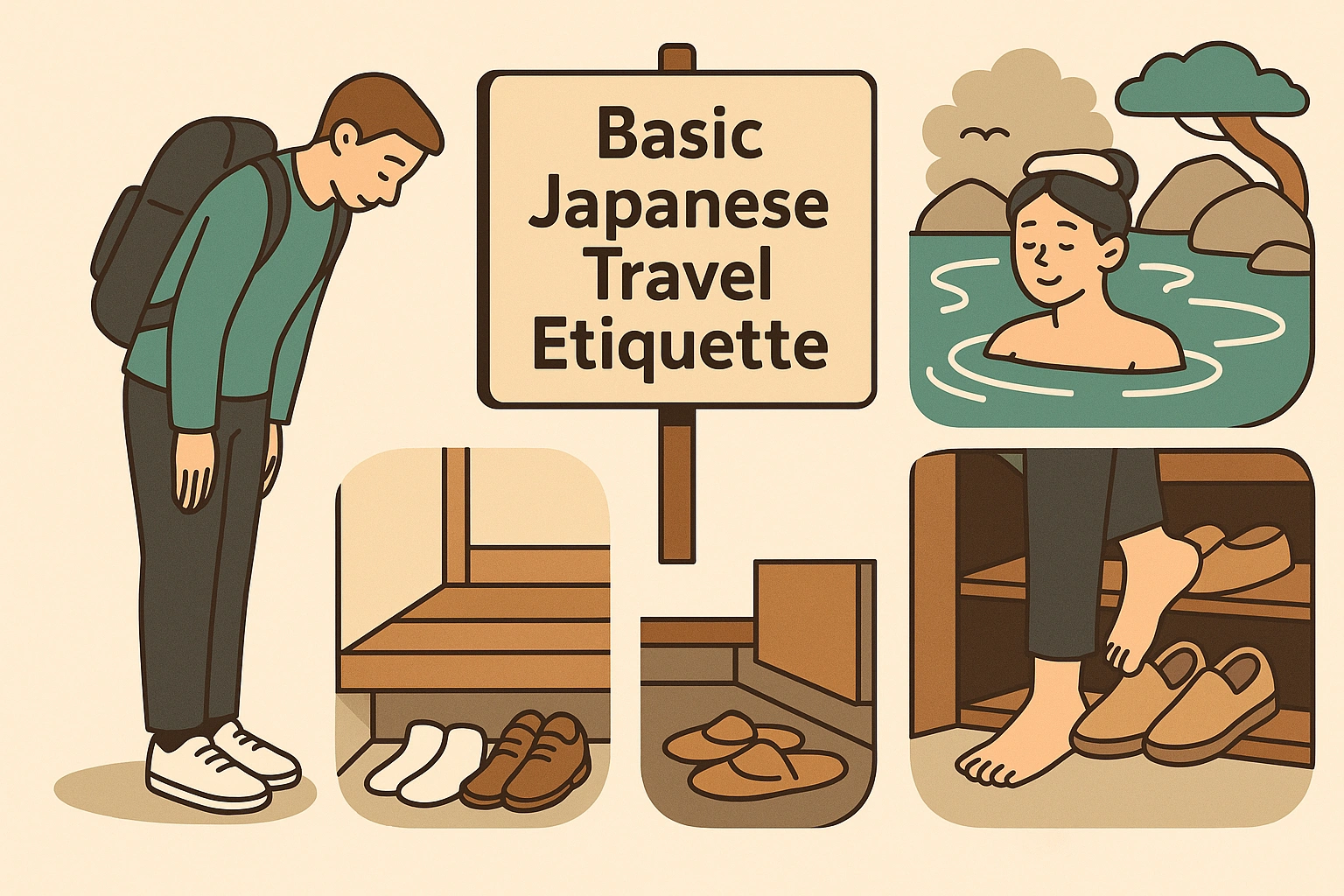
- Remove shoes before entering.
- Step carefully and avoid damaging tatami edges.
- Sit where directed and move calmly in confined spaces.
- Handle utensils only if invited or instructed.
- Keep bags and personal items neat and unobtrusive.
Don’t
- Walk on cushions or place luggage carelessly on tatami.
- Touch tea utensils without explanation or permission.
- Rush movements in quiet ceremonial settings.
- Speak loudly where stillness and focus matter.
Why: Tatami rooms emphasize order, cleanliness, and awareness of movement, so how you move matters as much as what you do.
Origins & Philosophy: Tea culture shaped many of these manners through humility, attentiveness, and respect for carefully prepared space.
Dining (Restaurants & Izakaya)
Do
- Say itadakimasu before eating and gochisousama deshita after the meal when appropriate.
- Use serving utensils when provided.
- Keep shared dishes orderly and follow the pace of the table.
- Place chopsticks neatly on a rest when not in use.
- Follow the house style in smaller restaurants or izakaya.
Don’t
- Stick chopsticks upright into rice.
- Pass food directly from chopsticks to chopsticks.
- Waste food casually or pour sauces excessively.
- Tip at ordinary restaurants.
- Speak loudly in quiet dining spaces.
Why: Dining manners are linked to respect, cleanliness, and avoiding actions associated with funeral customs or careless behavior.
Origins & Philosophy: Japanese dining etiquette reflects shared dishes, ritual sensitivity, and attention to the atmosphere of the meal.
Table Manners & Chopsticks
Do
- Rest chopsticks on a holder when possible.
- Lift bowls slightly when appropriate, especially rice or soup bowls.
- Use small, tidy motions when eating.
- Take shared food with serving utensils or the opposite end of your chopsticks if acceptable.
Don’t
- Point with chopsticks.
- Rub disposable chopsticks together loudly.
- Wave chopsticks over dishes while deciding.
- Leave chopsticks standing upright in food.
Why: Chopstick behavior is visible and symbolic, so neat handling signals care and respect.
Origins & Philosophy: Table manners in Japan often reflect both practical cleanliness and sensitivity to symbolic gestures.
Onsen & Sento
Do
- Wash thoroughly before entering the bath.
- Keep towels out of the water.
- Move quietly and respect the shared atmosphere.
- Check local rules before entering.
Don’t
- Enter the bath before washing.
- Swim, splash, or behave as if it is a pool.
- Let long hair touch the bath water.
- Ignore posted rules about tattoos or facility-specific guidance.
Why: Bathing spaces are communal and restorative, so cleanliness and calm behavior protect the experience for everyone.
Origins & Philosophy: Japanese bathing separates washing from soaking, emphasizing hygiene, shared relaxation, and respect for communal space.
Homes & Small Studios
Do
- Remove shoes when entering if expected.
- Follow your host’s lead about where to sit or place belongings.
- Keep your voice moderate in smaller spaces.
- Bring a small gift if visiting someone’s home formally.
Don’t
- Step into living areas with outdoor shoes.
- Open doors, cabinets, or private areas without invitation.
- Assume informality just because the space is small.
Why: Private spaces in Japan often separate clean indoor life from the outside, so entry behavior matters immediately.
Origins & Philosophy: Home etiquette reflects boundaries, cleanliness, and respect for another person’s carefully maintained space.
Public Transport
Do
- Queue in marked areas and let passengers exit first.
- Keep phone conversations to a minimum or avoid them entirely on trains.
- Wear backpacks in front or lower them when cars are crowded.
- Offer priority seats when appropriate.
- Keep your voice low.
Don’t
- Talk loudly or take calls in crowded train cars.
- Spread bags or legs into shared space.
- Block doors or aisle flow.
- Eat on commuter trains unless the context clearly makes it normal.
Why: Trains are shared, high-density spaces, so quiet efficiency is treated as mutual respect.
Origins & Philosophy: Public transport etiquette reflects the broader value of not imposing on strangers and helping shared systems run smoothly.
Museums & Performing Arts
Do
- Read photography and phone rules carefully.
- Move quietly and avoid blocking others’ view.
- Arrive on time for performances.
- Use low voices in exhibition areas.
Don’t
- Assume photos are allowed everywhere.
- Use bright screens during performances.
- Enter or leave repeatedly during quiet scenes unless necessary.
Why: Museums and performances depend on concentration and shared attention, so distraction affects everyone.
Origins & Philosophy: These manners reflect respect for the work, the performers, and the other people present.
Streets & Public Spaces
Do
- Keep to one side where local flow suggests it.
- Dispose of trash properly or carry it with you.
- Pause to eat when needed rather than always walking while eating.
- Be aware of people using narrow sidewalks, crossings, or queue spaces.
Don’t
- Block walkways in busy areas.
- Litter or assume public bins will always be nearby.
- Speak or behave as though all public space is casual and anonymous.
Why: Public areas in Japan often depend on quiet self-management and awareness of others rather than overt enforcement.
Origins & Philosophy: Streets and shared outdoor spaces reflect a culture of low disruption and personal responsibility.
Shopping & Cash
Do
- Use trays for payment when one is provided.
- Handle products carefully, especially in specialty shops.
- Wait your turn and follow queue order.
- Acknowledge staff politely.
Don’t
- Open packages casually unless clearly acceptable.
- Push ahead in line or crowd the register.
- Assume tipping is expected.
- Treat curated shops as if they were casual browsing spaces.
Why: Good shopping behavior keeps transactions smooth and shows care for both staff and products.
Origins & Philosophy: Shopping manners reflect order, attentiveness, and a service culture built around mutual respect.
Gifts & Omiyage
Do
- Choose something thoughtful and appropriately modest.
- Offer gifts neatly and with both hands when suitable.
- Bring omiyage when returning from travel or visiting in a semi-formal context.
- Pay attention to wrapping and presentation.
Don’t
- Assume the gift must be expensive to be meaningful.
- Force someone to open a gift immediately if the situation feels formal.
- Treat omiyage as a random souvenir with no social meaning.
Why: Gifts in Japan often communicate thoughtfulness and social awareness more than material value.
Origins & Philosophy: Omiyage culture reflects reciprocity, travel memory, and care for relationships through small acts of consideration.
Common mistakes visitors make
Most etiquette mistakes happen because expectations differ, not because visitors mean to be rude. These are some of the most common ones.
- Talking too loudly on trains or in quiet shared spaces.
- Eating while walking in places where it feels disruptive.
- Tipping where it is not expected.
- Wearing shoes indoors or on tatami.
- Entering a bath before washing.
- Using flash photography in places of worship or performances.
- Assuming every rule is rigid instead of observing the atmosphere first.
FAQ
Do I need to bow correctly everywhere?
No. A polite attitude matters more than perfect technique. A small respectful nod is usually enough for visitors.
Is tipping expected in Japan?
Usually no. In most ordinary situations, tipping is not part of service culture and may feel unnecessary or confusing.
Can I talk on trains?
Quiet conversation may sometimes be acceptable, but loud talking and phone calls are generally avoided, especially on crowded commuter trains.
In Japan, public transport is often seen as a shared quiet space rather than a place for open conversation. Speaking softly is one way people help protect comfort for everyone around them.
Is eating while walking rude?
It depends on the place, but in many situations it is better to stop and eat rather than walk while eating. Watching what people around you are doing is often the safest guide.
What should I do when I am unsure?
Pause, observe, and follow the atmosphere around you. In Japan, reading the situation is often more useful than trying to perform every rule perfectly.
Are visitors expected to know everything in advance?
No. Most people understand that visitors are learning. What matters most is showing care, staying calm, and trying to be respectful.
What matters most
Japanese etiquette is less about memorizing rules than about awareness. Paying attention to others, respecting shared space, and adjusting to the situation are the real foundations.
If you approach each place with quiet observation and consideration, you are already following the spirit behind the etiquette.
External resources
You must be logged in to post a comment.