


Tokyo Cultural Itinerary
← Back to Japanese Cultural Itineraries
A culture-first itinerary at a medium pace with Tokyo as your base (1–14 nights). Start at Day 1 and use the first N days to match your stay (e.g., 7 nights = Days 1–7); the plan minimizes hotel moves, balances indoor/outdoor time, and includes crafts and performing arts without rushing. Optional day trips include Kamakura, Nikko, and Kawagoe; for Kyoto, Osaka, and Kanazawa, use the dedicated itineraries linked below.
This route is part of our series of culture-first trips across Japan. You can find more ideas on our Cultural Itineraries page.
Before you go, we recommend reading a few of our Japanese Culture Guides to get comfortable with basic customs, shrine etiquette, and seasonal patterns.
Quick Facts
- Base: Tokyo (optional extensions use separate Kyoto / Osaka / Kanazawa itineraries)
- Pace: Medium (3 blocks/day; 1 pre-booked activity/day)
- Moves: Short 0–1 move; long 2–3 moves max
- Best Seasons: Mar–May, Oct–Dec (use indoor clusters for rain/heat)
- Passes: IC card in Kanto; reserve Shinkansen seats for intercity hops
- Budget tier: ¥¥ (see Budget)
- Map: See Access & Map
- Accessibility: See Accessibility & Family
Contents
What makes Tokyo different?
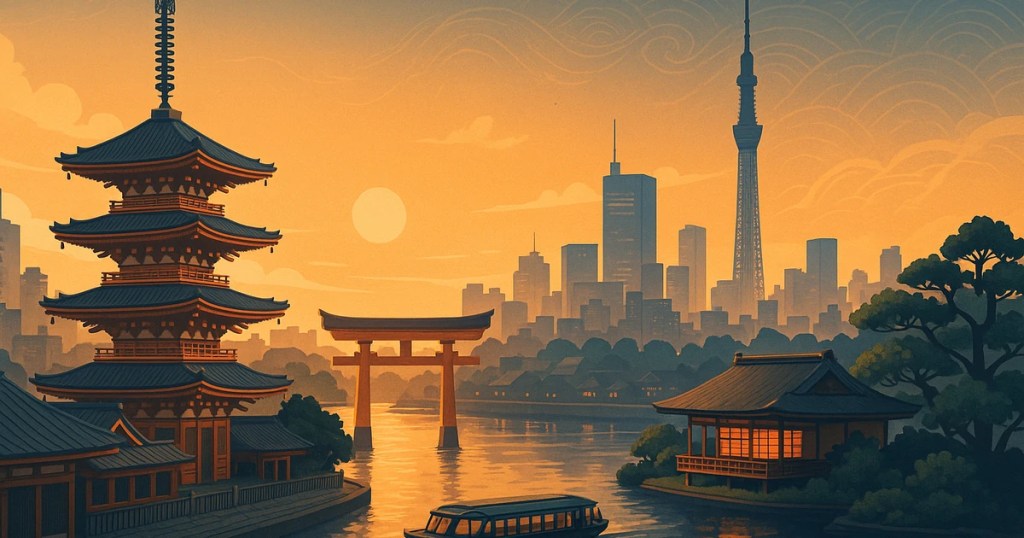
Tokyo is where layers of Japanese culture remain visible inside a modern megacity. Unlike places defined by one preserved historical atmosphere, Tokyo brings together shrine districts, merchant neighborhoods, museums, gardens, performing arts, and contemporary design within everyday urban life.
What you experience here is not a single mood, but a sequence of cultural layers — from Edo-period downtown traditions and tea culture to modern architecture, pop visual culture, and carefully maintained seasonal rituals.
If Kyoto feels refined and Kanazawa feels preserved, Tokyo feels layered and alive — a place where culture is constantly changing, yet still deeply rooted in older patterns of everyday life.
How to Use
Start at Day 1 and pick the first N days. Each Tokyo day stands largely alone, so you can reorder around museum closures or weather when needed. Places that already have their own itinerary pages are linked out instead of being fully duplicated here.
Itinerary
Accessibility (official links) are listed at the bottom of this page.
Helpful guides for planning: Japanese Calendar · Traditional Crafts · Etiquette Basics
Tokyo Cultural Itinerary — 3-Day Highlights
Short on time? Start here. Each day links to the full modular plan.
Seasonal Versions
-
Day 1 — Asakusa & Kuramae (Tokyo)
Morning
Senso-ji & Nakamise; Sumida riverside walk.
Afternoon
Hokusai Museum → craft studios in Kuramae.
Evening
Kappabashi tools street; tempura.
Cultural connection: Shitamachi (downtown) culture; ukiyo-e as popular media; living artisan traditions.
-
Day 2 — Ueno & Yanaka alleys (Tokyo)
Morning
Tokyo National Museum (museum cluster).
Afternoon
Temple-town alleys in Yanaka–Nezu–Sendagi.
Evening
Intro tea ceremony (pre-book).
Cultural connection: Museum hub + temple districts; wabi-sabi and etiquette via tea.
-
Day 3 — Imperial Garden · Nihonbashi · Kabuki (Tokyo)
Morning
Imperial Palace East Garden.
Afternoon
Craft demo (e.g., metal leaf, cords) in Nihonbashi.
Evening
Kabuki/Bunraku if available.
Cultural connection: Samurai & merchant cultures; Edo popular performing arts.
-
Day 4 — Meiji Jingu, Ukiyo-e & Roppongi museums (Tokyo)
Morning
Meiji Jingu shrine walk.
Afternoon
Ota Memorial Museum of Ukiyo-e → Roppongi museums (e.g., The National Art Center, Tokyo, Suntory Museum of Art, Mori Art Museum ).
Evening
Optional craft workshop or kaiseki.
Cultural connection: State Shinto & modernization; print aesthetics; modern architecture/curation.
-
Day 5 — Hama-rikyu, Fukagawa & Tsukishima (Tokyo)
Morning
Hama-rikyu Gardens with matcha tearoom.
Afternoon
Water bus → Fukagawa shrines/streets.
Evening
Monja dinner in Tsukishima.
Cultural connection: Daimyo garden × chanoyu; canal towns & folk faith; classic downtown foodways.
-
Day 6 — Kamakura (Day Trip)
Why go
Kamakura offers a calm contrast to Tokyo through Zen temples, bamboo groves, and a slower samurai-era atmosphere.
How to use
Rather than compressing it here, we recommend using the dedicated itinerary for the full route and pacing.
Cultural connection: Medieval samurai government; Zen simplicity; coastal life and quiet temple landscapes.
-
Day 7 — Kawagoe (Day Trip)
Morning
Kawagoe (Koedo): Kurazukuri warehouses & Toki-no-kane bell.
Afternoon
Kitain temple; local candle/indigo craft.
Evening
Return to Tokyo.
Cultural connection: “Little Edo” merchant town; regional crafts.
-
Day 8 — Nikko (Optional Overnight)
Why go
Nikko adds ornate shrine culture, mountain faith, and a more immersive natural setting than Tokyo itself.
How to use
Use the dedicated Nikko itinerary if you want the full shrine complex and lake area without rushing.
Next step
Cultural connection: Tokugawa authority, shrine-temple syncretism, mountain worship, and decorative arts.
-
Day 9 — Kyoto Extension
Why go
Kyoto offers a more concentrated experience of temples, tea culture, seasonal aesthetics, and historic urban form.
How to use
Switch to the dedicated Kyoto itinerary instead of duplicating detailed day planning here.
Next step
Cultural connection: Courtly refinement, temple culture, and seasonal visual traditions.
-
Day 10 — Osaka Extension
Why go
Osaka brings a more casual, lively, and food-centered atmosphere than Kyoto, while still offering strong cultural context.
How to use
Use the dedicated Osaka itinerary for neighborhood flow, food rhythm, and local contrasts.
Next step
Cultural connection: Merchant humor, everyday foodways, and an urban culture distinct from Tokyo and Kyoto.
-
Day 11 — Nara (Optional from Kyoto)
Morning
Todaiji Great Buddha.
Afternoon
Kasuga Taisha → Naramachi townhouses.
Evening
Return to Kyoto; obanzai.
Cultural connection: Ancient capital; syncretism; sacred deer; brush and ink traditions.
-
Day 12 — Kanazawa Extension
Why go
Kanazawa offers preserved samurai districts, gold leaf culture, and traditional crafts in a quieter urban setting.
How to use
Use the dedicated Kanazawa itinerary if you want a full craft-and-garden route without overlap.
Next step
Cultural connection: Kaga domain aesthetics, samurai town structure, tea culture, and artisan continuity.
-
Day 13 — Return to Tokyo / Flexible Final Days
Morning
Use this day for a slow return, a museum revisit, or shopping with cultural focus.
Afternoon
Choose one district you want to understand more deeply rather than adding new major sights.
Evening
Final dinner in a neighborhood that matches your favorite side of Tokyo.
Cultural connection: Tokyo is often understood best through revisiting familiar places rather than constant expansion.
-
Day 14 — Last Tokyo Day
Morning
Short shrine, garden, or old shopping street visit depending on departure time.
Afternoon
Light final meal and luggage-friendly route back toward your departure hub.
Evening
Departure or a quiet last night near your airport/train connection.
Cultural connection: End with rhythm, not pressure — a final Tokyo day works best when it stays light and observational.
Traditional & Local Foods
Tokyo’s food culture reflects Edo merchant life, modern urban layering, regional migration, and the city’s role as a national crossroads. This section focuses on foods with cultural meaning rather than sightseeing-oriented gourmet picks.
Quick taste summary: Tokyo flavors often range from simple and classic to highly specialized, but many traditional dishes still reflect Edo’s preference for clear seasoning, practical street food, refined seasonal sweets, and quick but skillful preparation.
Core Cultural Foods
- Edo-style sushi: one of Tokyo’s clearest cultural food traditions, tied to the city’s old bay and merchant culture. Taste-wise, it often feels cleaner, more direct, and more balanced than heavily dressed modern styles.
- Tempura: long associated with Edo dining and still central to Tokyo food identity. Taste-wise, it is light and crisp when done well, with richness coming from texture rather than heavy sauce.
- Soba: strongly linked to Edo everyday life. Taste-wise, it is earthy, light, and satisfying, fitting both quick meals and more reflective cultural days.
Secondary Local Specialties
- Monjayaki: especially tied to older downtown neighborhoods like Tsukishima. Taste-wise, it is savory, soft, and casual, more about shared experience than refined presentation.
- Wagashi and tea sweets: these connect Tokyo to seasonal awareness and everyday refinement. Taste-wise, they are often subtle in sweetness and best appreciated with tea.
- Specialist neighborhood foods: Tokyo’s districts often preserve small-scale food identities, from craft cafés to long-running shops. Taste-wise, this can vary widely, but the cultural value lies in local continuity and specialization.
Traditional Drinks
- Tea culture: tea pauses are a natural part of Tokyo’s museum, garden, and traditional neighborhood routes. Taste-wise, they tend to be clean, calm, and lightly structured.
- Regional sake and modern pairings: because Tokyo gathers foods and drinks from across Japan, it also offers a broad sake context. Taste-wise, pairings can range from crisp and delicate to richer styles depending on the dish.
If this may suit your taste: Tokyo may be a good match if you enjoy variety, specialist craft food, classic Edo dishes, neighborhood differences, and meals that fit different cultural moods across the city. It may feel less ideal if you want one single unified regional food identity like a smaller city offers.
Best fit within this itinerary: Day 1 naturally fits tempura and downtown foodways; Day 2 works well with tea and quieter neighborhood meals; Day 3 suits more refined Edo-influenced dining around Nihonbashi and performance districts; later linked itineraries broaden into Kamakura, Nikko, Kyoto, Osaka, and Kanazawa when you want regional contrast.
Seasonal & Rainy Swaps
Weather and season can shift the best rhythm for Tokyo. Use these quick swaps to keep your days smooth and culture-rich.
-
Rainy:
Choose compact indoor areas with multiple cultural stops.
- Ueno (easy one-area route): Tokyo National Museum → nearby smaller museums → Ueno Park cafés
- Roppongi (design & contemporary): The National Art Center → Suntory Museum → Mori Art Museum
- Indoor crafts backup: Edo Kiriko / woodblock printing / small studios in Kuramae
-
Summer heat:
Go outside early or late, and rest in cooler interiors mid-day.
- Early morning: shrine/temple walks, quiet backstreets, gardens before crowds
- Mid-day cool-down: museums, galleries, covered arcades, tea houses
- Evening: riverside strolls, night views, or late-open museums
-
Autumn:
Foliage timing varies—use Nikko for early peak and Tokyo gardens for later peak.
- Early season (late Oct–early Nov): extend Nikko day trip if colors are prime
- Tokyo peak (mid–late Nov): emphasize Hama-rikyu, Rikugien, Koishikawa Korakuen
- Late season: ginkgo avenues and larger city parks
To match each itinerary with the right season, use the Japanese Calendar to see how festivals and everyday rhythms change through the year.
For more background on the traditions, customs, and everyday life that shape these routes, explore our Japanese Culture Guides.
Etiquette & Handy Phrases
- Shrines/temples: follow posted rules; avoid center of the main approach; no flash where restricted.
- Tea rooms: avoid strong fragrances; simple attire; arrive 10 minutes early.
- Performing arts: photos usually prohibited; keep silent; seated before curtain.
Phrases: Excuse me / Thank you / Two tickets please / May I take photos? / Where is …?
Accessibility resources for listed facilities
Note: We do not accept questions about this itinerary. For hours, access, and on-site accessibility, please use the official links below.Links point to official facility pages or official tourism/government sources. Conditions (ramps, elevators, restrooms, closures, etc.) may change—please verify before visiting.
- Asakusa / Sumida
- Ueno / Yanaka
- Imperial Palace area
- Harajuku / Aoyama
- Bay & East Tokyo
- Tokyo transport
To learn more about the craft traditions behind this area, explore our Traditional Crafts section, where we introduce more artisans and techniques from across Japan.
Access & Map
- Airports → City: Narita (NRT) and Haneda (HND) connect by JR/Keisei/Monorail/Keikyu. Follow station signs for rapid services; buy on site or use IC (Suica/PASMO).
- Main hubs (base for most days): Tokyo Station (JR Shinkansen/Metro), Shinjuku (JR/Metro), Shibuya (JR/Metro), Ueno (JR/Metro), Asakusa (Metro/Toei).
- Pass / IC: Suica & PASMO are accepted across JR/Metro/bus; short stays can use the Tokyo Subway Ticket (24/48/72h) for Metro/Toei only.
- Accessibility: Major stations have elevators and accessible restrooms; platforms can be crowded—allow extra time.
- Luggage: Coin lockers are common at hubs; consider same-day baggage delivery if traveling with large suitcases.
Narita T1 Narita T2·3 Haneda T3 Tokyo Station Shinjuku Shibuya Ueno Asakusa
Budget
| Item | ¥ Range | Notes |
|---|---|---|
| Transport (within Tokyo) | ¥700–¥1,200 | JR/Metro/Toei with IC (Suica/PASMO); 24–72h subway tickets available. |
| Admission | ¥0–¥2,500 | Shrines/temples often free; museums/exhibitions typically ¥500–¥2,000. |
| Food / Tea | ¥2,000–¥4,000 | Casual lunch + café/snack; dinner varies by choice. |
| Optional | ¥0–¥3,000 | Observation decks / small workshops / extra exhibits. |
| Total (per person / day) | ¥6,000–¥12,000 | Tier: ¥¥ (standard) |
¥ = frugal (<¥5,000) · ¥¥ = standard (¥5,000–¥12,000) · ¥¥¥ = comfort (>¥12,000)
*Arrival/departure days may add airport transfer (one-way ~¥500–¥3,000). Day trips and linked regional itineraries add rail fares separately.
Ready to design your next trip or adjust this one? Visit Plan Your Trip for more culture-first planning tips and tools.
See more of Japan this way
If you enjoyed this cultural itinerary and want to see more of Japan through this kind of lens, try our free course, “Seeing Japan Culturally 101 – Before You Travel” . It gives you simple ways to read spaces, notice patterns, and feel more at ease wherever you go.
EXPLORE
Popular next itineraries and Japanese culture
Choose your next route by interest: start with well-known cities, go deeper culturally, or explore from a different angle.
Start with well-known cities
Go deeper culturally
Try a different perspective
Planning a trip? Use the Trip Planner to turn these ideas into a culture-first itinerary.
Official Resources
Official Resources
Tokyo & Kanto
- GO TOKYO — Tokyo Metropolitan Government Official Travel Guide
- Tokyo National Museum
- Imperial Palace East Gardens — Imperial Household Agency
- Hama-rikyu Gardens — Tokyo Metropolitan Park Association
Day Trips from Tokyo
- VISIT KAMAKURA — Kamakura City Tourist Association
- Koedo Kawagoe Tourism Association
- Visit Nikko — Nikko City Tourism Association
- Nikko National Park — Japan National Tourism Organization
Transport (Official Operators)
← Back to Japanese Cultural Itineraries
You must be logged in to post a comment.