
Wakayama Prefecture culture guide
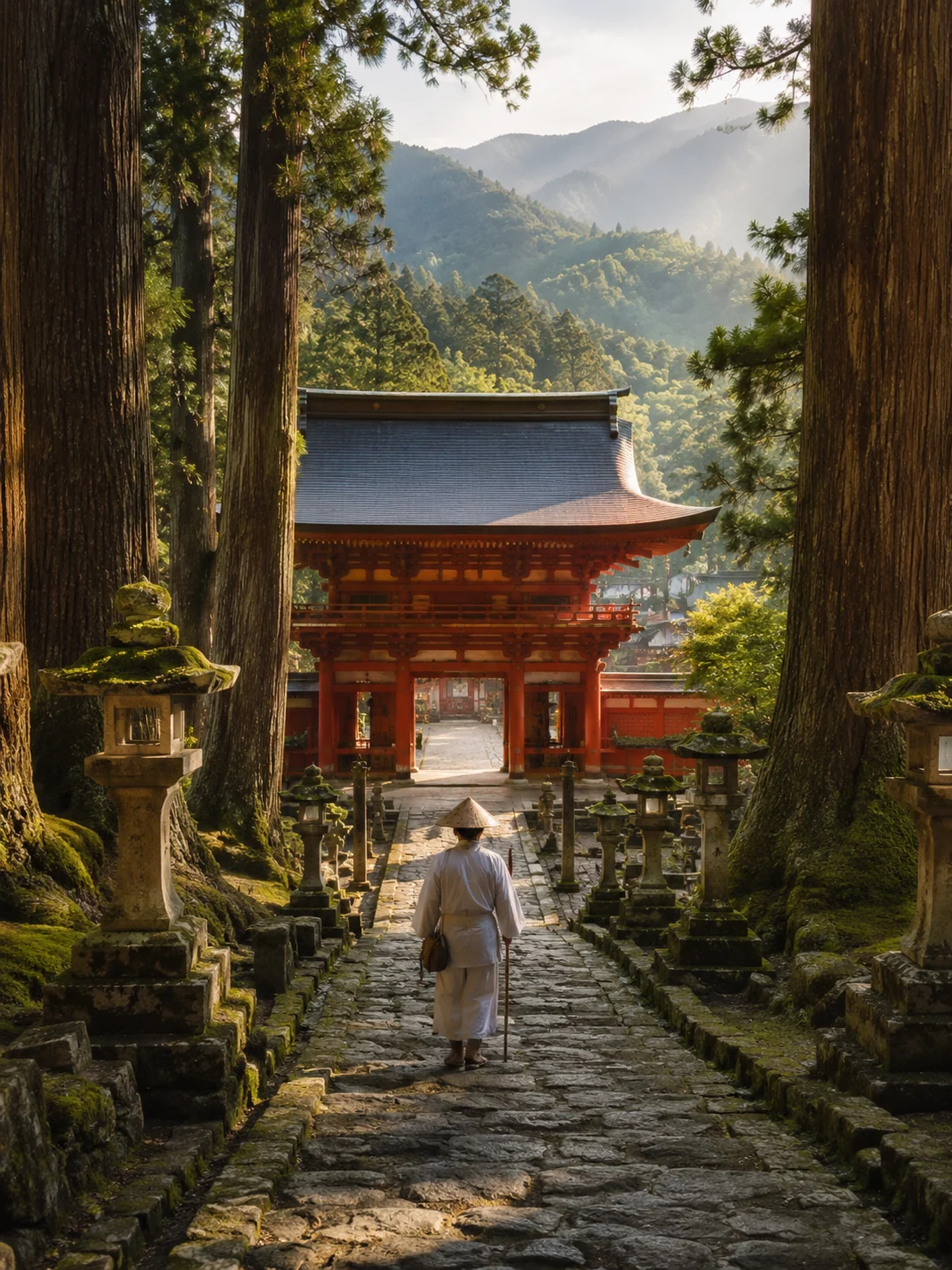
Wakayama Prefecture is where Japan’s mountains, forests, coastlines, and sacred routes come together. It is a place of pilgrimage roads, Buddhist mountain life, shrine forests, waterfalls, fishing towns, hot springs, citrus groves, and food traditions shaped by the Kii Peninsula.
This guide introduces Wakayama Prefecture as a cultural landscape, not simply as a quiet region south of Osaka. From Koyasan and the Kumano Kodo to Nachi Falls, coastal towns, onsen areas, ume orchards, and mountain villages, Wakayama reveals a side of Japan where walking, prayer, nature, and daily life remain closely connected.
Quick Facts
| Region | Kansai |
|---|---|
| Historical Role | Sacred pilgrimage region, Buddhist mountain center, coastal gateway, and cultural heart of the Kii Peninsula |
| Cultural Keywords | Kumano Kodo, Koyasan, pilgrimage, mountain faith, sacred forests, waterfalls, coastal towns, onsen, ume, mikan |
| Major Cultural Areas | Koyasan, Kumano, Nachikatsuura, Tanabe, Shirahama, Wakayama City, Kainan, Yuasa, Arida, Kii Peninsula coast |
| Key Traditions | Shingon Buddhism, Kumano pilgrimage, shrine worship, mountain practice, coastal food culture, ume and mikan production |
| Best Known For | Kumano Kodo pilgrimage routes, Koyasan temple stays, sacred forests, Nachi Falls, coastal scenery, and spiritual travel |
A Short Cultural History of Wakayama
Wakayama’s cultural history is deeply tied to the Kii Peninsula, a region of steep mountains, dense forests, rivers, waterfalls, and Pacific coastlines. Its geography helped shape a culture where travel was often physical, spiritual, and demanding.
Koyasan became one of Wakayama’s most important sacred centers after Kukai, later known as Kobo Daishi, established a Shingon Buddhist monastic community there in the early Heian period. Over time, Koyasan developed into a mountain world of temples, ritual practice, cemetery paths, shukubo temple lodging, and Buddhist food culture.
The Kumano region added another layer. For centuries, pilgrims traveled through forests and mountain routes toward the Kumano Sanzan shrines, seeking purification, rebirth, protection, and contact with sacred powers. These routes were not only roads; they were ritual journeys through a landscape understood as holy.
Wakayama’s coastal areas also shaped the prefecture’s identity. Fishing towns, soy sauce history, ume production, mikan groves, onsen culture, and sea routes gave Wakayama a daily culture grounded in both mountain faith and coastal livelihood.
Wakayama as Japan’s Sacred Route to Mountains and Sea
Wakayama holds a special place in Japanese culture because it turns movement into meaning. Walking a mountain path, entering a temple town, crossing a forest pass, or arriving at a waterfall can all become part of the cultural experience.
Unlike Kyoto’s refined old capital culture or Osaka’s merchant city energy, Wakayama’s cultural role is rooted in routes, thresholds, and sacred geography. It is a prefecture where the journey itself often matters as much as the destination.
Koyasan represents Buddhist mountain life, while Kumano represents pilgrimage through forests, shrines, waterfalls, and villages. Together, they make Wakayama one of Japan’s most powerful regions for understanding how faith, landscape, endurance, hospitality, and seasonal nature can become one cultural system.
The Wakayama Character: Pilgrimage, Forests & Coastal Faith
Wakayama’s character is shaped by distance, depth, and arrival. Its culture often asks people to move through space slowly: up a mountain, along an old road, through a cedar forest, across a shrine approach, or toward the sea.
This gives Wakayama a different feeling from more urban cultural regions. It is quieter but not empty, remote but not isolated, spiritual but also practical. Food, lodging, walking routes, fishing towns, temple communities, and onsen areas all support the act of staying, moving, and recovering.
The prefecture’s identity comes from both mountain and coast. Sacred forests and Buddhist temple life give Wakayama depth, while fishing villages, citrus groves, hot springs, and Pacific views give it openness and daily vitality.
Kumano Kodo and the Culture of Walking
The Kumano Kodo is one of Wakayama’s defining cultural landscapes. These pilgrimage routes connect mountains, forests, villages, shrines, stone paths, and old waystations, turning walking into a form of spiritual practice and cultural memory.
Historically, pilgrims did not travel to Kumano only to see a famous place. The journey itself was part of purification and transformation. The route asked the body to participate: to climb, descend, endure rain, feel fatigue, and notice the land.
Today, the Kumano Kodo continues to attract people because it offers something rare: a way to experience Japanese culture through movement, nature, silence, and time rather than through a single monument.
To turn this pilgrimage background into a practical walking route, see our Kumano Kodo Itinerary, which focuses on sacred paths, forest villages, shrine visits, and the rhythm of walking through the Kii Peninsula.
Koyasan and Buddhist Mountain Life
Koyasan is one of Japan’s most important Buddhist mountain communities. Its temples, cemetery paths, gates, halls, and lodging traditions create a cultural world where religion is not only studied, but lived through space, ritual, food, and daily rhythm.
Temple lodging and shojin ryori, Buddhist vegetarian cuisine, help visitors understand Koyasan as more than a sightseeing destination. It is a place where staying overnight, walking quietly, eating carefully, and joining morning practices can become part of the cultural experience.
Koyasan’s atmosphere is especially powerful because it combines grandeur and stillness. Monumental gates, forested paths, lanterns, memorial stones, and temple rooms all express a culture of devotion, discipline, and continuity.
To turn this cultural background into a practical visit, see our Koyasan Cultural Itinerary, which focuses on temple stays, sacred paths, Buddhist food, and the quiet rhythm of mountain worship.
Shrines, Forests & Sacred Waterfalls
Wakayama’s sacred culture is closely connected with natural features. Forests, rivers, stones, mountains, and waterfalls often feel like active parts of the religious landscape, not simply scenery around it.
Nachi Falls is one of the clearest examples. Its height and presence make the waterfall feel like a living symbol of nature’s power, prayer, and purification. Nearby shrine and temple spaces show how Buddhism, Shinto, and landscape-based faith can overlap.
This connection between sacred sites and natural force is central to Wakayama. The forest is not just a background to pilgrimage; it is part of what the pilgrimage means.
Food Culture: Ume, Mikan, Seafood & Mountain Villages
Wakayama’s food culture reflects its geography. The coast provides seafood, the hills support citrus and ume, and mountain villages preserve foods suited to travel, storage, hospitality, and local climate.
Umeboshi and mikan are two of Wakayama’s best-known food symbols. They show how local agriculture can become part of regional identity, daily meals, gifts, and seasonal memory.
Coastal towns add seafood, tuna culture, dried foods, and onsen resort meals, while temple areas such as Koyasan connect food with Buddhist practice through shojin ryori. Wakayama’s food culture is simple in appearance, but deeply tied to place.
Coastal Towns, Onsen & Everyday Life
Wakayama is not only a sacred mountain region. Its coastlines, fishing ports, hot springs, beaches, and seaside towns form another important layer of the prefecture’s culture.
Places such as Shirahama, Nachikatsuura, and the Kii Peninsula coast connect Wakayama to sea travel, bathing culture, seafood, and Pacific scenery. These areas show how rest, recovery, and everyday hospitality are also part of the region’s identity.
This balance between sacred route and coastal life gives Wakayama its distinctive depth: pilgrims walk through forests, travelers rest in onsen towns, families grow fruit, and fishing communities continue life along the sea.
Cultural Landscapes Across Wakayama Prefecture
Wakayama Prefecture is best understood through its landscapes: temple mountains, pilgrimage routes, shrine forests, coastal towns, citrus fields, onsen areas, and fishing ports. Each area reveals a different relationship between faith, nature, and daily life.
Koyasan: Buddhist Mountain Culture
Koyasan is the prefecture’s most important Buddhist mountain landscape. Its temples, cemetery paths, gates, shukubo lodging, and vegetarian cuisine make it one of the clearest places to experience religious culture as an environment.
Kumano: Pilgrimage, Forests and Sacred Routes
Kumano is closely associated with pilgrimage, shrine worship, forest paths, purification, and sacred mountains. The Kumano Kodo routes help visitors experience the landscape through walking rather than simply viewing.
Nachikatsuura: Waterfalls, Shrines and the Sea
Nachikatsuura brings together some of Wakayama’s strongest images: Nachi Falls, shrine and temple landscapes, tuna culture, onsen, and Pacific coastal scenery.
Tanabe: Gateway to Kumano
Tanabe is an important gateway to the Kumano Kodo, especially for travelers entering the Nakahechi route. It also connects pilgrimage culture with coastal life, local food, and the wider Kii Peninsula.
Shirahama: Onsen, Coast and Resort Culture
Shirahama shows Wakayama’s lighter coastal side through hot springs, beaches, seafood, family travel, and seaside scenery. It adds rest and recreation to the prefecture’s more spiritual mountain identity.
Yuasa and Arida: Soy Sauce, Citrus and Local Food Memory
Yuasa and Arida connect Wakayama to food heritage, including soy sauce culture, citrus production, local streetscapes, and agricultural identity.
Wakayama City: Castle, Port and Regional Gateway
Wakayama City offers a more urban entry point into the prefecture, with castle history, port connections, local food, and access to both coastal and inland cultural landscapes.
Wakayama Through the Seasons
Wakayama’s seasons are closely tied to pilgrimage conditions, forest color, coastal light, citrus harvests, ume blossoms, onsen stays, and mountain weather. Seasonal change affects not only scenery, but also the rhythm of travel and local life.
Spring
Spring brings blossoms, mild walking weather, temple visits, and fresh green mountain paths. In Wakayama, spring often feels like a season of renewal after the deep stillness of winter.
Summer
Summer highlights Wakayama’s coast, waterfalls, rivers, beaches, and forest shade. It is also a season when the contrast between humid lowlands and cooler mountain areas becomes especially clear.
Autumn
Autumn is one of Wakayama’s most atmospheric seasons for walking. Forest color, clear air, harvest foods, and quieter pilgrimage paths give the prefecture a reflective mood.
Winter
Winter brings temple stillness, hot springs, coastal seafood, ume preparations, and quiet mountain landscapes. Koyasan can feel especially solemn in the cold months.
Wakayama Today: Living Pilgrimage Culture
Wakayama today is not only a preserved sacred region. It is a living prefecture where temple communities, shrine groups, farmers, innkeepers, guides, fishers, craftspeople, and residents continue to support the landscapes that visitors experience as cultural.
Pilgrimage culture survives because people maintain paths, host travelers, protect forests, prepare food, preserve stories, and keep local rituals alive. The experience of Wakayama depends on this quiet network of care.
To understand Wakayama is to see that sacred culture is not only found at a destination. It can live in the road, the forest, the meal, the lodging, the greeting, the local field, and the return to ordinary life after a journey.
Trivia
Kumano Kodo is a pilgrimage culture, not only a hiking route
Many travelers now walk parts of the Kumano Kodo as a scenic trail, but its deeper meaning comes from pilgrimage, purification, prayer, and sacred geography.
Koyasan is a temple town where visitors can stay overnight
Koyasan is known for shukubo temple lodging, where visitors can experience Buddhist food, quiet temple spaces, and morning practices.
Wakayama’s food identity is both mountain and coastal
Ume, mikan, seafood, tuna, onsen meals, and Buddhist vegetarian cuisine all show how Wakayama’s food culture comes from both inland and seaside life.
FAQ
What is Wakayama Prefecture best known for culturally?
Wakayama Prefecture is best known for the Kumano Kodo pilgrimage routes, Koyasan Buddhist temple culture, sacred forests, Nachi Falls, coastal towns, ume, mikan, seafood, and mountain spirituality.
How is Wakayama different from Kyoto, Nara and Osaka?
Kyoto is known for refined old capital culture, Nara for ancient Buddhism and sacred deer, and Osaka for food and merchant city energy. Wakayama is more strongly shaped by pilgrimage, mountains, forests, coastlines, and sacred routes.
Is Kumano Kodo only for hikers?
No. While many people walk the routes today, Kumano Kodo is historically a pilgrimage culture connected with worship, purification, sacred sites, and movement through the Kii Peninsula.
What is Koyasan known for?
Koyasan is known as a major center of Shingon Buddhism, with temple complexes, cemetery paths, shukubo lodging, Buddhist vegetarian cuisine, and a mountain atmosphere shaped by religious practice.
What foods is Wakayama known for?
Wakayama is known for umeboshi, mikan, seafood, tuna, soy sauce heritage, local citrus, coastal meals, and Buddhist vegetarian cuisine in temple areas such as Koyasan.

EXPLORE
Popular next steps
Explore pages that fit this topic, popular picks, and useful tools to try next.
Similar articles
Popular picks
Explore more tools, stories, and travel ideas across The Wa Story.