
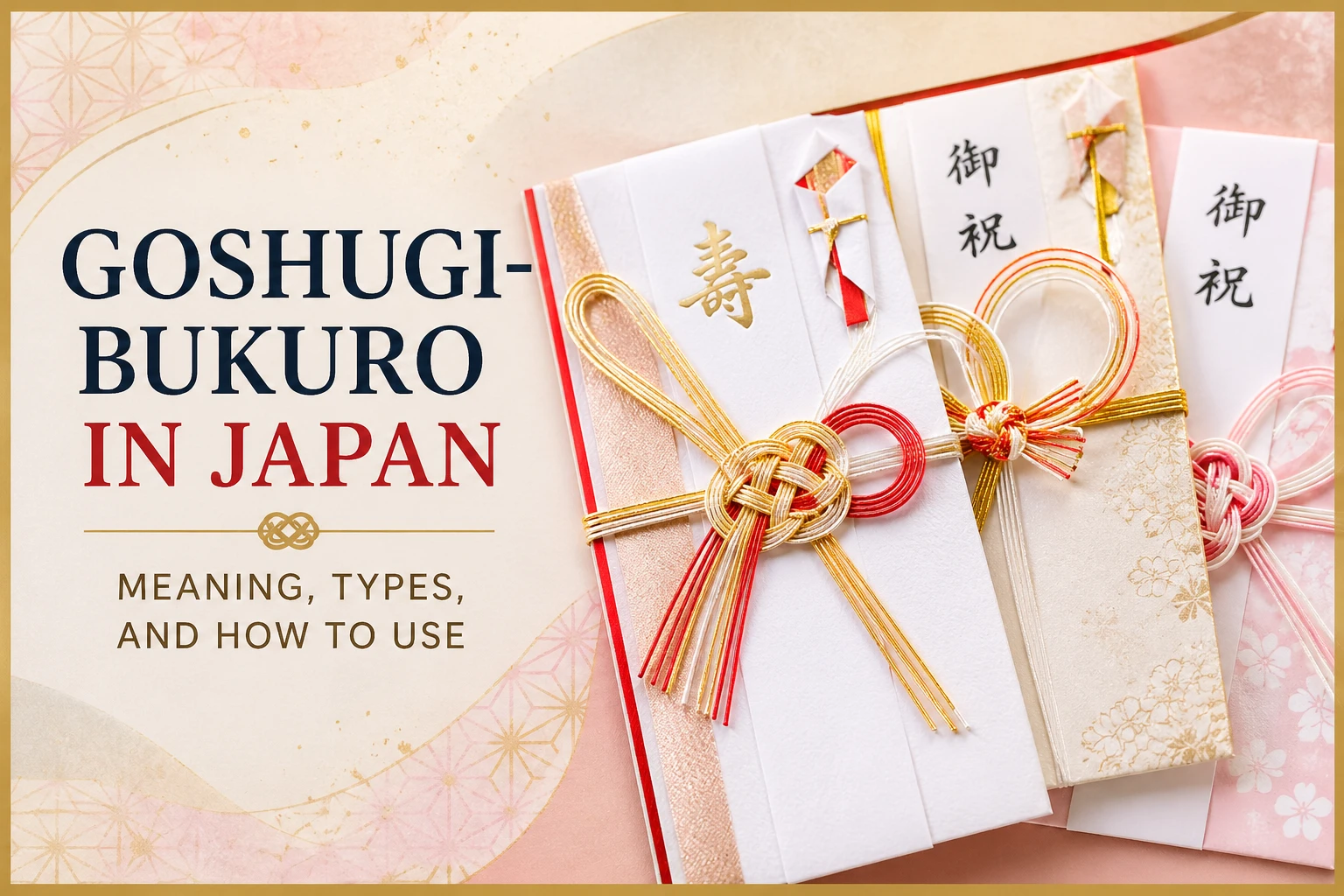

Goshugi-bukuro in japan
In Japan, giving money is not just a practical act—it is a cultural expression. A goshugi-bukuro is a decorative envelope used to present money for celebrations such as weddings or special occasions. Rather than handing over cash directly, people carefully choose, prepare, and present it in a way that reflects respect, intention, and tradition.
Contents
- What is a Goshugi-bukuro?
- When do you use it?
- Types of Goshugi-bukuro
- How to write a Goshugi-bukuro
- How much money should you give?
- How to give it properly
- Goshugi-bukuro in modern Japan
- Travel tips
- Trivia
- FAQ
What is a Goshugi-bukuro?
A goshugi-bukuro is a special envelope used to give money as a gift for celebrations in Japan. It is commonly used for weddings, births, and other joyful occasions.
Unlike a simple envelope, it is often decorated with mizuhiki (decorative cords), symbolic colors, and formal writing. These elements are not just decorative—they carry cultural meanings related to luck, relationships, and respect.
When do you use it?
Goshugi-bukuro are used in a variety of celebratory situations:
- Weddings — the most common and formal use
- Birth celebrations — welcoming a new child
- School entrance / graduation
- New house celebrations
Each situation may require a slightly different style of envelope, which is why choosing the right one matters.
Types of Goshugi-bukuro
There are several types of goshugi-bukuro, and using the wrong one can be considered inappropriate.
- Wedding envelopes — highly decorative, often with elaborate mizuhiki knots
- General celebration envelopes — simpler designs for everyday celebrations
- Casual versions — used for smaller amounts or informal situations
Important
Don’t confuse celebration and funeral envelopes.
Celebration envelopes use red and white or gold, while funeral envelopes use black and white or silver.
In Japanese culture, red and white symbolize happiness and celebration, while black and white represent mourning and farewell.
How to write a Goshugi-bukuro
Writing a goshugi-bukuro correctly is an essential part of the tradition.
- Front (top): write phrases like “寿” (for weddings) or “御祝” (general celebration)
- Front (bottom): your name
- Inside: amount of money (written formally)
Clean handwriting and correct placement show respect toward the recipient.
How much money should you give?
The amount depends on the occasion, but there are common guidelines:
- Wedding: typically 30,000 yen
- Close family: higher amounts
- Friends: around 20,000–30,000 yen
In Japan, odd numbers are preferred because they cannot be easily divided, symbolizing an unbreakable relationship.
How to give it properly
Presentation matters just as much as the gift itself.
- Use a fukusa (cloth) to carry it — in Japanese culture, this shows respect and protects the envelope from being bent or damaged.
- Hand it over with both hands
- Offer a short polite phrase
This reflects the importance of etiquette in Japanese culture.
Goshugi-bukuro in modern Japan
Even in today’s digital and cashless society, goshugi-bukuro remains widely used, especially for formal occasions.
While some aspects have become more casual, the core idea—showing respect through presentation—remains unchanged.
Travel tips
- You can buy goshugi-bukuro at convenience stores and stationery shops
- Choose the design carefully depending on the occasion
- If unsure, ask staff or choose a simple “御祝” version
Trivia
- Mizuhiki knots symbolize connection and relationships
- Red and white colors represent celebration and good fortune
- New bills are preferred, especially for weddings, as they symbolize a fresh start
FAQ
Can I use a regular envelope?
No. Using a proper goshugi-bukuro is part of the cultural etiquette.
Can foreigners use it?
Yes. Even if not perfect, the effort is appreciated.
What happens if I use the wrong one?
It may be seen as a cultural mistake, especially at formal events.

Related Guides
EXPLORE
Popular next steps
Explore pages that fit this topic, popular picks, and useful tools to try next.
Similar articles
Popular picks
Explore more tools, stories, and travel ideas across The Wa Story.