
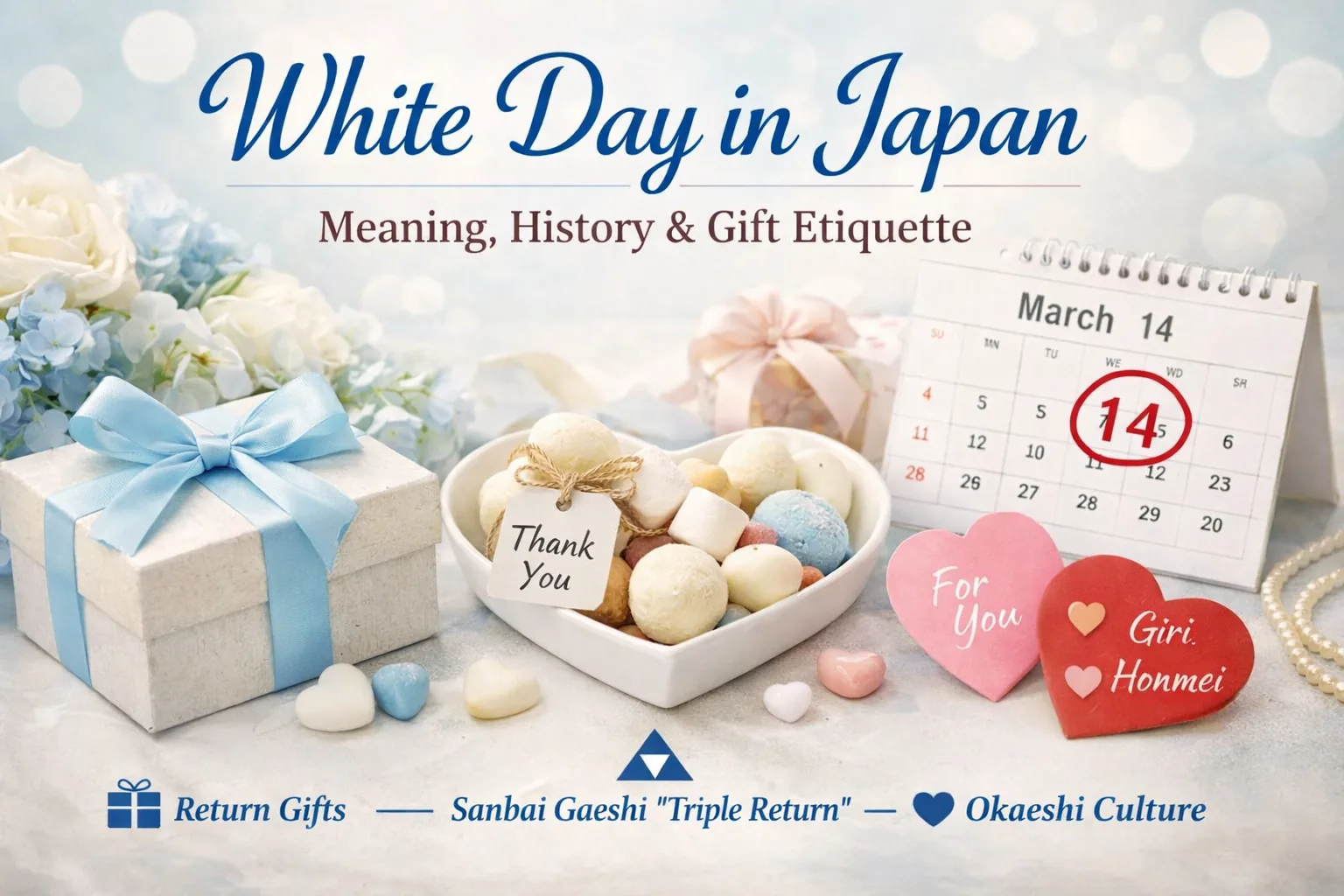

White Day in Japan
Seasonal Culture Guide – White Day in Japan
Quick Summary
White Day in Japan (March 14) is the “return-gift” day that follows Valentine’s Day. If someone gave you chocolates or a small gift on February 14, White Day is when you say thanks—often with sweets, flowers, or something thoughtfully chosen. Today, it is less about strict “rules” and more about a warm, fair-feeling way to acknowledge kindness.
Quick facts
- Date: March 14 (one month after Valentine’s Day)
- What happens: Return gifts for what you received on Feb 14
- Common gifts: Cookies, candies, white chocolate, small accessories, flowers
- Vibe today: More “thoughtful and fair” than “mandatory and expensive”
What is White Day?
White Day is a modern Japanese seasonal custom: a follow-up to Valentine’s Day where the receiver returns a gift about a month later. It’s a small ritual of reciprocity—less about grand romance, and more about acknowledging effort and keeping relationships smooth.
In Japan, gift exchange often carries an unspoken “balance” idea: if you receive something, you respond with gratitude in a tangible form. White Day fits that broader culture of okaeshi (returning a favor), but in a light, seasonal way.
Why White Day feels “very Japan”
Why Japanese think/do this: In everyday life, many relationships in Japan are maintained through small, visible acts of consideration. Returning a gift is not just “paying back”—it’s a way to show you noticed the effort and you value the relationship. White Day turns that idea into a friendly seasonal script, making gratitude easier to express without heavy words.
- Okaeshi mindset: a gentle “thank you” that keeps things balanced
- Social comfort: a clear timing helps avoid awkwardness or guessing
- Presentation matters: neat wrapping and thoughtfulness often matter as much as price
In other words, White Day is best understood as a cultural “relationship smoother” rather than a strict romantic rulebook.
Origin: from “Marshmallow Day” to White Day
White Day is widely described as a confectionery-industry campaign that took off in the late 1970s. One well-known origin story connects an early push to marshmallows as a symbolic “white” return gift, sometimes described as “Marshmallow Day,” before the concept spread more broadly as White Day.
However you tell the origin, the key point for readers is simple: White Day is a modern tradition shaped by gifting culture and seasonal marketing, which is part of why it feels “very Japan” to many travelers—structured, symbolic, and sweet.
What people give (and what it can mean)
While “white” sweets (white chocolate, marshmallows) are a classic motif, real-life White Day gifts span a wide range. The best choice depends on the relationship, the context, and what you received on Valentine’s Day.
- Cookies: Friendly, easy, “everyone can enjoy.”
- Candy: Simple and cheerful, common for casual exchanges.
- White chocolate: The iconic “White Day” look.
- Small accessories: A step more personal—works best when you know the person well.
- Flowers: A clean, universally appreciated “thank you.”
When in doubt, choose something modest but well-presented. In Japan, thoughtfulness and neat presentation often matter as much as price.
Gift etiquette: coworkers, friends, partners
The easiest way to avoid awkwardness is to match the “weight” of the relationship. Here’s a practical guide:
Coworkers / group gifting
- Keep it simple: individually wrapped sweets are the safest.
- Aim for “equal and easy”: no one should feel pressured to respond again.
- If you received a small “obligation chocolate,” return a small, polite gift.
Friends
- Choose something that feels personal but not intense: favorite snack, cute local sweets, a small token.
- If you’re traveling, a regional specialty (omiyage-style) is an easy win.
Partners
- Make it feel intentional: a note, a planned dessert date, or a gift tied to their tastes.
- Ignore “rules” if they don’t fit you—today, many couples treat it as flexible and fun.
You may hear the phrase sanbai gaeshi (“triple the return”), meaning the return gift should be two to three times the value. Treat it as folklore-level guidance, not a requirement. A thoughtful match is more modern—and usually more welcome.
How White Day is changing
In recent years, Japan’s Valentine/White Day customs have been shifting. “Obligation” gifting to coworkers has declined in many workplaces, and younger people are less tied to strict gender roles or fixed scripts. As a result, White Day is increasingly about mutual appreciation rather than social pressure.
For travelers, that’s good news: you’ll still see beautiful seasonal gift displays—especially in department stores—but you’ll also notice more “choose what you actually like” vibes than in the past.
Travel tips: enjoying White Day in Japan
- Department store basements (depachika): Gorgeous seasonal sweets and gift sets, often with limited-time packaging.
- Convenience stores: Quick “good enough” White Day sweets—perfect for casual returns.
- Cafés: A dessert date can be the best return gift if you’re traveling together.
- Omiyage: If you’re leaving Japan soon after, regional sweets make thoughtful White Day returns back home.
Trivia
- It’s not only Japan: White Day is also known in places like South Korea and Taiwan, with local twists.
- “Marshmallow Day” story: One origin narrative ties early White Day marketing to marshmallows as the symbolic “white” return gift.
- Another March 14 fun fact: In many countries, March 14 is also Pi Day (3/14).
FAQ
Is White Day a public holiday in Japan?
No—shops and workplaces operate normally. It’s a cultural/customary day, not a national holiday.
Do you have to give a return gift?
In close relationships, many people do. In workplaces, it depends on the office culture. If you received a small gift, a small, polite return is usually appreciated—but it shouldn’t feel like a burden.
What’s a safe White Day gift?
Individually wrapped cookies or chocolates are the safest for coworkers and casual exchanges. For partners, choose something tied to their taste (or plan a dessert date).
Official Resources
Want to learn seasonal customs like this through travel-friendly context? Explore more guides in our Seasonal Japanese Stories.