
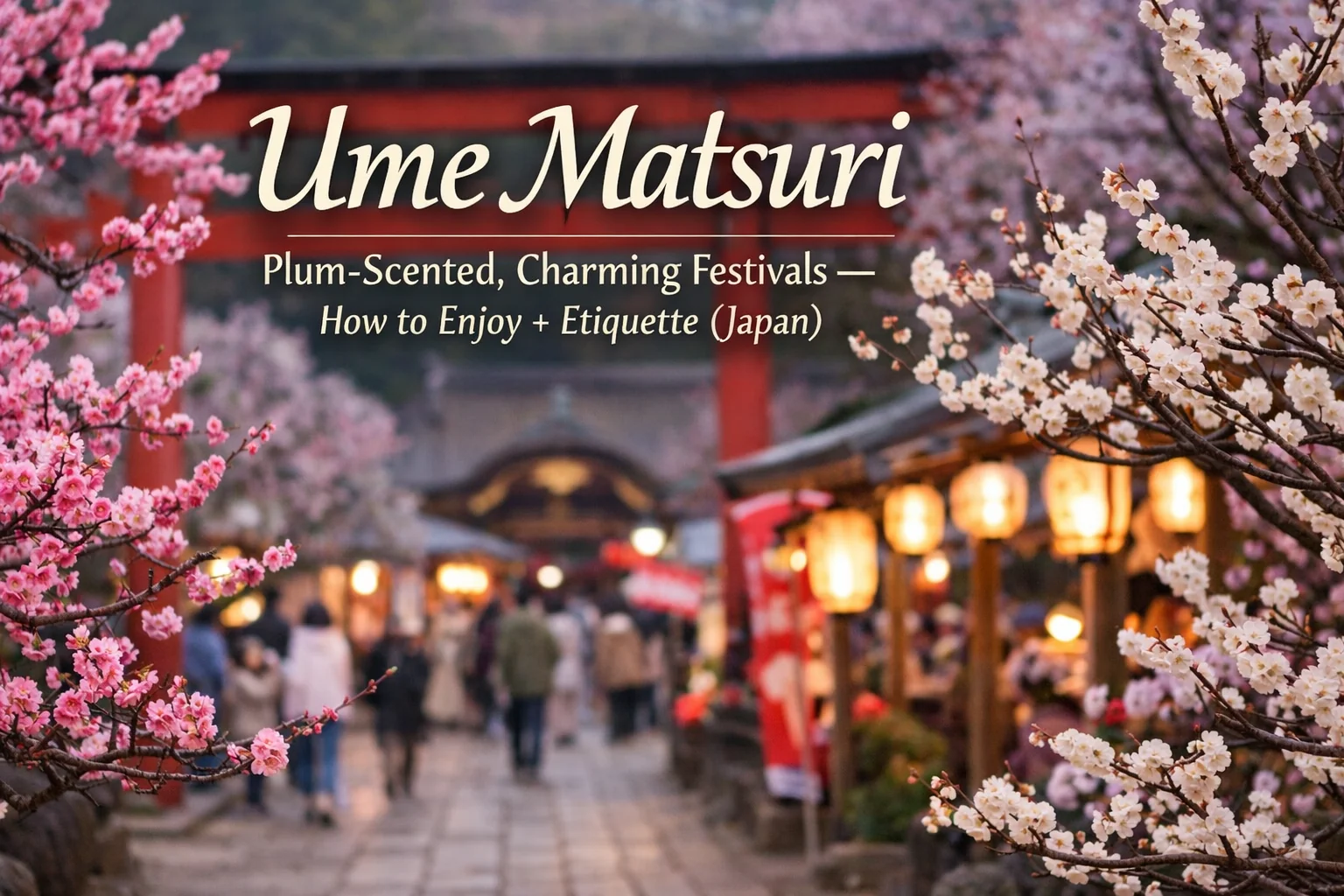

Ume Matsuri
Ume Matsuri (梅まつり) are Japan’s plum blossom festivals—early-spring celebrations built around delicate flowers, crisp air, and a fragrance that feels like the year’s first “real” hint of warmth. While cherry blossoms often steal the spotlight, plum blossoms (ume) bloom earlier, and the mood is different: quieter, more contemplative, and often closely tied to shrines and seasonal rituals.
This guide explains what Ume Matsuri are, when they usually happen, how to enjoy them respectfully, what to eat and photograph, and where to find classic examples—from shrine grounds in Tokyo to famous plum gardens in Ibaraki and Kyoto.
Want the cultural background, timing by region, and etiquette for plum blossom season? Read our guide: Plum Blossom in Japan (Ume): best time & places.
- Best season: late winter to early spring (timing varies by region and weather).
- Expect: plum groves, light performances, tea corners, small stalls, and shrine etiquette in some venues.
- Go for fragrance: ume blossoms are known for their scent—slow down and enjoy it.
- Plan smart: aim for late morning on weekdays; weekends can be crowded at famous sites.
- Photos: shoot blossoms against dark branches, lanterns, or shrine architecture for strong contrast.
Ume Matsuri: what it is and why it matters
“Ume” (plum) blossoms arrive when winter still lingers. That’s why they’re often read as a symbol of endurance and a gentle kind of optimism: not a loud “spring is here,” but a promise that spring is on the way. Many festivals happen in gardens famous for plum trees, while others take place at shrines—especially Tenmangu shrines connected to learning and scholarship—where plum trees are part of the landscape and the tradition.
Culturally, plum blossoms are also a reminder that Japan’s seasonal calendar is layered: the year doesn’t “turn” on a single day. Instead, it shifts in steps—temperature, light, scent, and small rituals that help people feel the change. Ume Matsuri fits that rhythm perfectly.
When to go (bloom timing)
Ume bloom timing depends on region and weather, but the season generally runs from late winter to early spring. In many areas, you’ll see blossoms before cherry season starts. If you’re choosing a date, treat it like cherry blossoms: look for “bloom updates” from the venue, not just a calendar range.
- Warm regions: earlier blooms (often when the air is still sharp).
- Cooler regions: later blooms, sometimes extending into March.
- Best viewing window: a short peak period—go as soon as you see “best time to visit” updates.
How to enjoy Ume Matsuri
1) Walk slowly—ume is a “scent festival” as much as a visual one
Unlike cherry blossoms, which often read as a sky-wide spectacle, plum blossoms reward close viewing. Step in, notice the buds, and pay attention to fragrance—especially on calm mornings.
2) Look for tea moments
Some festivals feature tea corners, tea ceremonies, or seasonal sweets. Even when it’s informal, a warm drink in cold air is part of the charm.
3) Try seasonal flavors
If there are stalls, you’ll often find comforting winter-to-spring foods. When you see plum-themed items—like ume sweets or plum drinks—treat them as “season markers,” not just snacks.
4) Photograph for contrast
Ume blossoms often pop against dark branches and winter skies. Try framing blossoms with shrine gates, lanterns, or traditional roofs. A slightly overcast day can actually be ideal for soft detail.
Etiquette basics (especially at shrines)
- Stay on paths: protect roots and planted areas (especially in groves).
- Don’t pick blossoms: it damages trees and ruins the view for everyone.
- Keep voices gentle: many venues aim for a calm atmosphere.
- At shrines: be mindful near worship areas—performances and stalls may be lively, but the core space is still sacred.
If you want a quick refresher on shrine manners, keep this handy: Japanese Etiquette Basics.
Where to see plum blossoms: classic examples
Ume Matsuri exist across Japan. Here are a few well-known “types” of experiences—use these as references and then pick the best option near your trip route.
Garden-style festivals (large plum groves)
Mito / Kairakuen (Ibaraki): A famous example is the Mito Plum Blossom Festival at Kairakuen, often introduced as running from late February to late March. It’s one of the best-known large-scale plum events in eastern Japan. (Always confirm the year’s dates and bloom updates before you go.)
Shrine-style festivals (Tenmangu & local celebrations)
Tokyo / Yushima Tenjin: Yushima Tenjin (Yushima Tenmangu) is a long-known plum-viewing spot and hosts a plum festival atmosphere during bloom season.
Fixed-date cultural events
Kyoto / Kitano Tenmangu (Baikasai, Feb 25): A signature date on Kyoto’s seasonal calendar—plum blossoms, a special tea ceremony, and a uniquely “Kyoto” cultural mood. This is a great choice if you want a clear date to plan around.
Travel tips
- Weekdays win: if you can, go on a weekday late morning for better photos and less crowding.
- Dress for “almost spring”: mornings and evenings can still feel like winter—layers matter.
- Check bloom reports: festivals may run for weeks, but peak bloom can be short.
- Pair it with planning: link your trip timing to your seasonal calendar notes: Japanese Calendar.
Trivia (quick cultural notes)
- Plum before cherry: many people associate spring with sakura, but ume often arrives first—like a “preview” of the season.
- Ume is also food culture: ume appears as umeboshi (pickled plum), umeshu (plum liqueur), and plum-flavored sweets.
- Tenmangu connection: many Tenmangu shrines feature plum trees, tying blossoms to scholarship and seasonal shrine culture.
- Color range: ume blossoms can be white, pale pink, or deeper pink/red—each grove can look surprisingly different.
FAQ
Is Ume Matsuri the same as hanami?
“Hanami” broadly means flower viewing, and it can include plum blossoms—but internationally it’s most associated with cherry blossoms. Ume viewing tends to be earlier and often calmer.
Do I need tickets?
It depends on the venue. Some gardens charge admission during peak season; many shrines are free to enter, but may have special areas or events. Check the venue’s official page.
What if I miss peak bloom?
You can still enjoy the atmosphere—buds, fragrance, and early spring light—but if blossoms are your priority, follow bloom updates and be flexible by a few days.
Related guides
- Plum Blossom in Japan (Ume) – Best time by region, etiquette, and seasonal planning tips for ume season.
- Japanese Calendar (holidays, seasonal timing)
- Japanese Etiquette Basics
- Cultural Itineraries (trip planning ideas)