
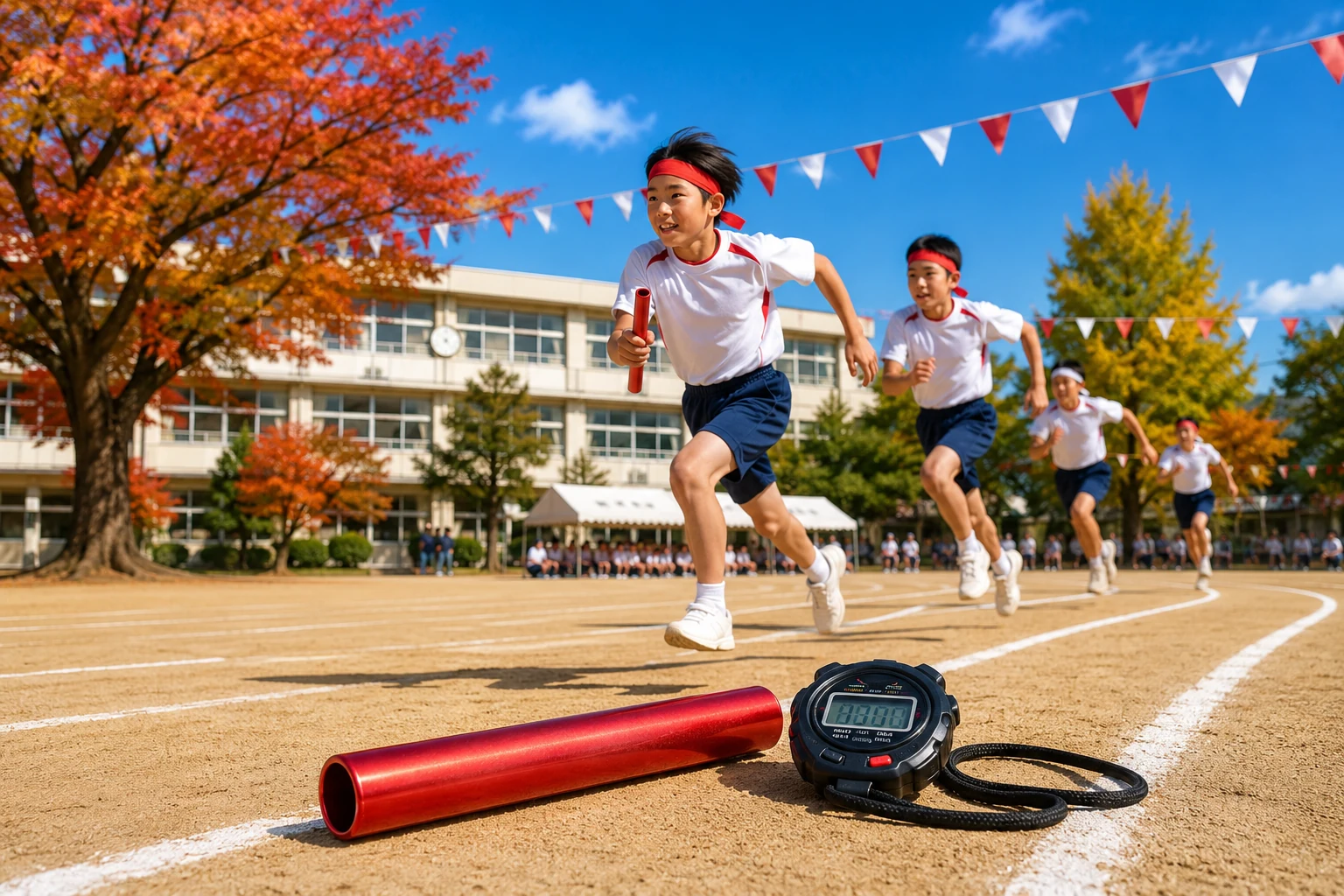

Sports Day in Japan is a national holiday held on the second Monday of October. In Japanese, it is called Supōtsu no Hi, or スポーツの日. The holiday encourages people to enjoy sports, respect others, and think about health and active living. It also has roots in the 1964 Tokyo Olympics, making it a modern holiday connected with movement, community, and Japan’s postwar international identity.
Quick Summary
- Date: The second Monday of October
- Japanese name: Supōtsu no Hi, written スポーツの日
- Former name: Health and Sports Day, or Taiiku no Hi, written 体育の日
- Meaning: A day to enjoy sports, respect others, and support a healthy, active society
- Historical roots: Connected with the 1964 Tokyo Olympics
- Seasonal feel: An autumn holiday often associated with school sports festivals, community events, and outdoor activity
What Is Sports Day?
Sports Day is one of Japan’s national holidays. In Japanese, it is called Supōtsu no Hi. The word supōtsu means “sports,” and hi means “day.”
The holiday is meant to encourage people to enjoy sports, build respect for others, and support a healthy and energetic society. This makes Sports Day more than a day for athletes. It is also about movement, teamwork, community, and well-being.
For many people in Japan, Sports Day has an autumn feeling. October is usually cooler than summer, making it easier to spend time outdoors. Schools, communities, and local groups may hold sports-related events around this season, although not every event happens on the holiday itself.
When Is Sports Day?
Sports Day is held on the second Monday of October. Because it follows the Monday holiday system, the exact date changes every year.
In 2026, Sports Day falls on Monday, October 12. Since it is always observed on a Monday, it usually creates a three-day weekend with Saturday and Sunday.
For travelers, this timing matters. October is one of Japan’s more comfortable travel months, and a long weekend can make popular destinations, trains, hotels, parks, and event areas busier than usual.
From Health and Sports Day to Sports Day
Sports Day was formerly known in English as Health and Sports Day. In Japanese, it was called Taiiku no Hi, or 体育の日. The word taiiku is often translated as “physical education.”
The name later changed to Sports Day, or Supōtsu no Hi. The newer name feels broader and more contemporary, and it uses the loanword supōtsu, which is widely understood in modern Japanese.
This shift from “physical education” to “sports” also changes the feeling of the holiday slightly. It sounds less like a school subject and more like a shared activity that people of many ages can enjoy.
The 1964 Tokyo Olympics Connection
Sports Day has an important connection with the 1964 Tokyo Olympics. The original holiday was created to commemorate those Games, which were a major moment in postwar Japan’s return to the international stage.
The holiday was first established in 1966. At first, it was held on October 10, the date of the opening ceremony of the 1964 Tokyo Olympics. Beginning in 2000, it moved to the second Monday of October under Japan’s Monday holiday system.
Because of this history, Sports Day is not only about exercise. It also carries a memory of modern Japan, international exchange, public health, and the idea of building a lively society through sports.
Sports Day and School Sports Festivals
Sports Day is often associated with school sports festivals, known as undōkai. These events are common in Japanese schools and may include races, relays, tug-of-war, group dances, cheering squads, and team competitions.
An undōkai is not always held on Sports Day itself. Schools choose their own schedules, and some hold sports festivals in spring rather than autumn. Still, the image of children running, cheering, and competing in teams fits naturally with the spirit of Sports Day.
For many families, school sports festivals are memorable community events. Parents come to watch, children practice in advance, and classes or teams often work together toward a shared goal. This makes sports part of school life, family memory, and local community culture.
How Sports Day Is Celebrated Today
Sports Day does not have one fixed household ritual. There is no special food that everyone eats and no nationwide decoration linked to the holiday.
Instead, people may enjoy sports events, exercise programs, local activities, school events, family outings, or a relaxed long weekend. Some communities and organizations may hold fitness-related programs, public sports events, or health activities around this period.
Others simply use the day to rest, travel, or enjoy autumn weather. In that sense, Sports Day is both practical and symbolic: it is a day off, but it also encourages people to value movement, health, and respect through sport.
Sports Day and Autumn Travel in Japan
Sports Day can be a pleasant time to travel in Japan. By October, the intense heat of summer has usually eased in many regions, and outdoor sightseeing becomes more comfortable.
However, because Sports Day creates a three-day weekend, domestic travel can increase. Trains, hotels, highways, parks, museums, and popular sightseeing areas may be more crowded than on a normal weekday.
If you are visiting Japan around Sports Day, consider booking long-distance transportation and accommodation early. It is also wise to check local event calendars, because autumn festivals, school events, sports programs, and regional activities may overlap with the holiday weekend.
October weather is generally travel-friendly, but rain and typhoons are still possible depending on the year and region. For outdoor plans, keep a flexible schedule and prepare both indoor and outdoor options.
Culture Note: Sports, Teamwork, and Community
Sports Day is useful for understanding a side of Japanese culture that is not always visible in temples, gardens, or traditional arts. It points to the role of group effort, discipline, encouragement, and public participation in everyday life.
School sports festivals often emphasize teamwork as much as individual victory. Children may compete, but they also practice together, cheer together, carry equipment, help organize events, and support classmates. The event becomes a lesson in cooperation as well as physical activity.
This does not mean every person in Japan is sporty, or that everyone celebrates the day in the same way. Rather, Sports Day shows how modern Japanese holidays can connect health, education, community, and seasonal rhythm.
Like Marine Day and Mountain Day, Sports Day also turns an everyday value into a public calendar moment. It asks people to pause and recognize something that supports daily life: in this case, movement, health, respect, and shared activity.
Trivia
Sports Day Used to Be on October 10
The original date was October 10, chosen because it was the opening day of the 1964 Tokyo Olympics. The holiday later moved to the second Monday of October.
The Old Japanese Name Was Taiiku no Hi
Before becoming Supōtsu no Hi, the holiday was known as Taiiku no Hi, or 体育の日. This is why some older English materials call it Health and Sports Day.
Sports Day Is Not Only for Athletes
The holiday is not limited to competitive sports. Its wider meaning includes health, respect for others, community participation, and active living.
School Sports Festivals Are Called Undōkai
Undōkai are school sports festivals that often include races, relays, team games, cheering, and group performances. They are closely associated with the cultural image of sports in Japan.
FAQ
Is Sports Day a public holiday in Japan?
Yes. Sports Day is a national holiday in Japan, held on the second Monday of October.
When is Sports Day in 2026?
In 2026, Sports Day falls on Monday, October 12.
What is Sports Day called in Japanese?
Sports Day is called Supōtsu no Hi, written スポーツの日. It was formerly known as Taiiku no Hi, written 体育の日.
Why was Sports Day created?
Sports Day has roots in the 1964 Tokyo Olympics. It was created to encourage sports, health, respect for others, and an active society.
Do Japanese schools hold sports festivals on Sports Day?
Some schools may hold sports-related events around this season, but not every school holds its sports festival on Sports Day itself. School schedules vary by region and school.
Is Sports Day a good time to travel in Japan?
It can be a good time to travel because October weather is often comfortable. However, Sports Day creates a long weekend, so popular destinations and transportation may be busier than usual.

EXPLORE
Popular next steps
Explore pages that fit this topic, popular picks, and useful tools to try next.
Similar articles
Popular picks
Explore more tools, stories, and travel ideas across The Wa Story.