
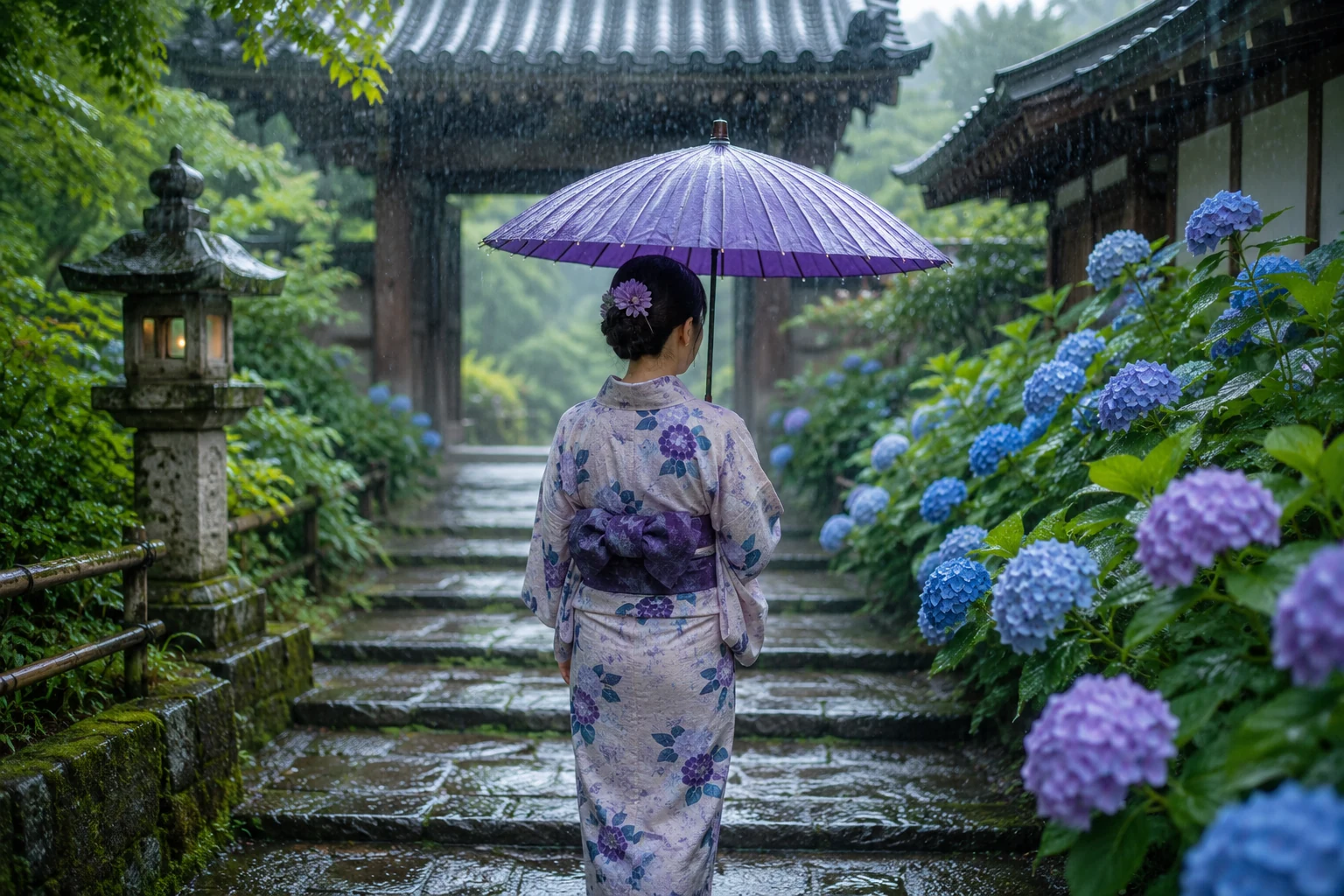

Rainy Season
Rainy season in Japan, known as tsuyu or baiu, is the cloudy, humid, rain-filled stretch of early summer. It usually affects much of Japan from June to July, though the timing changes by region because Japan stretches far from south to north. For travelers, rainy season is not simply “bad weather.” It is also a season of hydrangeas, temple gardens, quiet streets, indoor cultural experiences, and practical planning.
Quick Summary
- Japanese names: Tsuyu or Baiu, written 梅雨
- Typical timing: Around June to July in much of Japan
- Regional difference: Okinawa and Amami usually experience it earlier; Hokkaido is less affected
- Weather feel: Cloudy days, humidity, steady rain, sudden showers, and occasional sunny breaks
- Seasonal highlights: Hydrangeas, lush gardens, quieter temples, museums, cafés, craft experiences, and onsen trips
- Today’s travel note: Rainy season can feel uneven, with some years bringing shorter rainy periods, sudden downpours, or heavier rain events
- Travel impact: Pack for rain and humidity, keep flexible plans, and check weather warnings during heavy rain
What Is Rainy Season in Japan?
Rainy season in Japan is the early-summer period when many regions experience more cloudy, wet, and humid days. In Japanese, it is called tsuyu or baiu, both written with the characters 梅雨.
It does not mean that it rains heavily every minute of every day. A typical rainy-season week may include steady rain, misty mornings, sudden showers, gray skies, and occasional sunny breaks. The air often feels humid, and laundry may take longer to dry.
For travelers, rainy season can be inconvenient, but it also has a softer beauty. Gardens become lush, moss looks vivid, hydrangeas bloom, and temples or old streets can feel calm and atmospheric in the rain.
When Is Rainy Season in Japan?
In much of Japan, rainy season usually falls from June to July. The exact start and end dates change by region and year.
Japan is long from south to north, so rainy season does not arrive everywhere at the same time. It generally begins earlier in the south and shifts gradually northward. Okinawa and Amami usually experience rainy season earlier than mainland Japan, while regions such as Kyushu, Shikoku, Kansai, Chubu, Kanto, and Tohoku tend to enter and leave the season later.
Hokkaido is relatively less affected by the main rainy-season pattern. This is why an early-summer trip in Sapporo or other parts of Hokkaido may feel quite different from a June trip in Tokyo, Kyoto, or Kyushu.
Because the rainy season changes by region and year, travelers should treat dates as a general guide, not a fixed promise. It is always best to check the current forecast and local weather updates before travel.
Rainy Season Today: Recent Weather Trends
In recent years, rainy season in Japan can feel less predictable than a simple “June rain” image suggests. Some years may feel shorter or patchier, while others bring intense rain in a short period. For travelers, this means it is better to prepare for both humid gray days and sudden heavy rain.
Japan’s weather agencies and climate reports have increasingly emphasized the importance of heavy-rain preparedness. Extreme rainfall events can affect transportation, roads, rivers, mountain areas, and coastal routes, especially when rain continues for several days or becomes concentrated in a short time.
This does not mean rainy season is unsafe for travel by default. Many people travel comfortably during this period every year. However, today’s rainy-season planning should be flexible: check official forecasts, avoid risky outdoor routes during heavy rain, and keep indoor alternatives ready.
A modern rainy-season itinerary should balance seasonal beauty with weather awareness. Hydrangea temples, gardens, museums, cafés, workshops, and onsen towns can all work well, but mountain hikes, river areas, islands, ferries, and long rural routes need extra caution when heavy rain is forecast.
What Does Tsuyu Mean?
Tsuyu and baiu are both written 梅雨. The characters can be understood as “plum rain,” because the season comes around the time when Japanese plums ripen.
This name gives the season a cultural feeling. Rain is not only weather; it is part of the year’s rhythm. It arrives between spring and full summer, softening the landscape before the hotter months begin.
In daily Japanese, tsuyu is the more familiar word for the rainy season. You may hear phrases such as tsuyu-iri, meaning the start of rainy season, and tsuyu-ake, meaning the end of rainy season.
What Rainy Season Feels Like
Rainy season often feels humid, soft, and changeable. Some days are cool and gray, while others are warm, sticky, and bright between showers.
The hardest part for travelers is usually not the rain itself, but the humidity. Clothes may feel damp, shoes may stay wet, and hair or skin may react differently than usual. Indoor spaces, trains, and shops can also feel cold because of air conditioning, while outside air is humid.
Still, the season has its own charm. Temple gardens, stone paths, moss, bamboo, and hydrangeas often look especially beautiful in the rain. If you plan with flexibility, rainy season can feel peaceful rather than disappointing.
Best Things to Do During Rainy Season
Rainy season is a good time to choose activities that work with the weather instead of fighting it.
- Visit hydrangea spots: Hydrangeas are one of the signature flowers of rainy season in Japan. For route ideas, see our Hydrangea Highlights in Japan.
- Explore temple gardens: Rain can make moss, stone paths, and greenery feel more vivid.
- Plan museum days: Art museums, history museums, and small local museums are useful rainy-day anchors.
- Try cultural workshops: Tea ceremony, calligraphy, cooking, indigo dyeing, pottery, or craft experiences can fit rainy days well.
- Relax in an onsen town: Hot springs can be especially atmospheric when it rains.
- Use covered shopping streets: Arcades, station buildings, and department stores are practical during showers.
- Enjoy cafés and bookstores: Rainy afternoons are well suited to slower urban wandering.
The best rainy-season plans usually combine one outdoor highlight with one indoor backup. For example, visit a hydrangea temple in the morning, then move to a museum, café, or workshop if the rain becomes heavy.
What to Pack for Rainy Season
Packing well can make rainy season much easier. A small amount of preparation changes the whole experience.
- Compact umbrella
- Light rain jacket or packable shell
- Quick-dry clothing
- Breathable layers for humid outdoor air and cool indoor air conditioning
- Water-resistant shoes or sandals with good grip
- Extra socks
- Small towel or handkerchief
- Plastic or waterproof pouch for wet items
- Anti-humidity hair or skin-care items if needed
- Portable battery, especially if you rely on weather and transit apps
Shoes matter more than many travelers expect. Avoid shoes that become slippery, heavy, or uncomfortable when wet. If your itinerary includes temple paths, gardens, or older stone streets, choose footwear with reliable grip.
Rainy Season Travel Tips
Rainy season travel works best with flexible planning. Instead of building a schedule that depends entirely on sunny weather, create a mix of outdoor, indoor, and short-distance options.
Check the weather forecast regularly, especially if you plan to visit mountains, rivers, islands, coastal areas, or rural destinations. Heavy rain can affect trains, buses, roads, trails, and ferry services.
If a weather warning is issued, follow local instructions and official safety information. Japan’s weather alerts may include advisories, warnings, and emergency warnings for severe conditions such as heavy rain and strong winds.
Practical strategies include starting outdoor plans earlier in the day, keeping travel distances shorter, booking refundable or flexible activities where possible, and choosing accommodations near stations or covered shopping areas.
Culture Note: Why Rain Has a Place in Japanese Seasonal Life
Rainy season is not usually marketed as Japan’s most glamorous travel season, but it has a deep place in seasonal life.
Japanese culture often pays attention to subtle shifts in weather, flowers, light, and sound. Rain changes the atmosphere of a place. It softens colors, deepens the green of moss, darkens wood and stone, and makes temple gardens feel quieter.
This is why rainy season can be more than a travel challenge. It is also a way to notice Japan’s early summer mood: umbrellas at stations, hydrangeas beside paths, wet stone lanterns, mist over hills, and the sound of rain in gardens.
If cherry blossom season is about brief brightness, rainy season is about patience and texture. It asks travelers to slow down, adjust, and see beauty in weather that is not perfect.
Trivia
Tsuyu and Baiu Use the Same Characters
Both tsuyu and baiu are written 梅雨. Tsuyu is common in everyday conversation, while baiu is often seen in more formal or meteorological contexts.
梅雨 Literally Points to Plum Rain
The characters 梅雨 are associated with rain around the time when plums ripen. This gives the season a name connected to agriculture and seasonal change.
Hokkaido Is Different
Hokkaido is generally less affected by Japan’s main rainy-season pattern, which is why some travelers consider it a useful option for early-summer trips.
Rainy Season Is Not Typhoon Season
Rainy season and typhoon season are not the same. Rainy season is the early-summer wet period, while typhoons are more commonly associated with later summer into autumn, though weather can vary by year.
FAQ
When is rainy season in Japan?
In much of Japan, rainy season usually falls from June to July. Because Japan stretches far from south to north, the season generally begins earlier in Okinawa and Amami, then shifts northward through mainland Japan. Hokkaido is less affected by the main rainy-season pattern.
What is rainy season called in Japanese?
Rainy season is called tsuyu or baiu, written 梅雨.
Does it rain every day during rainy season in Japan?
Not always. Some days have steady rain, while others are cloudy, humid, or partly sunny. The weather can change quickly, so flexible planning is useful.
Is rainy season changing in Japan?
Rainy season can feel more uneven in recent years, with some periods bringing shorter rainy stretches and others bringing stronger downpours or heavy-rain events. Travelers should check current forecasts instead of relying only on average dates.
Is rainy season a bad time to visit Japan?
Not necessarily. Rainy season can be humid and inconvenient, but it is also a beautiful time for hydrangeas, lush gardens, museums, onsen towns, and quieter cultural experiences.
What should I wear during rainy season in Japan?
Wear quick-dry clothing, breathable layers, and shoes that handle wet ground well. A compact umbrella, light rain jacket, and extra socks are also useful.
Where should I go in Japan during rainy season?
Good options include hydrangea temples, gardens, museums, covered shopping streets, onsen towns, and cultural workshops. Hokkaido can also be a good option if you want to reduce the chance of rainy-season weather.
EXPLORE
Popular next steps
Explore pages that fit this topic, popular picks, and useful tools to try next.
Similar articles
Popular picks
Explore more tools, stories, and travel ideas across The Wa Story.