
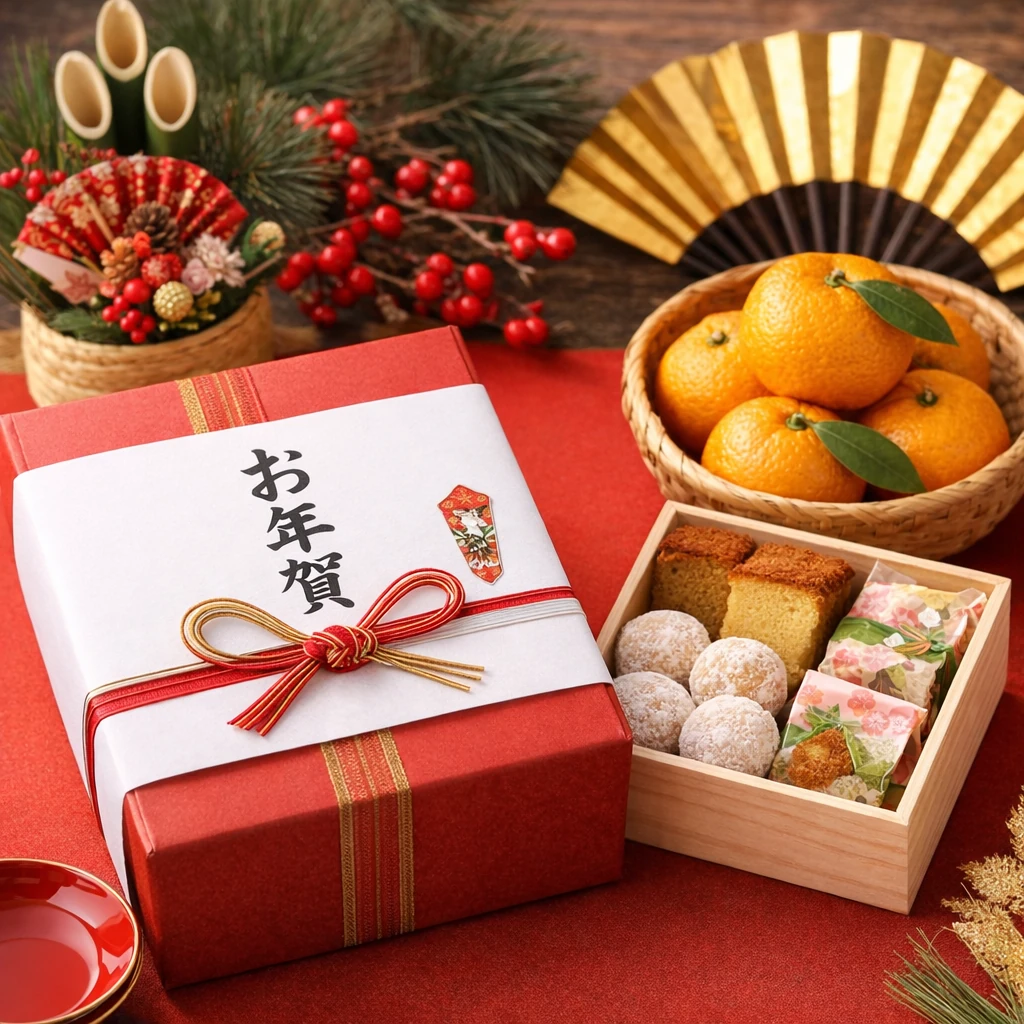

Onenga gift
Onenga (お年賀)—often written as “o-nenga”—is a Japanese New Year custom of bringing a small gift when visiting someone’s home in early January. It’s not about price; it’s about respect, gratitude, and starting the year with good relationships. This guide covers timing, gift choices, etiquette, how onenga differs from everyday host gifts, and what people tend to do today (in recent years) in both Japan and international family settings.
- Onenga is a small New Year’s gift for a host when you visit in early January.
- Temiyage is an everyday host gift; onenga is New Year–framed.
- Safe picks are shareable: sweets, tea, fruit, or local specialties.
- Today, many people keep onenga simpler and rely on polite wording over “perfect formality.”
- If you use noshi paper, writing 「お年賀」 is a standard label for New Year visits.
What Is Onenga?
Onenga (お年賀) is a small gift brought to a host when you visit their home around the New Year. It’s a seasonal way to say: “Thank you for having me, and I’m wishing you a good year.”
Onenga is different from otoshidama (New Year money given to children) and from year-end gifts such as oseibo. It is specifically connected to New Year greetings and visits.
Onenga vs. a Regular Host Gift (Temiyage)
Onenga can look similar to a normal host gift, but the meaning is slightly different. A regular host gift (temiyage / 手土産) is an everyday courtesy: “Thank you for having me.” Onenga is New Year–framed—it carries the seasonal greeting and “fresh start” feeling of early January.
- Onenga: a New Year visit gift (early January, seasonal framing)
- Temiyage: a year-round host gift (any visit, everyday courtesy)
If you are visiting in the first days of January, calling your gift “onenga” is natural. If you visit later—or you feel unsure—treat it as temiyage. The gift itself can be similar; the timing and wording are what change.
When to Give Onenga
Onenga is most commonly given when you visit someone’s home in early January—often within the first week of the year. Many families exchange these greetings during sanganichi (January 1–3) or shortly after.
If you visit later in January, it may no longer feel like “New Year timing.” In that case, a normal temiyage is usually the smoother choice.
Who This Guide Is For (Travelers & Families)
For travelers visiting Japan
If you are staying with a Japanese friend, visiting a host family, or joining a New Year gathering, onenga works like a host gift—with New Year meaning. Choose something compact, shareable, and easy to accept.
For international families and overseas Japanese households
If your New Year includes relatives, in-laws, or a mixed-cultural household, onenga can set a warm tone. Even outside Japan, the gesture communicates respect—especially when visiting elders or a host’s home.
What to Give (Safe Gift Choices)
The safest onenga gifts are modest, shareable, and easy for the household to enjoy together. Common choices include:
- Sweets (wagashi, cookies, small boxed treats)
- Tea or coffee
- Local specialties (a small regional souvenir)
- Fruit (seasonal, neatly packaged)
Travel-friendly picks
- Individually wrapped snacks (easy to share)
- Small tea tins or tea sachets
- Station/airport gift boxes (simple and culturally “expected”)
Family-visit picks
- A slightly nicer boxed sweet for elders
- Something the household can share after a meal
- A local specialty from your area (a natural conversation starter)
When in doubt, aim for “easy to accept,” not “impressive.”
Typical Budget and “How Much Is Enough?”
Onenga is usually modest in value. The “right amount” depends on the relationship, but the safest principle is balance: enough to show respect, not so much that the host feels pressure to reciprocate.
If your host prepared a large meal or you are staying overnight, a slightly nicer gift can be appropriate. For a short visit, keep it simple.
How to Give It (Simple Etiquette)
- Give the gift soon after greeting (not at the end).
- Use both hands when handing it over.
- Say a short phrase such as: “A small New Year’s gift for you.” or “Thank you for having me.”
- Keep wrapping clean and simple.
In Japan, a calm tone and clear gratitude often matter more than perfect technique.
Using Noshi Paper (Write “お年賀”)
For many casual visits, normal packaging is enough. However, if you want a more formal presentation (for elders, in-laws, or a host you want to honor), you may use noshi paper (熨斗紙).
When you use noshi paper for a New Year visit, the standard label (the front inscription) is: 「お年賀」.
We’ll cover types of noshi, ribbon styles, and writing rules in a dedicated guide: Noshi Paper: Japanese Gift-Wrapping Etiquette.
Onenga Today (Recent Trends)
Today (in recent years), many people keep onenga simpler than in the past—especially among friends or younger households. A well-chosen box of sweets and a warm greeting can feel “correct” without strict formality.
This shift is partly practical: families are busier, visits may be shorter, and some people avoid creating pressure through overly expensive gifts. The cultural core stays the same—starting the year with goodwill—while the style becomes more flexible.
When in doubt, choose a modest, shareable gift and focus on the greeting. If your host family has a clear custom, follow their lead.
Common Mistakes to Avoid
- Giving something too expensive (creates pressure)
- Choosing a gift that is hard to share
- Ignoring dietary restrictions or strong preferences
- Handing it over casually without a greeting
Trivia
The Japanese New Year traditionally emphasizes “resetting” life—clean beginnings, orderly relationships, and gratitude. That’s why onenga can feel meaningful even when the gift is simple.
FAQ
Is onenga required?
No, but it is a widely understood gesture when visiting someone’s home around New Year. If you are unsure, a small, modest gift is usually appreciated.
What if I’m not sure whether to call it onenga or temiyage?
Use timing as your guide. If you are visiting in early January, “onenga” is natural. If the visit is later—or you feel unsure—treat it as temiyage. The gift can be similar; the seasonal framing is what changes.
Do I need noshi paper?
Not always. For casual visits, normal packaging is fine. If you want a more formal presentation, noshi paper can be appropriate. For New Year visits, the common inscription is 「お年賀」.
Can foreigners give onenga?
Yes. If you keep it modest and present it respectfully, it is generally seen as thoughtful.
What if I visit after mid-January?
It may feel late for “New Year’s gift timing.” In that case, treat it as a normal host gift (temiyage), without emphasizing “onenga.”