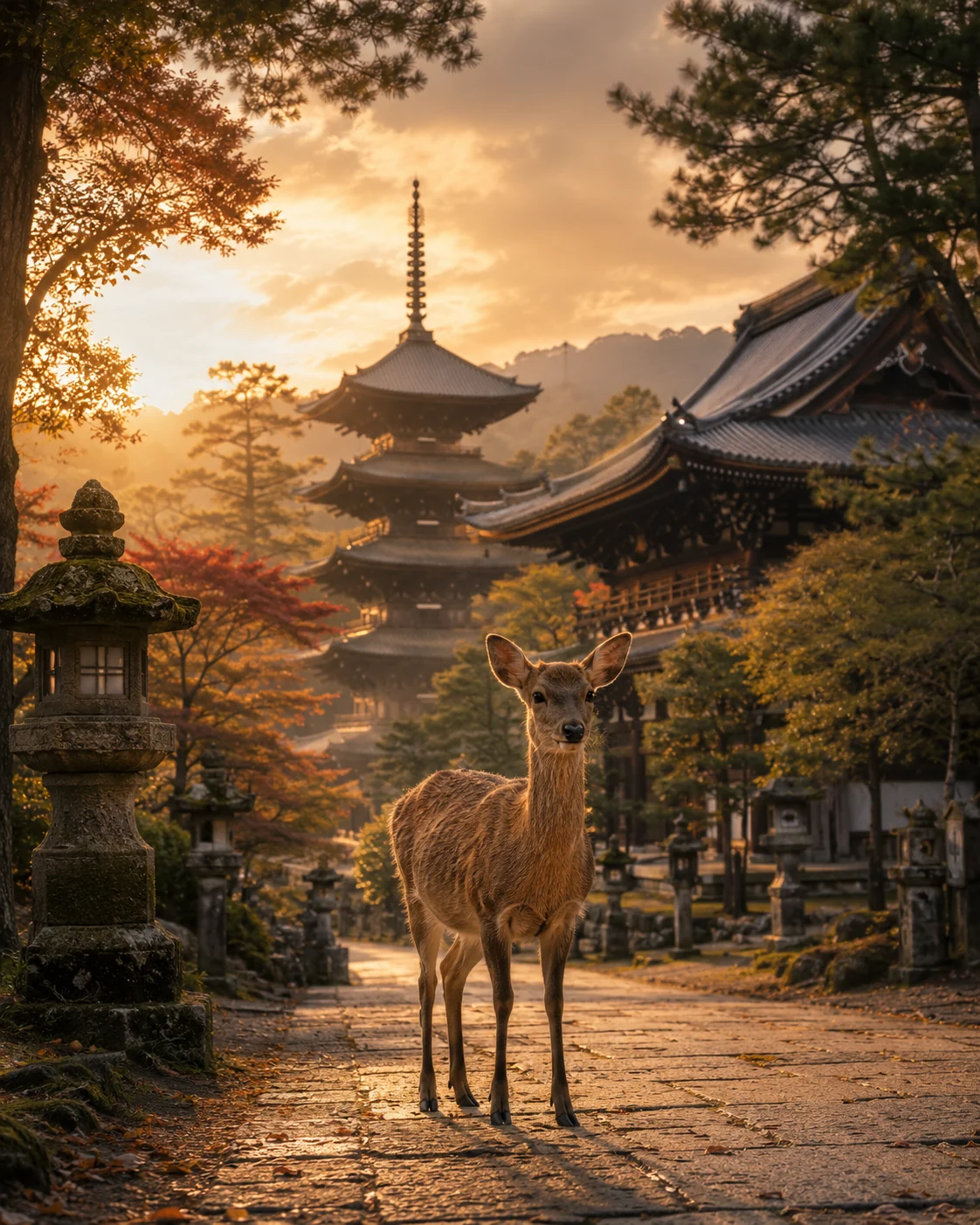

Nara Prefecture culture guide
Nara Prefecture is one of the best places to feel the older roots of Japanese culture. Before Kyoto became the symbol of refined old capital beauty, Nara was already shaping Japan’s religious, political, and artistic foundations through temples, Buddhist images, sacred mountains, ancient roads, and ritual landscapes.
This guide introduces Nara Prefecture as a cultural landscape, not simply as a collection of famous temples. From the deer of Nara Park to the old routes of Asuka, the mountain faith of Yoshino and Omine, and the quiet villages of the south, Nara reveals a Japan where history, nature, and sacred space still feel closely connected.
Quick Facts
| Region | Kansai |
|---|---|
| Historical Role | Early capital region and major center of Buddhism, court culture, ritual life, and ancient state formation |
| Cultural Keywords | Ancient temples, Buddhist sculpture, sacred deer, mountain faith, old roads, ritual landscapes, seasonal pilgrimage |
| Major Cultural Areas | Nara City, Asuka, Sakurai, Yoshino, Kashihara, Ikaruga, Tenkawa, Dorogawa, southern Nara |
| Key Traditions | Buddhist rituals, Kasuga faith, Shugendo mountain practice, fire ceremonies, deer protection, local festivals |
| Best Known For | Ancient Japan, temple culture, sacred deer, Buddhist art, old pilgrimage routes, and mountain spirituality |
A Short Cultural History of Nara
Nara’s cultural importance begins with its role in the formation of early Japan. In the 8th century, Heijo-kyo, located in present-day Nara City, became Japan’s first large-scale permanent capital. It was modeled with strong influence from continental East Asian urban planning, while also becoming a place where Japanese court culture, law, religion, and ceremony began to take clearer form.
Buddhism became one of Nara’s defining forces. Great temples such as Todai-ji, Kofuku-ji, Yakushi-ji, Toshodai-ji, and Horyu-ji were not only religious institutions. They were also centers of learning, art, ritual, architecture, and political authority. Buddhist sculpture, temple halls, and ceremonial practices from this period still shape how many people imagine ancient Japan.
Nara’s story is not limited to the city. Older cultural landscapes in Asuka and Sakurai preserve memories of early rulers, burial mounds, shrines, and ancient roads. To the south, Yoshino and the Omine mountains connect Nara to pilgrimage, mountain faith, poetry, cherry blossoms, and Shugendo practice. Together, these places make Nara feel less like one city and more like a layered map of Japan’s early spiritual and cultural memory.
Nara as Japan’s Ancient Spiritual Landscape
Nara holds a special place in Japanese culture because it allows visitors to encounter ancient Japan not only through objects, but through space. Temples stand near forests, deer move through shrine grounds, old roads cross rural valleys, and mountains remain connected to pilgrimage and prayer.
Kyoto often represents refined old capital culture, but Nara reaches further back. Its temples and sacred sites carry the feeling of a period when Buddhism, court rule, local deities, continental influence, and landscape-based faith were still being woven into the foundations of Japanese culture.
This is why Nara can feel quieter but deeper than many first-time visitors expect. Its cultural power is not always dramatic. It appears in the scale of a temple gate, the calm face of a Buddhist image, the presence of deer near a shrine, or the way a mountain path continues to hold religious meaning.
The Nara Character: Sacred Space and Ancient Memory
Nara’s character is shaped by a sense of nearness: sacred places feel close to daily life, ancient history feels close to the landscape, and nature feels close to religious practice. The result is a prefecture where culture often seems to rise from the ground itself.
Deer are one of Nara’s most recognizable symbols, but they are not only a charming image. In Nara Park and around Kasuga Taisha, deer are connected with older beliefs about sacred messengers and protected land. Their presence makes the boundary between nature, religion, and public space feel unusually visible.
Nara also has a quieter cultural tone than Kyoto. Instead of refined urban layering, Nara often gives a feeling of depth, age, and openness. Stone paths, temple courtyards, old trees, mountain trails, and rural villages all contribute to a cultural identity rooted in sacred space and ancient memory.
Temples, Buddhism & Ritual Life
Buddhist temple culture is central to Nara. Todai-ji, with its Great Buddha, expresses the scale of state Buddhism in ancient Japan. Kofuku-ji reflects the power of temple networks tied to aristocratic families, while Yakushi-ji and Toshodai-ji show the beauty of early Buddhist architecture, sculpture, and learning.
Horyu-ji in Ikaruga adds another layer. It is associated with some of the world’s oldest surviving wooden structures and with the early spread of Buddhism in Japan. Its buildings, statues, and layout help visitors sense how religion, art, and political vision came together in early Japanese state formation.
Nara’s temples are not only historical monuments. They remain active religious spaces where annual rituals, prayers, ceremonies, and seasonal events continue. This living ritual life is part of what keeps ancient Nara from feeling distant.
To experience Nara’s temple culture as part of a practical route, see our Nara Cultural Itinerary, which connects ancient temples, sacred deer, old capital memory, and quiet cultural landscapes.
Deer, Nature & Sacred Boundaries
Nara’s deer are famous around the world, but their meaning is deeper than tourism. Around Kasuga Taisha and Nara Park, deer have long been treated with special respect because of their association with the shrine and its sacred landscape.
Their presence changes how people experience Nara. A temple visit may begin with deer resting under trees. A shrine approach may feel shared with animals that move freely through the same space. This creates a cultural atmosphere where nature is not simply background scenery, but part of the sacred environment.
Nara’s relationship with nature also extends beyond the park. Forests, old trees, mountain paths, rivers, and rural valleys appear throughout the prefecture’s cultural geography. Sacred space in Nara is often felt through the meeting of human-made ritual and natural presence.
Crafts, Materials & Ancient Forms
Nara’s craft culture is closely tied to temple life, ritual objects, writing, and materials used in religious and courtly settings. Its traditions may feel quieter than Kyoto’s textile and tea-related crafts, but they carry a strong connection to ancient forms and sacred use.
Nara is known for items such as ink, brushes, calligraphy materials, lacquer-related work, woodcraft, textiles, and objects connected with temple and shrine culture. These crafts reflect a region where writing, prayer, preservation, and handwork have long been linked.
The material culture of Nara also appears in Buddhist sculpture, temple architecture, roof tiles, ritual implements, and preserved artifacts. Even when not described as “craft” in a modern sense, these objects show how skill, faith, and cultural memory were carried through wood, clay, metal, paper, and pigment.
Festivals, Fire Rituals & Community Memory
Nara’s festival culture often carries a strong ritual feeling. Some events are connected with Buddhist ceremonies, shrine processions, purification, mountain practice, or seasonal renewal. They are not only performances; they are ways of keeping memory active in a place.
Fire is especially powerful in Nara’s cultural imagination. Rituals such as the famous ceremonies connected with Todai-ji’s Nigatsu-do show how light, heat, prayer, and physical endurance can become part of religious experience. These events link the body to faith, season, and community.
Mountain areas add another layer through Shugendo and pilgrimage traditions. In places connected with Yoshino, Omine, Tenkawa, and Dorogawa, ritual movement through mountains becomes part of cultural memory. Nara’s performing and festival culture often feels close to prayer, landscape, and endurance.
Food Culture: Persimmon Leaves, Tea & Mountain Villages
Nara’s food culture is shaped by ancient history, inland geography, preservation methods, mountain villages, and temple influence. It is not as widely known internationally as Kyoto cuisine or Osaka street food, but it offers a quieter and deeply local view of Japanese food culture.
Kakinoha-zushi, sushi wrapped in persimmon leaves, is one of Nara’s best-known regional foods. It reflects the practical wisdom of an inland region where preservation, wrapping, and the fragrance of local leaves became part of taste and identity.
Nara is also associated with tea, somen noodles, local vegetables, pickles, sweets, and foods connected with temple and mountain communities. In southern Nara, food culture often feels tied to forests, rivers, village life, and seasonal ingredients.
Cultural Landscapes Across Nara Prefecture
Nara Prefecture is more varied than the image of Nara Park alone. Its cultural landscapes move from ancient capital sites to temple towns, old roads, rural valleys, mountain pilgrimage areas, and cherry-blossom slopes. Each area reveals a different layer of Nara’s identity.
Nara City: Temples, Deer and Ancient Capital Memory
Nara City is the most familiar entry point. Todai-ji, Kofuku-ji, Kasuga Taisha, Nara Park, and nearby museums make it the clearest place to encounter Nara’s combination of Buddhist culture, sacred deer, shrine life, and ancient capital history.
Asuka: Early Japan in the Landscape
Asuka preserves an older layer of Japanese history through burial mounds, stone monuments, early temple sites, rural scenery, and memories of early rulers. It feels less like a single attraction and more like a landscape where early Japan is spread across fields, hills, and village roads.
Ikaruga: Horyu-ji and Early Buddhist Architecture
Ikaruga is closely associated with Horyu-ji and the early spread of Buddhism in Japan. Its cultural importance lies in architecture, sculpture, temple layout, and the long memory of early Buddhist patronage.
Sakurai and the Yamanobe-no-Michi: Shrines and Ancient Roads
Sakurai and the Yamanobe-no-Michi area connect Nara to ancient roads, shrines, burial mounds, and rural walking landscapes. This is one of the best areas for sensing how movement, worship, and memory are built into the land.
Yoshino: Cherry Blossoms, Poetry and Mountain Faith
Yoshino is famous for cherry blossoms, but its cultural meaning goes beyond spring scenery. It is connected with poetry, imperial memory, Shugendo, pilgrimage, and mountain worship. Its slopes show how nature and sacred geography can become part of cultural identity.
Southern Nara: Villages, Forests and Sacred Mountains
Southern Nara, including areas such as Tenkawa and Dorogawa, reveals a quieter and more mountainous side of the prefecture. Here, Nara culture is shaped by forests, rivers, hot-spring villages, pilgrimage routes, and mountain religious practice.
If you want to turn these cultural landscapes into a practical route, see our Nara Cultural Itinerary. This page explains Nara’s cultural background, while the itinerary helps you connect temples, deer, ancient roads, and sacred landscapes into a walkable flow.
Nara Through the Seasons
Nara’s seasons are closely tied to temple rituals, deer, mountain landscapes, flowers, village life, and pilgrimage. Seasonal change is not only visual here. It often changes the feeling of sacred space.
Spring
Spring brings cherry blossoms to Nara Park, temple grounds, Asuka’s rural scenery, and Yoshino’s famous mountain slopes. In Nara, blossoms often feel connected with poetry, pilgrimage, memory, and the passage of time.
Summer
Summer highlights Nara’s forests, mountains, evening rituals, and rural landscapes. The heat can make temple shade, old trees, and mountain villages feel especially meaningful.
Autumn
Autumn brings maples, clear air, temple walks, and mountain color. Nara’s autumn beauty often feels calmer than the most crowded urban destinations, especially in rural and southern areas.
Winter
Winter reveals Nara’s stillness. Temple halls, deer in quiet parkland, fire rituals, bare trees, and mountain cold bring out the older and more solemn side of the prefecture.
Nara Today: Ancient Faith in Everyday Life
Nara today is not only a preserved ancient capital. It is a living prefecture where residents, temple communities, shrine groups, farmers, craftspeople, guides, and visitors share landscapes filled with cultural memory.
This creates a different feeling from more urban cultural centers. Nara’s heritage is often spread out across space: in temple grounds, deer habitats, village paths, mountain trails, local foods, and annual rituals. Its culture depends on both preservation and everyday care.
To understand Nara is to see that ancient culture does not survive only in museums. It can survive in a path still walked, a ritual still performed, a local food still made, a forest still protected, or a sacred animal still treated as part of the shared landscape.
Trivia
Nara was a capital before Kyoto
Nara’s old capital history predates Kyoto’s role as Japan’s long-term imperial center. This is why Nara often feels connected to an earlier layer of Japanese state, temple, and ritual culture.
The deer are part of Nara’s sacred landscape
Nara’s deer are famous with visitors, but their cultural meaning is tied to shrine belief, protected land, and the long relationship between nature and sacred space.
Yoshino is more than a cherry blossom destination
Yoshino is known for cherry blossoms, but it is also connected with poetry, pilgrimage, imperial memory, mountain faith, and Shugendo traditions.
FAQ
What is Nara Prefecture best known for culturally?
Nara Prefecture is best known for ancient temples, Buddhist sculpture, sacred deer, early Japanese history, old roads, mountain faith, and landscapes connected with ritual memory.
How is Nara different from Kyoto?
Kyoto often represents refined old capital culture, tea, crafts, and layered urban beauty. Nara feels older and more spacious, with stronger associations with early Buddhism, sacred deer, ancient roads, and mountain spirituality.
Are Nara’s deer only a tourist attraction?
No. While many visitors enjoy seeing the deer, they also carry cultural meaning connected with Kasuga Taisha, sacred messengers, and Nara’s relationship between nature and religious space.
What foods is Nara known for?
Nara is known for kakinoha-zushi, tea, somen noodles, local sweets, preserved foods, mountain village ingredients, and food traditions shaped by inland geography and temple culture.
What areas outside Nara City are culturally important?
Asuka, Ikaruga, Sakurai, the Yamanobe-no-Michi area, Yoshino, Tenkawa, Dorogawa, and southern Nara all reveal important layers of the prefecture’s ancient, rural, and mountain culture.

EXPLORE
Popular next steps
Explore pages that fit this topic, popular picks, and useful tools to try next.
Similar articles
Popular picks
Explore more tools, stories, and travel ideas across The Wa Story.