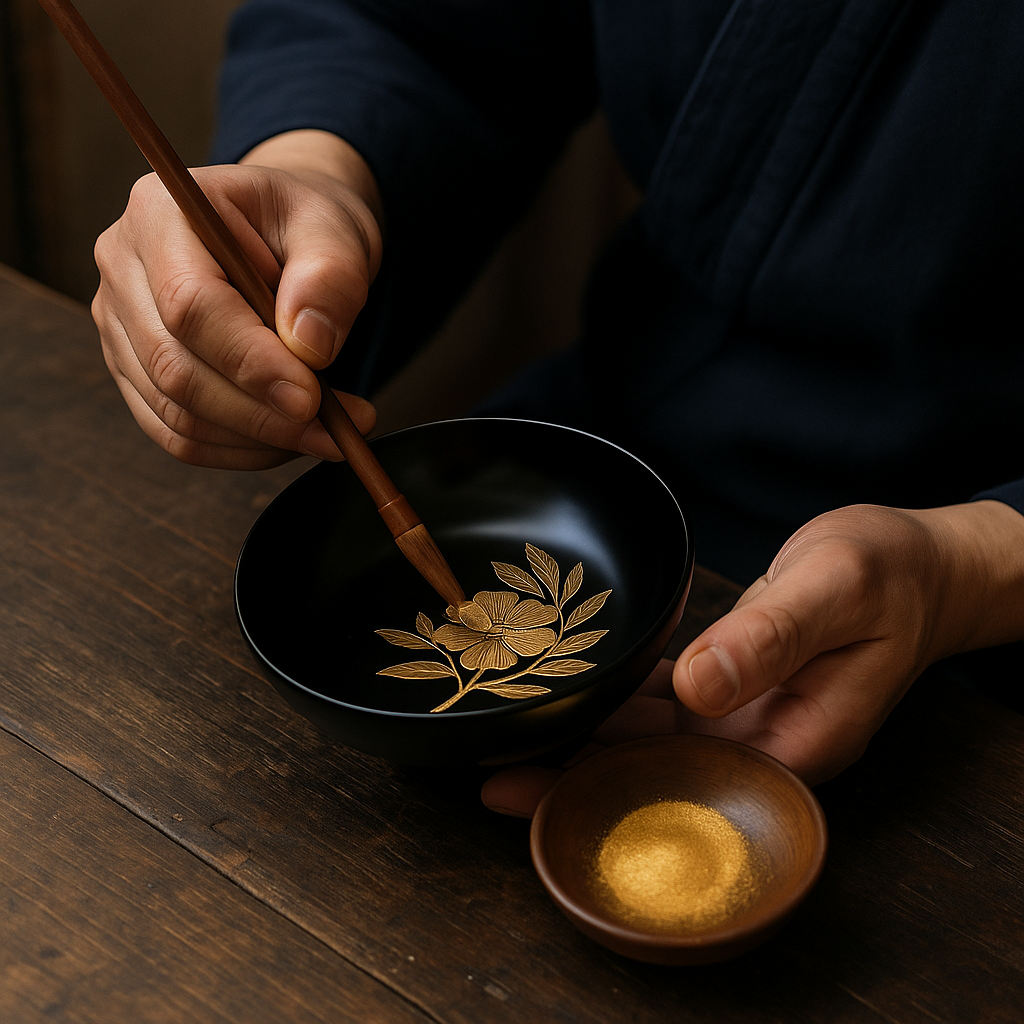

Japanese lacquerware turns everyday objects into heirlooms — from deep glossy bowls and trays to inlaid boxes that catch the light. This page focuses on where to experience lacquerware in Japan: key regions, museums, workshops, and how to visit them as a traveler.
Why Japanese Lacquerware Matters
Lacquer (urushi) is one of Japan’s most important traditional crafts. Sap from the lacquer tree is applied in many ultra-thin layers, polished, and sometimes decorated with gold, mother-of-pearl, or colored pigments. The process is time-consuming and requires skill, but the result is:
- Durable – properly cared-for pieces can last for generations.
- Lightweight – wooden cores make bowls and trays easy to handle.
- Comfortable to use – warm to the touch, gentle on the lips, and quiet on the table.
- Deeply regional – each lacquer town has its own history, materials, and designs.
Key Lacquerware Regions in Japan
If you are planning a trip, consider adding one of these lacquerware areas to your itinerary.
Wajima-nuri (Ishikawa)
On the Noto Peninsula, Wajima is famous for durable tableware built on strong wooden cores, many layers of lacquer, and fine decoration. You will find galleries, workshops, and a lacquerware street within walking distance of the town center.
Aizu-nuri (Fukushima)
In the castle town of Aizu-Wakamatsu, lacquerware ranges from everyday bowls to finely decorated boxes. Designs often feature local motifs, maki-e (gold powder painting), or simpler patterns for daily use.
Kagawa Lacquer (Kagawa)
Kagawa Prefecture is known for decorative techniques such as kinma (color-filled carved lines) and choshitsu (deeply carved layers of colored lacquer). These pieces are striking on display shelves and in modern interiors.
Other Notable Areas
- Tsugaru-nuri (Aomori) – bold, speckled patterns created by layering and polishing lacquer.
- Yamanaka / Kaga (Ishikawa) – turned wooden forms with fine, smooth finishes.
- Kanazawa (Ishikawa) – maki-e decoration and collaboration with gold leaf artisans.
How to Visit Lacquerware Towns & Workshops
Many lacquerware regions are small towns with walkable centers. A typical visit might include:
- Museums – to learn the history, tools, and techniques through exhibits.
- Galleries & shops – to compare styles and see the price range.
- Workshops – to watch artisans work or try simple experiences such as tray painting.
Check official tourism websites for:
- Opening hours and seasonal schedules.
- Whether reservations are needed for studio tours.
- Language support (English signage, guide availability).
What to Look For When Buying Lacquerware
Even if you are not a collector, it is worth choosing one or two pieces that feel good in the hand and fit your lifestyle. When shopping:
- Feel the weight and balance – bowls and cups should feel light but not flimsy; trays should be easy to lift.
- Look at the surface – quality lacquer has depth and a soft glow, not a plastic-like shine.
- Check the inside and edges – smooth, even finishes inside bowls and along rims are good signs.
- Ask about materials – genuine lacquer (urushi) and wooden cores will usually be labeled or explained by the shop.
- Think about use – daily soup bowls, small trays for tea, or a special box for jewelry all bring lacquer into everyday life.
Workshops & Hands-On Lacquer Experiences
If you want to feel lacquerware beyond the display shelf, short workshops are a great way to understand how urushi behaves on wood. Many craft towns and cities in Japan offer beginner-friendly experiences.
-
Simple fuki-urushi on spoons or small trays
Sand a wooden base and wipe on transparent urushi to bring out the grain. You can see how the color deepens with each coat. -
Painting and decorating chopsticks or small dishes
Try applying colored lacquer and adding simple lines or dots. Some studios offer easy maki-e style decoration using ready-made motifs. -
Introductory kintsugi-style repair
In some cities you can join short classes that show the basics of repairing a chipped cup or plate with urushi and metal powder, often using a simplified method suitable for beginners. -
Studio tours
Visit workshops in places like Wajima, Kiso or Aizu to see raw urushi, wooden cores, sanding rooms and finishing booths, and to learn how many coats and months a single bowl can take.
Most workshops require a reservation, and finished pieces may need time to cure in a humidity-controlled room before they can be shipped to you. If you are adding a workshop to your trip, plan a few extra days in the area or check whether international shipping is available.
Care & Everyday Use
Lacquerware is strong, but it does appreciate kind treatment. As a simple rule:
- Wash by hand with a soft sponge and mild soap; avoid abrasives.
- Do not leave pieces soaking in water for long periods.
- Avoid direct sunlight or high heat (no microwave, no dishwasher).
- Allow items to dry fully before storing to prevent odor and warping.
With these habits, lacquerware can be enjoyed as functional art in your home for many years.
Suggested Itinerary Ideas
If you are planning a culture-first trip, lacquerware can be one “thread” in your route:
- Kanazawa & Wajima – combine gold leaf, lacquerware, and coastal scenery on the Noto Peninsula.
- Aizu-Wakamatsu & surrounding towns – explore samurai history, lacquerware, and local sake.
- Shikoku (Kagawa) – mix lacquer, modern art islands, and udon culture in one trip.
Glossary – Useful lacquer terms
- Urushi: Natural lacquer sap used to coat and protect wood, built up in many thin layers.
- Maki-e: Decorative technique where designs are painted in lacquer and dusted with gold or silver powder.
- Kinma: Kagawa technique where lines are carved into colored lacquer and filled to create fine patterns.
- Chōshitsu: Deep carving through multiple layers of colored lacquer to reveal patterns in relief.
- Shikki: General Japanese word for lacquerware (bowls, trays, boxes and more).