


Winter in Japan


Quick Summary
Winter in Japan is a season of quiet mornings, crisp blue skies and strong contrasts: hot springs and snow, bright New Year decorations against bare trees, and steaming hotpot shared around low tables. From New Year rituals and winter festivals to ski trips and cosy days at home, this guide introduces how people in Japan experience the season and how you can enjoy it, too.
Winter in Japan at a glance
Japan’s winter usually runs from December to February, with big differences between regions. The Pacific side (Tokyo, Osaka, Kyoto) often has dry, sunny days and cold nights, while the Sea of Japan side and northern regions receive heavy snowfall. In cities, people bundle up in coats and scarves, but the sky can be surprisingly bright and clear.
Winter is also the season of New Year, the most important holiday in the Japanese year. Families gather, businesses close for several days, and streets become quiet while shrines and temples fill with visitors.
Typical winter themes in Japan include:
- New Year rituals, visits to shrines and temples and family gatherings
- Hot springs, public baths and long soaks in steaming water
- Snow country landscapes and ski resorts in Hokkaidō, Tōhoku and Nagano
- Hearty hotpot meals and winter-only comfort foods
- Seasonal illuminations, light displays and winter festivals
Japanese winter culture at home
Winter life in Japan is shaped by a mix of climate, architecture and long-standing habits. Traditional houses were not always well insulated, so people developed clever ways to stay warm.
Kotatsu and layered warmth
A classic winter image is the kotatsu: a low table with an electric heater underneath, covered by a thick quilt. Family members tuck their legs under the blanket, drink tea, eat oranges and watch TV together. Even in modern apartments, kotatsu remain a beloved symbol of winter comfort.
Bathing culture in the cold months
Long baths are another key part of winter. Many households enjoy hot evening baths at home, and public baths (sento) or hot spring inns (onsen ryokan) become especially appealing when the air is cold.
Light, air and humidity
On bright winter days, people open windows briefly to let in fresh air and sunlight, then close up again to keep warmth in. Humidifiers, kettles on gas stoves and electric carpets are all common ways to make homes more comfortable in the dry season.
Seasonal traditions & winter events
Winter in Japan is anchored by New Year but stretches across several months of festivals, customs and small seasonal markers.
New Year and hatsumōde
The period from 31 December to the first few days of January is one of the most important in the Japanese calendar. Families may spend New Year’s Eve quietly at home, eat toshikoshi soba noodles and watch TV, then visit temples and shrines for hatsumōde, the first shrine or temple visit of the year. People pray for good health and fortune, buy omamori charms and draw omikuji fortunes.
Little New Year and winter observances
Around mid-January there is a quieter observance sometimes called Koshōgatsu (Little New Year), linked to older lunar calendar traditions. In some regions, people hold small fire festivals or eat sweet red bean porridge with rice cakes.
Setsubun and the coming of spring
In early February, Setsubun marks the symbolic change from winter to spring. Families and temples perform bean-throwing rituals (mamemaki) to chase away bad luck and invite good fortune for the coming year: “Oni wa soto, fuku wa uchi” – “Demons out, luck in.”
Winter festivals and illuminations
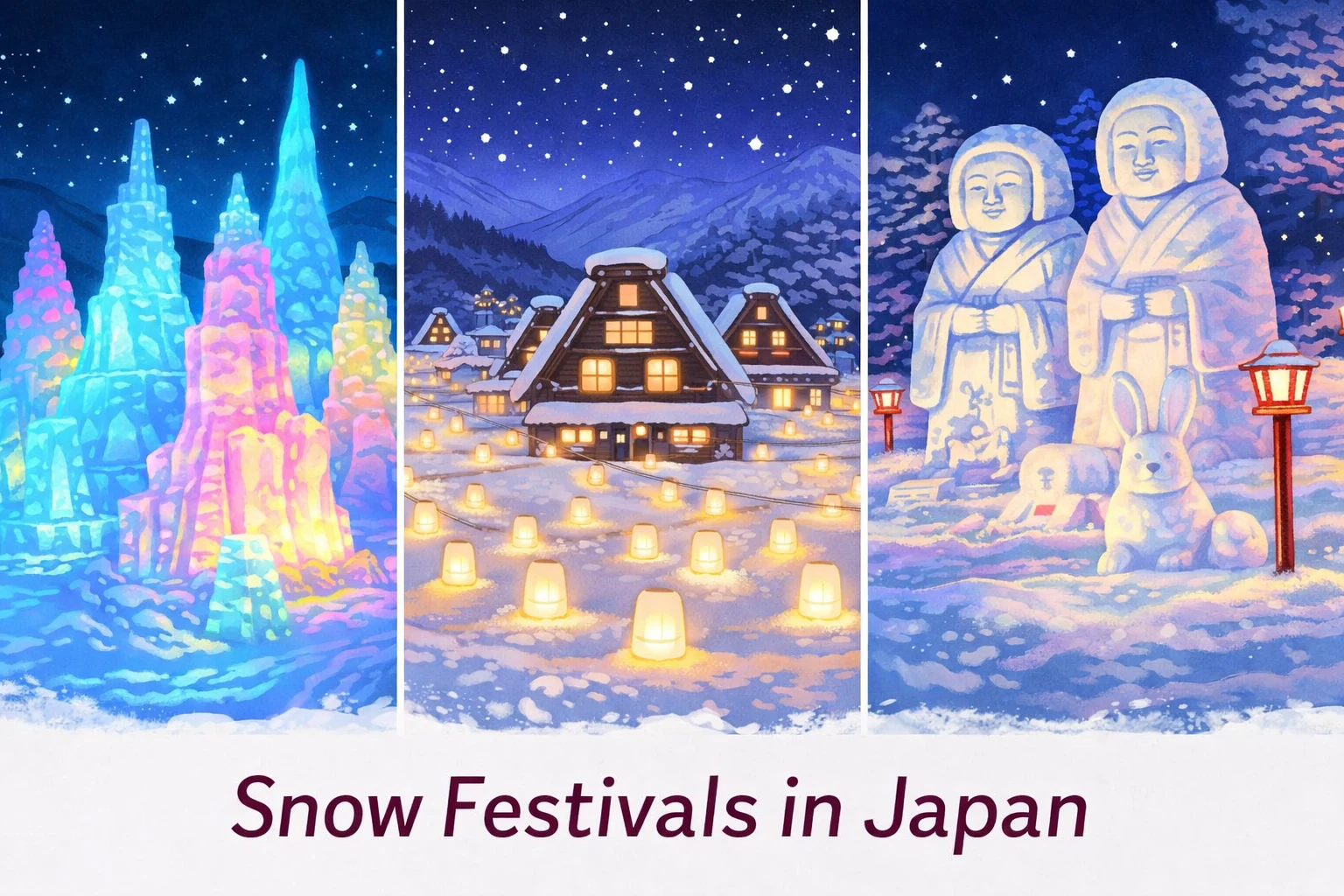
Northern and mountain regions host famous winter events such as snow festivals, ice sculptures and lantern-lit streets. Across Japan, cities decorate parks and shopping streets with winter illuminations, creating sparkling night walks from November through February.
Winter foods & warm drinks
Winter is a favourite season for food in Japan. Many dishes are designed to warm the body from the inside and bring people together around a table.
New Year dishes and home cooking
At the start of January, families eat osechi ryōri, beautifully arranged New Year dishes in stacked boxes, and ozōni, a warm soup with rice cakes. After the holiday, everyday winter meals continue the theme of warmth and sharing.
Nabe: shared hotpot meals
Nabe hotpot is a winter staple. A large pot of broth is placed in the centre of the table and filled with vegetables, tofu, mushrooms and slices of meat or fish. Everyone cooks and eats from the same pot, creating a relaxed and social dinner.
Citrus, root vegetables and seasonal snacks
Winter brings fragrant citrus fruits such as mikan mandarins and yuzu, along with sweet potatoes, daikon radish and hearty leafy greens. Seasonal sweets include roasted sweet potatoes, warm anko-filled buns and limited edition winter flavours of popular snacks.
Hot drinks for cold days
People warm up with hot green tea, roasted barley tea (mugicha served hot), instant corn soup from vending machines and, in some settings, hot sake or hot umeshu plum wine. Convenience stores stock an impressive range of canned hot drinks during the cold months.
Winter travel in Japan
Winter can be one of the most rewarding times to travel in Japan if you are prepared for the weather. Crowds are lighter outside the New Year period, and you can experience both snow country and clear, crisp city days.
Snow country and ski resorts
Regions such as Hokkaidō, Tōhoku and Nagano are famous for deep, powdery snow. Ski resorts range from family-friendly hills to international-level slopes. Even if you do not ski, visiting snowy onsen towns or riding trains through white landscapes can be a memorable experience.
Onsen in winter
Soaking in an outdoor hot spring while snow falls around you is a classic winter dream. Many onsen ryokan offer open-air baths surrounded by rocks, trees and mountain views, especially beautiful in the cold season.
Winter city breaks
Cities like Tokyo, Kyoto and Osaka offer bright winter illuminations, seasonal foods and relatively clear skies. Layered clothing and a good coat make it easy to explore temples, gardens and neighbourhoods without the intense heat and humidity of summer.
Travel tips & what to pack
- Dress in layers. Buildings, trains and shops are often heated, so it is easier to adjust your temperature by removing or adding layers than by relying on one very heavy coat.
- Bring good footwear. In snowy regions, waterproof shoes with grip are important. In cities, comfortable walking shoes plus warm socks are usually enough.
- Use hand warmers. Disposable heat packs called kairo are sold in convenience stores and can be placed in pockets or gloves.
- Mind the dry air. Winter air can be dry indoors and outside. Lip balm, a small moisturiser and, if you like, a mask can make long days outside more comfortable.
- Check holiday schedules. Many restaurants and museums close for several days around New Year. Check opening hours in advance, especially from 29 December to 3 January.
- Reserve popular onsen and ski areas early. Weekends and public holidays can be busy, particularly in January and February.
Trivia
- In many regions, people take yuzuyu, a hot bath with floating yuzu citrus fruits, on the winter solstice as a way to warm the body and ward off colds.
- Convenience store hot drink shelves change with the season, featuring limited flavours like sweet azuki bean soup, corn soup and yuzu tea in winter.
- Some old farmhouses in snow country use thick thatched roofs that naturally shed heavy snow, creating postcard-like winter scenery.
- In parts of northern Japan, residents build small snow huts called kamakura, where children play and people enjoy warm drinks inside.
FAQ
When is the best time to visit Japan in winter?
For snow and ski trips, January and February are usually the most reliable months. For city sightseeing with fewer crowds, early December and late January to February can be ideal, avoiding the busy New Year period.
Is winter in Japan very cold?
It depends on the region. Northern and mountainous areas can be extremely cold with heavy snow, while Tokyo and Osaka often have mild, sunny winter days but chilly nights. Indoors, trains and shops are usually well heated.
Are many places closed at New Year?
Yes, some museums, shops and restaurants close from around 29 December to 3 January. However, major department stores, tourist areas and of course shrines and temples usually remain active, so you will still find plenty to do.
Do I need special etiquette for visiting onsen in winter?
Onsen etiquette is the same year-round: wash thoroughly before entering, keep towels out of the water and stay quiet in shared baths. In winter, be careful when walking on wet, icy surfaces and avoid running from the indoor area to the outdoor bath.
External resources
- Winter travel inspiration and practical information from Japan National Tourism Organization (JNTO)
- Weather and climate data by region from the Japan Meteorological Agency
- Details on major winter festivals and events from local tourism boards, such as city and prefectural official websites.