
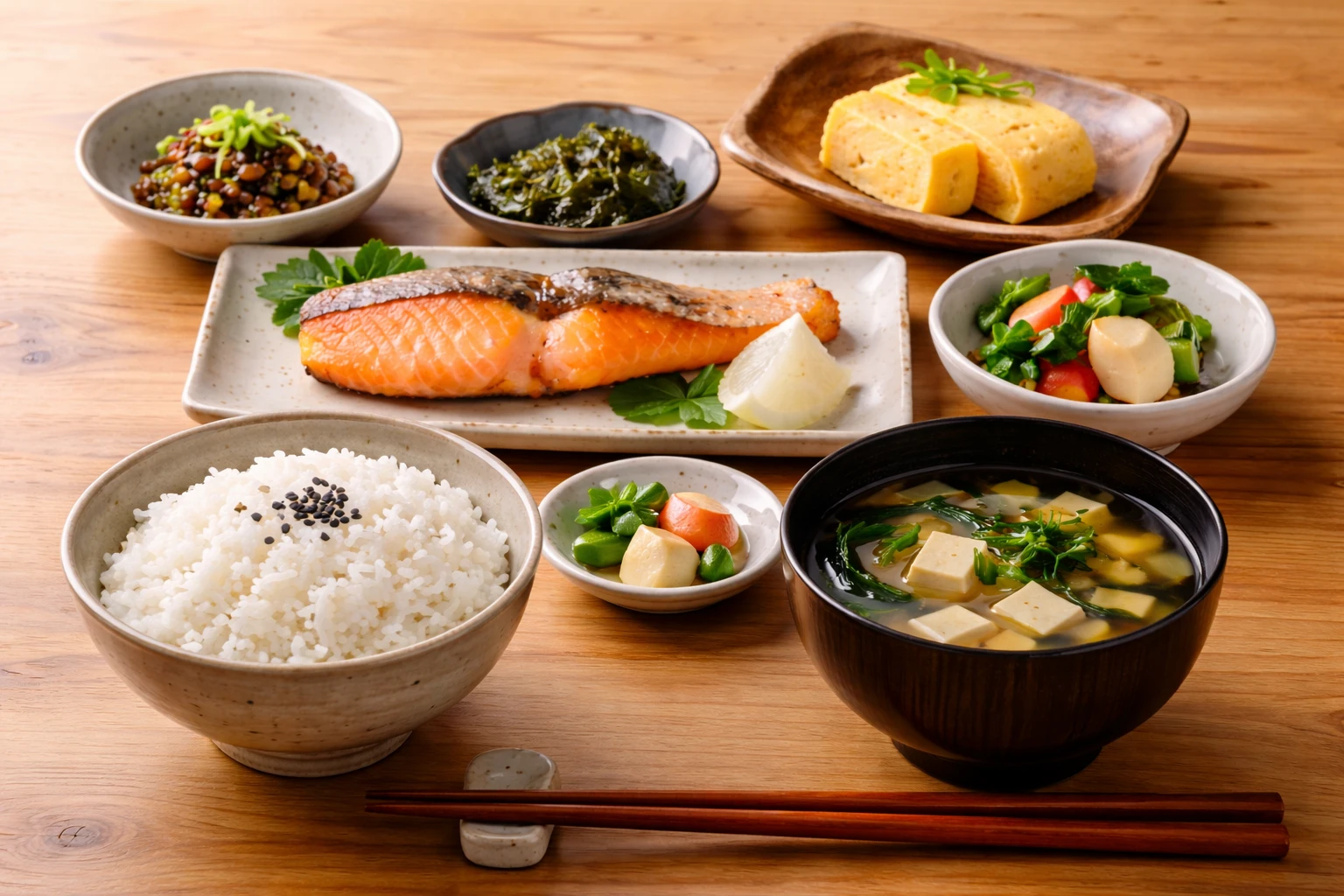

Traditional Japanese breakfast
← Go back to Japanese Culture Guides by Theme
A traditional Japanese breakfast is more than just a meal — it reflects balance, seasonality, and everyday cultural values. Built around rice, soup, and small dishes, it offers both nutritional variety and a deeper connection to daily life in Japan.
Contents
- What Is a Traditional Japanese Breakfast?
- What Does It Include?
- Balanced Nutrition
- Why Is Japanese Breakfast More Savory Than Sweet?
- Why Is It Structured This Way?
- How It Fits Into Daily Life
- Where Can You Try It?
- Traditional vs Modern Breakfast
- Tips for First-Time Visitors
- Trivia
- FAQ
- Related Guides
- Official Resources
What Is a Traditional Japanese Breakfast?
A traditional Japanese breakfast is a balanced set meal built around rice, soup, and several small side dishes. Rather than focusing on a single large item, it combines multiple elements to create a meal that is both light and complete.
This style reflects how food is approached in Japan: not just as nourishment, but as part of daily rhythm, seasonality, and cultural balance. Even a simple breakfast can express broader ideas about harmony, moderation, and attention to everyday life.
What Does It Include?
A typical traditional Japanese breakfast often includes steamed rice, miso soup, grilled fish, pickled vegetables, and one or two small side dishes such as tofu, seaweed, or egg. The exact combination varies by household, region, and season, but the overall structure remains recognizable.
Each dish has its own role. Rice provides the base, soup adds warmth and moisture, and the side dishes introduce contrast through texture, saltiness, and umami. Together, they create a meal that feels calm, balanced, and sustaining rather than heavy.
Balanced Nutrition
One of the defining features of a traditional Japanese breakfast is its nutritional balance. Instead of depending on one rich dish, it combines several smaller foods to provide a wider range of nutrients.
- Carbohydrates: Rice provides steady energy for the morning
- Protein: Fish, tofu, and eggs support body function and muscle maintenance
- Healthy fats: Fish can provide beneficial fats, including omega-3 fatty acids
- Vitamins and minerals: Vegetables, seaweed, and pickles add micronutrients
- Fermented foods: Miso and some pickled items support digestion and gut health
This combination creates a meal that is light yet sustaining. It can help maintain energy levels through the morning without the heaviness that sometimes comes from a single large breakfast item.
Why Is Japanese Breakfast More Savory Than Sweet?
Unlike many Western breakfasts that emphasize sweet flavors, a traditional Japanese breakfast is usually savory. One major reason is that rice is the central part of the meal. Because plain rice has a mild taste, it pairs naturally with salty and umami-rich foods such as miso soup, grilled fish, and pickles.
There are also historical reasons. Before refrigeration became common, many breakfast foods were based on ingredients that kept well, including salted fish, pickled vegetables, and fermented seasonings such as miso. These were practical, long-lasting, and easy to prepare or serve in the morning.
A warm, savory breakfast also helps wake up the body. Miso soup provides warmth and hydration after sleep, while salty and umami flavors can gently stimulate appetite. In that sense, the traditional Japanese breakfast is shaped not only by taste preference, but also by climate, preservation methods, and the practical rhythm of daily life.
Why Is It Structured This Way?
The structure of a traditional Japanese breakfast is rooted in the idea of balance. Rice acts as the center, soup adds warmth, and side dishes provide contrast in taste, texture, and nutrition.
This approach is often linked to ichiju-sansai, meaning “one soup, three dishes.” While everyday breakfasts may be simpler than a formal meal, the same logic is visible: a meal should feel balanced rather than dominated by one strong element.
More broadly, this reflects a cultural value of harmony. Japanese meals are often designed so that different parts support one another instead of competing for attention. That principle can also be seen in other parts of Japanese culture, where balance, spacing, and moderation are often preferred over excess.
The nutritional balance of breakfast is therefore not accidental. Over time, Japanese meals developed in a way that supported daily life through a combination of energy, digestion, variety, and practicality.
How It Fits Into Daily Life
Traditionally, breakfast played an important role in daily life, especially when physical work required steady energy over many hours. A rice-based breakfast offered a practical start to the day and fit well with the ingredients households commonly had on hand.
Today, lifestyles have changed, and many people choose quicker breakfasts such as toast or coffee on busy weekdays. Even so, the traditional breakfast still carries cultural meaning. It is often associated with a “proper” start to the day and remains especially visible in ryokan, family settings, and travel experiences.
Where Can You Try It?
One of the best places to experience a traditional Japanese breakfast is at a ryokan, where breakfast is often served as part of the stay. In that setting, the meal is usually prepared with more care and may include seasonal ingredients or local specialties.
You can also find Japanese breakfast sets in local restaurants and some hotels. These are often simpler, but they still give you a good sense of the structure, flavors, and balance that define a traditional morning meal in Japan.
Traditional vs Modern Breakfast
Today, many people in Japan still eat breakfast, but fully traditional Japanese-style breakfasts are less common in daily life. Surveys suggest that rice-based breakfasts are eaten by around 15–20% of people, while many others choose bread or quicker Western-style options.
This shift reflects changes in lifestyle, especially in urban areas where time is limited and convenience is important. Toast, coffee, and simple meals are often easier to prepare on busy mornings.
At the same time, breakfast habits are not always strictly one or the other. Many households mix elements — for example, eating rice one day and bread the next — depending on time, preference, or season.
Even so, the traditional Japanese breakfast remains culturally important. It is still associated with a more complete and balanced meal, and many people experience it during travel, at ryokan, or in households that maintain this style.
Tips for First-Time Visitors
- Eat slowly and try a little from each dish rather than finishing one item at a time
- Alternate between rice, soup, and side dishes to experience the intended balance
- Expect savory and umami-rich flavors rather than sweet ones
- Notice the presentation — arrangement and portioning are part of the cultural experience
For some visitors, grilled fish or pickles in the morning may feel unusual at first. That difference is part of what makes the experience memorable: it reveals a different idea of what breakfast can be.
Trivia
The structure often associated with a traditional Japanese breakfast reflects a broader pattern in Japanese cuisine, where meals are built around balance, seasonality, and a combination of small dishes rather than one dominant plate. This is one reason breakfast in Japan can feel both visually ordered and culturally distinctive.
FAQ
Is a traditional Japanese breakfast healthy?
It is often considered a balanced meal because it combines carbohydrates, protein, fermented foods, and a range of smaller side dishes. However, the exact nutritional profile depends on the ingredients and portion sizes.
Why is Japanese breakfast usually savory instead of sweet?
Because rice is the central staple, it pairs naturally with salty and umami-rich foods. Historical food preservation methods and the long use of fermented seasonings such as miso also shaped this savory style.
Do people in Japan still eat traditional Japanese breakfast every day?
Some do, but many people now choose quicker modern breakfasts on busy mornings. Traditional breakfasts remain especially common in ryokan, some restaurants, and households that prefer this style.
Where is the best place to try it?
A ryokan is often the best place for a fuller cultural experience, but local restaurants and hotels may also offer good breakfast sets.
Related Guides
Official Resources
BASEBALL FAVORITES
Explore More Baseball Stories
Start here
- Baseball in Japan: NPB Beginner’s Guide
- NPB Teams in Japan: All 12 Japanese Baseball Teams
- How to Buy Baseball Tickets in Japan
Stadiums & travel
Players & culture
International events
Traditions & tournaments
SAKURA FAVORITES