


Tohoku-hiraizumi-pure-land-gardens-day
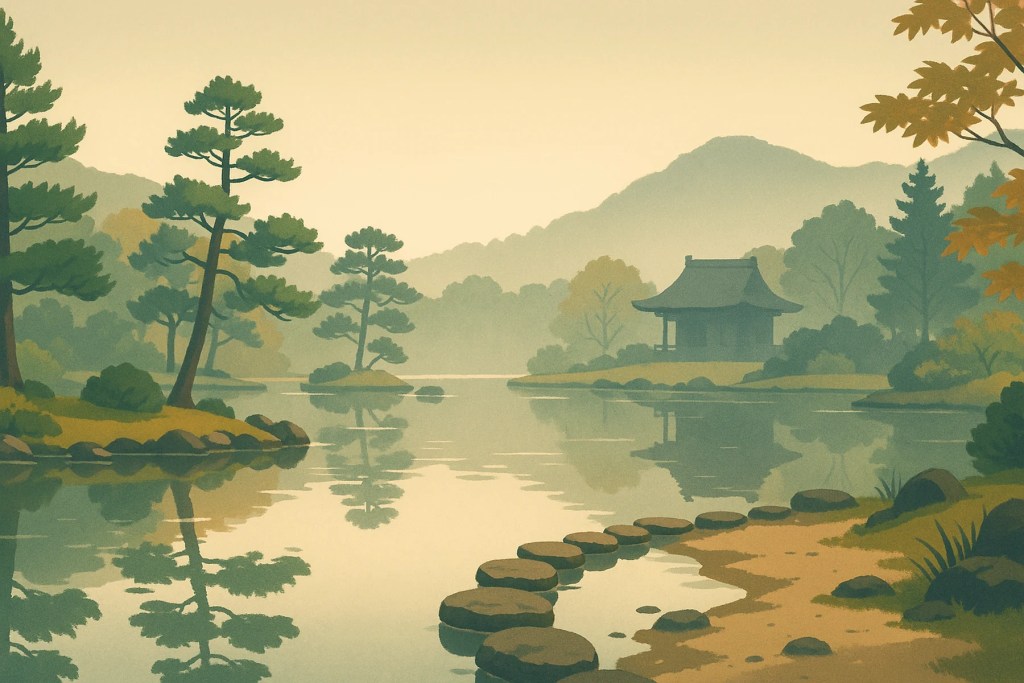
This Hiraizumi Pure Land gardens itinerary moves at a calm pace. First, read the Pure Land design at Motsu-ji. Next, walk the water edge and pause at the small museum. Then, continue to Chuson-ji for halls and approach paths. Afterward, enjoy soba or tea nearby. Finally, add a brief lacquer or gold-leaf browse before sunset.
Quick Facts
- Base: Hiraizumi (Iwate)
- Pace: Medium; three blocks in one day
- Access: Tōhoku Shinkansen to Ichinoseki, then JR Tōhoku Main Line (~10 min) to Hiraizumi
- Best Seasons: Apr–Jun, Sep–Nov (winter is quiet and cold)
- Theme: Pure Land garden design · Heian temple culture · lacquer & gold
- Passes: IC card for local trains; reserve Shinkansen seats
- Budget tier: ¥¥ (see Budget)
- Map: See Access & Map
- Accessibility: See Accessibility & Family
Contents
What makes Hiraizumi different?
Hiraizumi is where a spiritual vision of paradise was brought into physical form. Inspired by Pure Land Buddhist beliefs, this northern region developed as a place where architecture, gardens, and landscape were designed to reflect an ideal world of peace and harmony.
What you experience here is not grand scale or active practice, but a quiet, symbolic space — from temple grounds and garden layouts to the surrounding natural scenery, all expressing a deeper philosophical idea.
If Nara feels like the origin and Kyoto feels refined, Hiraizumi feels contemplative and visionary — a place where culture is shaped not only by history, but by the human desire to represent an ideal world.
How to Use
Start early. Arrive at Motsu-ji when light is soft. Then aim for Chuson-ji by midday. If it rains, shorten the garden loop and extend indoor rooms. When crowds grow, shift tea and shops to late afternoon.
Itinerary
Accessibility links are listed at the bottom of this page.
-
Day Plan — Motsu-ji garden & Chuson-ji halls
Morning
First, circle Ōizumi-ga-ike at Motsu-ji. Notice islands, bays, and borrowed scenery. Then, step into the small exhibit room.
Afternoon
Next, transfer to Chuson-ji. Walk the cedar approach. View sutra halls and the Konjikidō area. Afterward, take a short tea break.
Evening
Finally, return along quiet paths. If light holds, pick a lookout and pause for photos.
Cultural connection: Pure Land gardens model an ideal realm; Fujiwara patronage shaped art, gold, and lacquer; paths teach rhythm and restraint.
Traditional & Local Foods
Hiraizumi’s food culture reflects inland Tohoku life, temple-town calm, and the agricultural rhythms of Iwate. This section focuses on foods with cultural meaning rather than sightseeing-oriented gourmet picks.
Quick taste summary: Hiraizumi flavors often feel grounded, seasonal, and quietly balanced rather than elaborate. Many local dishes highlight buckwheat, rice, mountain vegetables, and gentle savory depth suited to a reflective day around temple grounds and gardens.
Core Cultural Foods
- Wanko soba / soba culture: the wider Iwate region is strongly associated with soba, and in Hiraizumi a simpler soba meal fits the area’s quiet rhythm well. Taste-wise, expect a clean, earthy flavor and a light but satisfying texture rather than rich heaviness.
- Mochi dishes: this area is also known for mochi traditions that connect to local celebrations and everyday regional food culture. Taste-wise, mochi can feel soft, mild, and comforting, with sweetness or savory toppings depending on the style.
- Rice and seasonal side dishes: temple-town meals often pair rice with restrained local sides. Taste-wise, the flavors are usually gentle, balanced, and ingredient-led rather than strongly spiced.
Secondary Local Specialties
- Mountain vegetables (sansai): seasonal greens and wild plants reflect the inland landscape and older foodways. Taste-wise, they may feel fresh, slightly bitter, or pleasantly earthy, adding depth rather than richness.
- Pickles and preserved foods: these support the quiet, practical rhythm of northern Japanese meals. Taste-wise, they add salt, acidity, and contrast in a subtle way rather than dominating the meal.
- Tea and simple sweets: after visiting gardens and halls, tea with a modest sweet suits Hiraizumi’s contemplative mood. Taste-wise, the sweetness is usually restrained, letting the tea remain central.
Traditional Drinks
- Local tea culture: simple tea pauses match the area’s calm pace and temple atmosphere. Taste-wise, the experience is light, clean, and restorative rather than luxurious.
- Iwate sake: the broader region is known for sake that pairs naturally with soba, vegetables, and understated local meals. Taste-wise, many styles feel clear and balanced, without overwhelming delicate dishes.
If this may suit your taste: Hiraizumi may be a good match if you enjoy soba, gentle seasoning, seasonal vegetables, mochi, and meals that feel tied to place and atmosphere. It may feel less ideal if you mainly want bold urban food scenes or strongly rich, high-impact flavors.
Best fit within this itinerary: a soba lunch fits naturally between Motsu-ji and Chuson-ji; tea and a small sweet work well after the afternoon temple visit; local mochi or simple regional specialties suit the quiet final pause before sunset.
Seasonal & Rainy Swaps
- Rainy: Use covered corridors and museum rooms; shorten open-water circuits.
- Autumn: Time Motsu-ji reflections for mid-afternoon light.
- Winter: Expect ice; choose shorter loops and warm indoor pauses.
Etiquette
- Walk quietly on temple approaches; keep voices low in halls.
- Follow photography rules; no photos where restricted.
- Stay on marked paths; do not step into garden edges or moss.
- Remove shoes where posted; carry them if a bag is provided.
- Do not touch statues, altars, or exhibit cases.
- At tea stops, keep fragrances minimal and phones silent.
- Arrive a few minutes early for any guided session or demo.
Handy Phrases in Japanese (Romaji)
- Excuse me : Sumimasen.
- Thank you : Arigatō gozaimasu.
- Please : Onegai shimasu.
- Two tickets, please : Chiketto o nimai onegai shimasu.
- May I take photos? : Shashin o totte mo ii desu ka?
- Where is the restroom? : Otearai wa doko desu ka?
- Where is … ? : … wa doko desu ka?
- Is there a step-free route? : Dansa no nai rūto wa arimasu ka?
- Is there an elevator? : Erebētā wa arimasu ka?
- May I use a wheelchair here? : Koko de kurumaisu o tsukatte mo ii desu ka?
- Do you have an English leaflet? : Eigo no panfuretto wa arimasu ka?
- How much is the ticket? : Chiketto wa ikura desu ka?
- What time does it open? : Nanji ni akimasu ka?
- What time does it close? : Nanji ni shimarimasu ka?
- I have a reservation : Yoyaku shite imasu.
- Can I pay by card? : Kādo de shiharai dekimasu ka?
Budget
| Item | ¥ Range | Notes |
|---|---|---|
| Transport (within Hiraizumi) | ¥300–¥1,500 | Local train access, station-area taxi, short bus ride, or walking depending on pace. |
| Admission | ¥500–¥2,000 | Temple/garden admissions and small museum entries vary by combination. |
| Food / Tea | ¥1,500–¥3,500 | Soba lunch, tea stop, and a small sweet or light snack. |
| Optional | ¥0–¥3,000 | Lacquer or gold-leaf browsing, extra museum stop, or short taxi segments. |
| Total (per person / day) | ¥3,000–¥10,000 | Tier: ¥¥ (standard) |
¥ = frugal (<¥5,000) · ¥¥ = standard (¥5,000–¥12,000) · ¥¥¥ = comfort (>¥12,000)
*Intercity rail to Ichinoseki/Hiraizumi is extra.
This Hiraizumi Pure Land gardens itinerary moves at a calm pace. First, read the Pure Land design at Motsu-ji. Next, walk the water edge and pause at the small museum. Then, continue to Chuson-ji for halls and approach paths. Afterward, enjoy soba or tea nearby. Finally, add a brief lacquer or gold-leaf browse before sunset.
Quick Facts
- Base: Hiraizumi (Iwate)
- Pace: Medium; three blocks in one day
- Access: Tōhoku Shinkansen to Ichinoseki, then JR Tōhoku Main Line (~10 min) to Hiraizumi
- Best Seasons: Apr–Jun, Sep–Nov (winter is quiet and cold)
- Theme: Pure Land garden design · Heian temple culture · lacquer & gold
- Passes: IC card for local trains; reserve Shinkansen seats
- Budget tier: ¥¥ (see Budget)
- Map: See Access & Map
- Accessibility: See Accessibility & Family
Contents
What makes Hiraizumi different?
Hiraizumi is where a spiritual vision of paradise was brought into physical form. Inspired by Pure Land Buddhist beliefs, this northern region developed as a place where architecture, gardens, and landscape were designed to reflect an ideal world of peace and harmony.
What you experience here is not grand scale or active practice, but a quiet, symbolic space — from temple grounds and garden layouts to the surrounding natural scenery, all expressing a deeper philosophical idea.
If Nara feels like the origin and Kyoto feels refined, Hiraizumi feels contemplative and visionary — a place where culture is shaped not only by history, but by the human desire to represent an ideal world.
How to Use
Start early. Arrive at Motsu-ji when light is soft. Then aim for Chuson-ji by midday. If it rains, shorten the garden loop and extend indoor rooms. When crowds grow, shift tea and shops to late afternoon.
Itinerary
Accessibility links are listed at the bottom of this page.
-
Day Plan — Motsu-ji garden & Chuson-ji halls
Morning
First, circle Ōizumi-ga-ike at Motsu-ji. Notice islands, bays, and borrowed scenery. Then, step into the small exhibit room.
Afternoon
Next, transfer to Chuson-ji. Walk the cedar approach. View sutra halls and the Konjikidō area. Afterward, take a short tea break.
Evening
Finally, return along quiet paths. If light holds, pick a lookout and pause for photos.
Cultural connection: Pure Land gardens model an ideal realm; Fujiwara patronage shaped art, gold, and lacquer; paths teach rhythm and restraint.
Traditional & Local Foods
Hiraizumi’s food culture reflects inland Tohoku life, temple-town calm, and the agricultural rhythms of Iwate. This section focuses on foods with cultural meaning rather than sightseeing-oriented gourmet picks.
Quick taste summary: Hiraizumi flavors often feel grounded, seasonal, and quietly balanced rather than elaborate. Many local dishes highlight buckwheat, rice, mountain vegetables, and gentle savory depth suited to a reflective day around temple grounds and gardens.
Core Cultural Foods
- Wanko soba / soba culture: the wider Iwate region is strongly associated with soba, and in Hiraizumi a simpler soba meal fits the area’s quiet rhythm well. Taste-wise, expect a clean, earthy flavor and a light but satisfying texture rather than rich heaviness.
- Mochi dishes: this area is also known for mochi traditions that connect to local celebrations and everyday regional food culture. Taste-wise, mochi can feel soft, mild, and comforting, with sweetness or savory toppings depending on the style.
- Rice and seasonal side dishes: temple-town meals often pair rice with restrained local sides. Taste-wise, the flavors are usually gentle, balanced, and ingredient-led rather than strongly spiced.
Secondary Local Specialties
- Mountain vegetables (sansai): seasonal greens and wild plants reflect the inland landscape and older foodways. Taste-wise, they may feel fresh, slightly bitter, or pleasantly earthy, adding depth rather than richness.
- Pickles and preserved foods: these support the quiet, practical rhythm of northern Japanese meals. Taste-wise, they add salt, acidity, and contrast in a subtle way rather than dominating the meal.
- Tea and simple sweets: after visiting gardens and halls, tea with a modest sweet suits Hiraizumi’s contemplative mood. Taste-wise, the sweetness is usually restrained, letting the tea remain central.
Traditional Drinks
- Local tea culture: simple tea pauses match the area’s calm pace and temple atmosphere. Taste-wise, the experience is light, clean, and restorative rather than luxurious.
- Iwate sake: the broader region is known for sake that pairs naturally with soba, vegetables, and understated local meals. Taste-wise, many styles feel clear and balanced, without overwhelming delicate dishes.
If this may suit your taste: Hiraizumi may be a good match if you enjoy soba, gentle seasoning, seasonal vegetables, mochi, and meals that feel tied to place and atmosphere. It may feel less ideal if you mainly want bold urban food scenes or strongly rich, high-impact flavors.
Best fit within this itinerary: a soba lunch fits naturally between Motsu-ji and Chuson-ji; tea and a small sweet work well after the afternoon temple visit; local mochi or simple regional specialties suit the quiet final pause before sunset.
Seasonal & Rainy Swaps
- Rainy: Use covered corridors and museum rooms; shorten open-water circuits.
- Autumn: Time Motsu-ji reflections for mid-afternoon light.
- Winter: Expect ice; choose shorter loops and warm indoor pauses.
Etiquette
- Walk quietly on temple approaches; keep voices low in halls.
- Follow photography rules; no photos where restricted.
- Stay on marked paths; do not step into garden edges or moss.
- Remove shoes where posted; carry them if a bag is provided.
- Do not touch statues, altars, or exhibit cases.
- At tea stops, keep fragrances minimal and phones silent.
- Arrive a few minutes early for any guided session or demo.
Handy Phrases in Japanese (Romaji)
- Excuse me : Sumimasen.
- Thank you : Arigatō gozaimasu.
- Please : Onegai shimasu.
- Two tickets, please : Chiketto o nimai onegai shimasu.
- May I take photos? : Shashin o totte mo ii desu ka?
- Where is the restroom? : Otearai wa doko desu ka?
- Where is … ? : … wa doko desu ka?
- Is there a step-free route? : Dansa no nai rūto wa arimasu ka?
- Is there an elevator? : Erebētā wa arimasu ka?
- May I use a wheelchair here? : Koko de kurumaisu o tsukatte mo ii desu ka?
- Do you have an English leaflet? : Eigo no panfuretto wa arimasu ka?
- How much is the ticket? : Chiketto wa ikura desu ka?
- What time does it open? : Nanji ni akimasu ka?
- What time does it close? : Nanji ni shimarimasu ka?
- I have a reservation : Yoyaku shite imasu.
- Can I pay by card? : Kādo de shiharai dekimasu ka?
Budget
| Item | ¥ Range | Notes |
|---|---|---|
| Transport (within Hiraizumi) | ¥300–¥1,500 | Local train access, station-area taxi, short bus ride, or walking depending on pace. |
| Admission | ¥500–¥2,000 | Temple/garden admissions and small museum entries vary by combination. |
| Food / Tea | ¥1,500–¥3,500 | Soba lunch, tea stop, and a small sweet or light snack. |
| Optional | ¥0–¥3,000 | Lacquer or gold-leaf browsing, extra museum stop, or short taxi segments. |
| Total (per person / day) | ¥3,000–¥10,000 | Tier: ¥¥ (standard) |
¥ = frugal (<¥5,000) · ¥¥ = standard (¥5,000–¥12,000) · ¥¥¥ = comfort (>¥12,000)
*Intercity rail to Ichinoseki/Hiraizumi is extra.
EXPLORE Choose your next route by interest: start with well-known cities, go deeper culturally, or explore from a different angle. Start with well-known cities Go deeper culturally Try a different perspective
Planning a trip? Use the Trip Planner
to turn these ideas into a culture-first itinerary.
Popular next itineraries and Japanese culture
Official Resources
← Back to Cultural Itineraries
You must be logged in to post a comment.