


Tohoku-hiraizumi-pure-land-gardens-day
This Hiraizumi Pure Land gardens itinerary moves at a calm pace. First, read the Pure Land design at Motsu-ji. Next, walk the water edge and pause at the small museum. Then, continue to Chuson-ji for halls and approach paths. Afterward, enjoy soba or tea nearby. Finally, add a brief lacquer or gold-leaf browse before sunset.
Quick Facts
- Base: Hiraizumi (Iwate)
- Pace: Medium; three blocks in one day
- Access: Tōhoku Shinkansen to Ichinoseki, then JR Tōhoku Main Line (~10 min) to Hiraizumi
- Best Seasons: Apr–Jun, Sep–Nov (winter is quiet and cold)
- Theme: Pure Land garden design · Heian temple culture · lacquer & gold
- Passes: IC card for local trains; reserve Shinkansen seats
- Budget tier: ¥¥ (see Budget)
- Map: See Access & Map
- Accessibility: See Accessibility & Family
How to Use
Start early. Arrive at Motsu-ji when light is soft. Then aim for Chuson-ji by midday. If it rains, shorten the garden loop and extend indoor rooms. When crowds grow, shift tea and shops to late afternoon.
Itinerary
Accessibility links are listed at the bottom of this page.
-
Day Plan — Motsu-ji garden & Chuson-ji halls
Morning
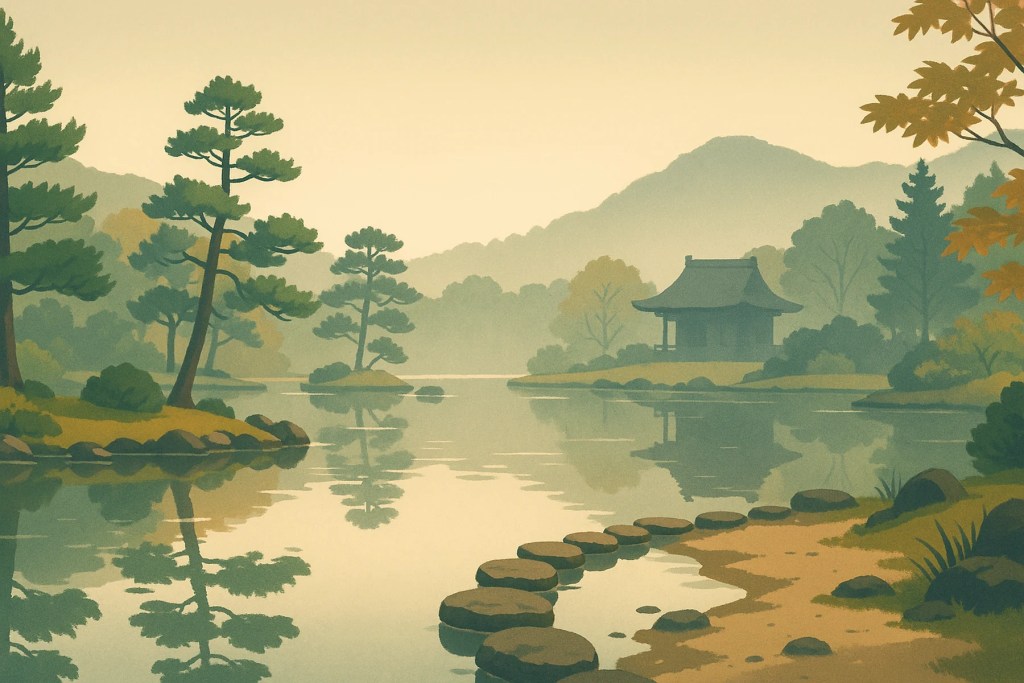
First, circle Ōizumi-ga-ike at Motsu-ji. Notice islands, bays, and borrowed scenery. Then, step into the small exhibit room.
Afternoon
Next, transfer to Chuson-ji. Walk the cedar approach. View sutra halls and the Konjikidō area. Afterward, take a short tea break.
Evening
Finally, return along quiet paths. If light holds, pick a lookout and pause for photos.
Cultural connection: Pure Land gardens model an ideal realm; Fujiwara patronage shaped art, gold, and lacquer; paths teach rhythm and restraint.
Seasonal & Rainy Swaps
- Rainy: Use covered corridors and museum rooms; shorten open-water circuits.
- Autumn: Time Motsu-ji reflections for mid-afternoon light.
- Winter: Expect ice; choose shorter loops and warm indoor pauses.
Etiquette
- Walk quietly on temple approaches; keep voices low in halls.
- Follow photography rules; no photos where restricted.
- Stay on marked paths; do not step into garden edges or moss.
- Remove shoes where posted; carry them if a bag is provided.
- Do not touch statues, altars, or exhibit cases.
- At tea stops, keep fragrances minimal and phones silent.
- Arrive a few minutes early for any guided session or demo.
Handy Phrases in Japanese (Romaji)
- Excuse me : Sumimasen.
- Thank you : Arigatō gozaimasu.
- Please : Onegai shimasu.
- Two tickets, please : Chiketto o nimai onegai shimasu.
- May I take photos? : Shashin o totte mo ii desu ka?
- Where is the restroom? : Otearai wa doko desu ka?
- Where is … ? : … wa doko desu ka?
- Is there a step-free route? : Dansa no nai rūto wa arimasu ka?
- Is there an elevator? : Erebētā wa arimasu ka?
- May I use a wheelchair here? : Koko de kurumaisu o tsukatte mo ii desu ka?
- Do you have an English leaflet? : Eigo no panfuretto wa arimasu ka?
- How much is the ticket? : Chiketto wa ikura desu ka?
- What time does it open? : Nanji ni akimasu ka?
- What time does it close? : Nanji ni shimarimasu ka?
- I have a reservation : Yoyaku shite imasu.
- Can I pay by card? : Kādo de shiharai dekimasu ka?
Accessibility — Hiraizumi Pure Land Gardens Itinerary
- Mōtsū-ji Temple: See the official FAQ (EN) for notes on wheelchair-accessible grounds and facilities. Staff can advise on current conditions at the entrance.
- Chūson-ji Temple: The official FAQ (EN) covers access/parking guidance (incl. elderly visitors). Some precinct paths are sloped; allow extra time and use on-site shuttle/taxi as needed.
- Hiraizumi Cultural Heritage Center: Visitor center with multilingual exhibits; see the official page (EN) for facilities. Tactile maps/models and multi-language audio are available.
- Rail access & station facilities: JR East’s Hiraizumi Station page (EN) links to the station map. For general barrier-free features and assistance, see JR East’s official site (EN).
Tip: Garden precincts and ruin sites include gravel or uneven paving. On rainy/snowy days, shorten outdoor blocks and swap in museum/center time mid-day.
Access & Map
- From Tokyo: Tōhoku Shinkansen to Ichinoseki → JR Tōhoku Main Line to Hiraizumi (2 stops, ~8–10 min) or local bus. IC (Suica/PASMO) ok on JR.
- From Sendai / Morioka: Shinkansen or JR rapid to Ichinoseki → transfer to Hiraizumi.
- Getting around: Chūson-ji / Mōtsū-ji are walkable from Hiraizumi Station (plan 15–25 min each). Takkoku-no-Iwaya is farther—use bus or taxi.
- Pass / IC: JR East IC cards widely accepted; some local buses are cash-first—carry small coins just in case.
- Accessibility: Chūson-ji approach includes an uphill forest path; allow time. Taxis/buses stop near upper areas; many sites have accessible restrooms.
- Luggage: Coin lockers at Ichinoseki / Hiraizumi Stations.
Official: Hiraizumi Tourism (EN)
Ichinoseki Station Hiraizumi Station Chūson-ji Temple Konjikidō (Golden Hall) Mōtsū-ji Temple Muryōkō-in Ruins Takkoku-no-Iwaya
Budget
| Item | ¥ Range | Notes |
|---|---|---|
| Transport (local) | ¥400–¥1,000 | JR short hop Ichinoseki↔Hiraizumi + walks; bus/taxi for Takkoku-no-Iwaya as needed. |
| Admission | ¥0–¥2,000 | Temple precincts often free; paid areas (e.g., Konjikidō / museum zones) add modest fees. |
| Food / Tea | ¥1,500–¥3,500 | Casual lunch + café/snack; dinner depends on choice. |
| Optional | ¥0–¥3,000 | Extra exhibits, workshop/guide fees, short taxi segments. |
| Total (per person / day) | ¥4,500–¥10,500 | Tier: ¥¥ (standard) |
¥ = frugal (<¥5,000) · ¥¥ = standard (¥5,000–¥12,000) · ¥¥¥ = comfort (>¥12,000)
*Intercity rail (Tokyo/Sendai/Morioka ↔ Ichinoseki) is extra. Peak seasons may affect lines and prices.
Official Resources
You must be logged in to post a comment.