
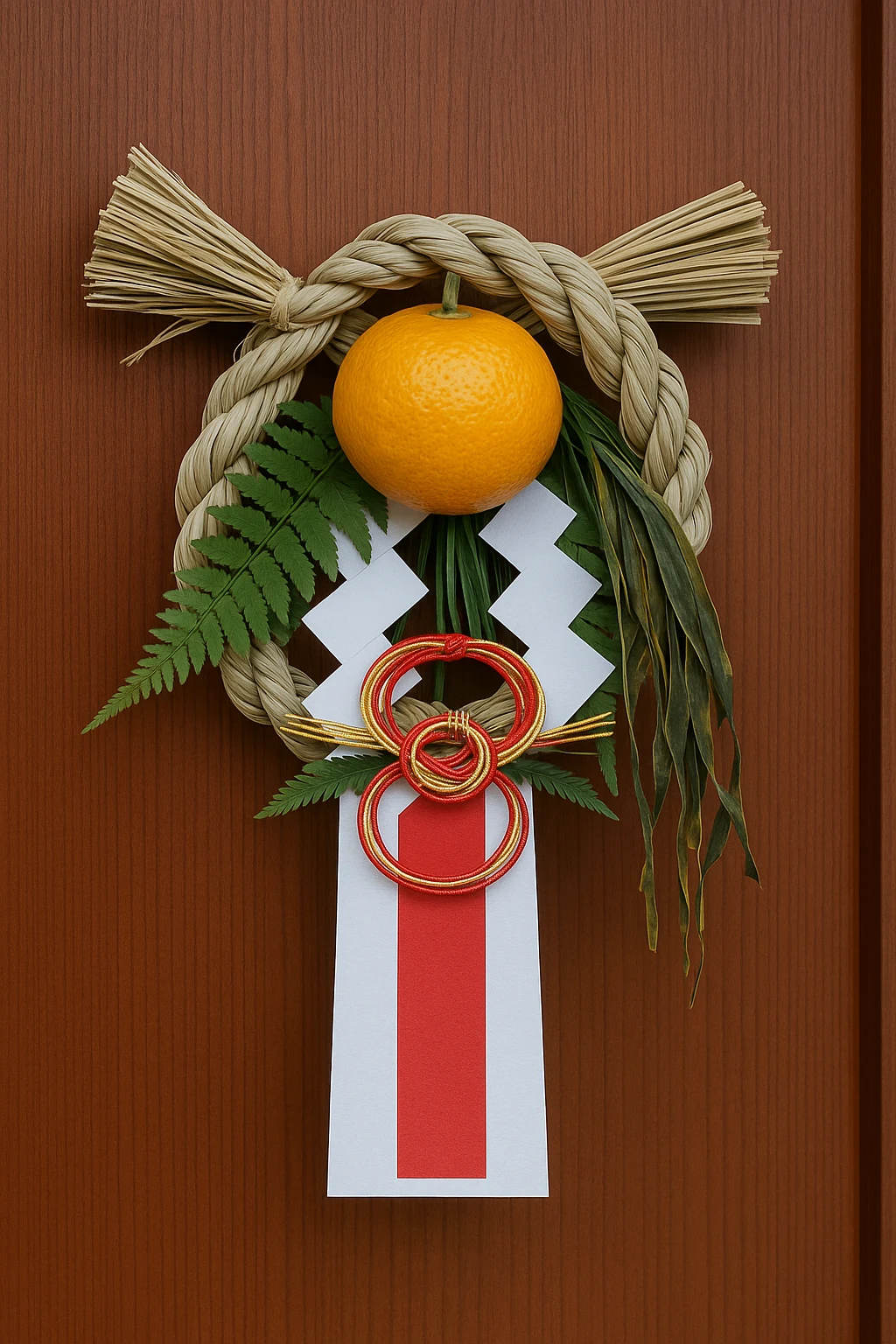

Shimekazari meaning
Seasonal Japanese Stories
Shimekazari Meaning: Japanese New Year Door Decorations Explained
Even outside December, understanding the shimekazari meaning is one of the easiest ways to see how Japan marks “entering” a new year through space, timing, and symbols. Shimekazari are Japanese New Year door decorations—often built around shimenawa rope imagery—that signal purification, welcome good fortune, and create a visible boundary between the old year and the new. This guide explains what shimekazari are, what the symbols represent, and when to put them up (and take them down).
Just looking for when to take shimekazari down? Jump to the quick regional guide (matsunouchi).
What Is Shimekazari?
Shimekazari (しめ飾り) are Japanese New Year ornaments placed at home entrances—most commonly on doors, gates, or entryways. They are closely related to shimenawa (しめ縄), the sacred rope seen at shrines and sacred sites, but shimekazari are the household-friendly, decorative form used specifically for the New Year season.
Think of shimekazari as a “seasonal threshold marker.” It visually announces that the home has entered Oshōgatsu, and it signals a clean, welcoming entry into the new year.
Key term: Oshōgatsu — the Japanese New Year season, often experienced as a cultural period rather than a single day.
Shimekazari Meaning
The shimekazari meaning centers on purification, welcome, and threshold-making—turning the New Year into something you can see at the entrance. By decorating the doorway, you mark the boundary between “old year” and “new year” through preparation and seasonal intention.
- Purification at the threshold: The entrance is treated as an important boundary, so it’s symbolically “cleared” for a fresh start.
- Welcoming good fortune: Shimekazari acts like a seasonal invitation—welcoming New Year blessings into the home.
- A visible reset: It makes the New Year feel real in daily life, not only on the calendar.
Why Japanese think/do this: Many Japanese seasonal customs emphasize preparing before receiving. Placing shimekazari is a quiet way to say “we’re ready,” stepping into the new year with clarity and respect.
Common Symbols and What They Represent
Shimekazari designs vary by region and shop, but many share familiar symbolic elements. Even when people choose a design for aesthetics, the motifs typically carry seasonal meaning.
Rope or straw base
The rope/straw base reflects the boundary idea—marking a prepared, “protected” space at the entrance. Straw also points to agricultural roots and the seasonal rhythm underlying New Year tradition.
Paper elements
White paper shapes often echo purification imagery seen in shrine contexts. They strengthen the idea that the entrance is ceremonially “clean.”
Daidai (bitter orange)
A citrus fruit often associated with continuity across generations, because its name suggests “from generation to generation.” (Some modern ornaments use a substitute motif, but the intention is similar.)
Fern leaves and seaweed motifs
Fern leaves are often linked with longevity, while seaweed motifs can suggest joy and good fortune in Japanese tradition. Exact combinations vary, but the direction is consistent: positive wishes for the year ahead.
How this connects to other New Year symbols
Shimekazari “welcomes” the season at the entrance. Inside the home, another key New Year symbol is the offering of stacked rice cakes called kagami mochi, which is displayed first and eaten later after Kagami Biraki.
When to Put Shimekazari Up
Many households put shimekazari up in late December, often after end-of-year cleaning begins. The goal is simple: decorate while you’re still in “preparation mode,” so the entrance feels ready before the New Year season starts.
Many households aim to put shimekazari up by December 28. Some people avoid the 29th and 31st for traditional “unlucky day” reasons, though modern practice varies.
You may hear that certain dates are avoided depending on local custom or personal belief. In modern practice, flexibility is common—if you’re unsure, prioritize the intention: clean the entryway and put it up when you can.
When to Take Them Down
Shimekazari are typically kept through the New Year period and removed afterward. The exact timing varies by region and household, because Japanese New Year is often experienced as a season with phases: prepare → welcome → enjoy → close.
A helpful keyword here is Matsunouchi (松の内): the “New Year period” when pine-related decorations and New Year ornaments are traditionally kept up. In many places, people take shimekazari down after matsunouchi ends.
Rule of thumb by region: Kanto often treats matsunouchi as ending on January 7, while Kansai often keeps it through January 15 (Little New Year). Some areas extend the “closing” feeling to January 20. If your neighborhood has a dondoyaki / sagichō bonfire for New Year decorations, many households align removal with that local schedule. Why it varies: Historically, many areas kept New Year decorations through mid-January, but in the Edo period a shorter schedule spread strongly around Edo (today’s Tokyo). The change did not spread evenly nationwide, so different local “closing days” remain.
If you’re in Japan, observing what neighbors and shops do locally is a practical guide. If you’re abroad, choosing a consistent “closing day” after the New Year period is culturally sensible.
Shimekazari and Japan’s Calendar Logic
Shimekazari makes the New Year “visible” because Japan often treats important moments as a sequence, not a single date. The decoration belongs to a cultural rhythm: preparation days in late December, the New Year season, and a closing phase when normal routines return.
To explore how New Year timing connects with holidays, seasonal markers, and cultural planning, use our Japanese Calendar. If you’re curious about traditional auspicious-day concepts, you can also explore Rokuyo.
How People Use Shimekazari Today
Modern shimekazari range from traditional straw-based ornaments to compact, minimalist versions for apartments. Many people buy one from a supermarket, home center, or local shop and place it at the entrance for the season.
What stays constant is the purpose: shimekazari is not just “decor”—it’s a small seasonal message at the doorway: the home is prepared, the year is changing, and the new season is welcomed.
Travel Tips: Where You’ll See Them
- Home and shop entrances: Especially in late December through early January.
- Supermarkets and department stores: Seasonal decoration corners appear well before New Year.
- Shrine areas: You’ll often see shimenawa-style rope imagery near New Year visits (hatsumōde).
If you’re traveling around New Year, pay attention to entrances first—Japan’s seasonal culture often announces itself at the threshold.
Trivia
- Shimekazari is the “home” form: Shimenawa is the sacred-rope form seen at shrines; shimekazari adapts that idea for the household entrance.
- Entrances matter in Japanese seasonal culture: Many traditions begin by “preparing the threshold.”
- It’s part of a sequence: Shimekazari welcomes the season; kagami mochi represents offering and sharing afterward.
FAQ
Is shimekazari the same as shimenawa?
They’re closely related but not identical. Shimenawa is the sacred rope form commonly seen at shrines and sacred places. Shimekazari is the decorative, household-oriented New Year ornament placed on doors and entrances.
Do shimekazari have to be religious?
Not necessarily. Some elements have roots in purification traditions, but many people treat shimekazari as shared seasonal culture. Modern practice ranges from spiritual to purely seasonal.
Do I need to follow strict rules about dates?
Many households keep it flexible. A culturally aligned approach is: clean the entryway, put shimekazari up during late-December preparation time, and remove it after the New Year season ends in your local context.
How does shimekazari relate to kagami mochi?
Shimekazari marks the New Year at the entrance—welcoming the season. Kagami mochi is a New Year offering displayed inside the home and eaten later after Kagami Biraki. Read more in our guide to kagami mochi.