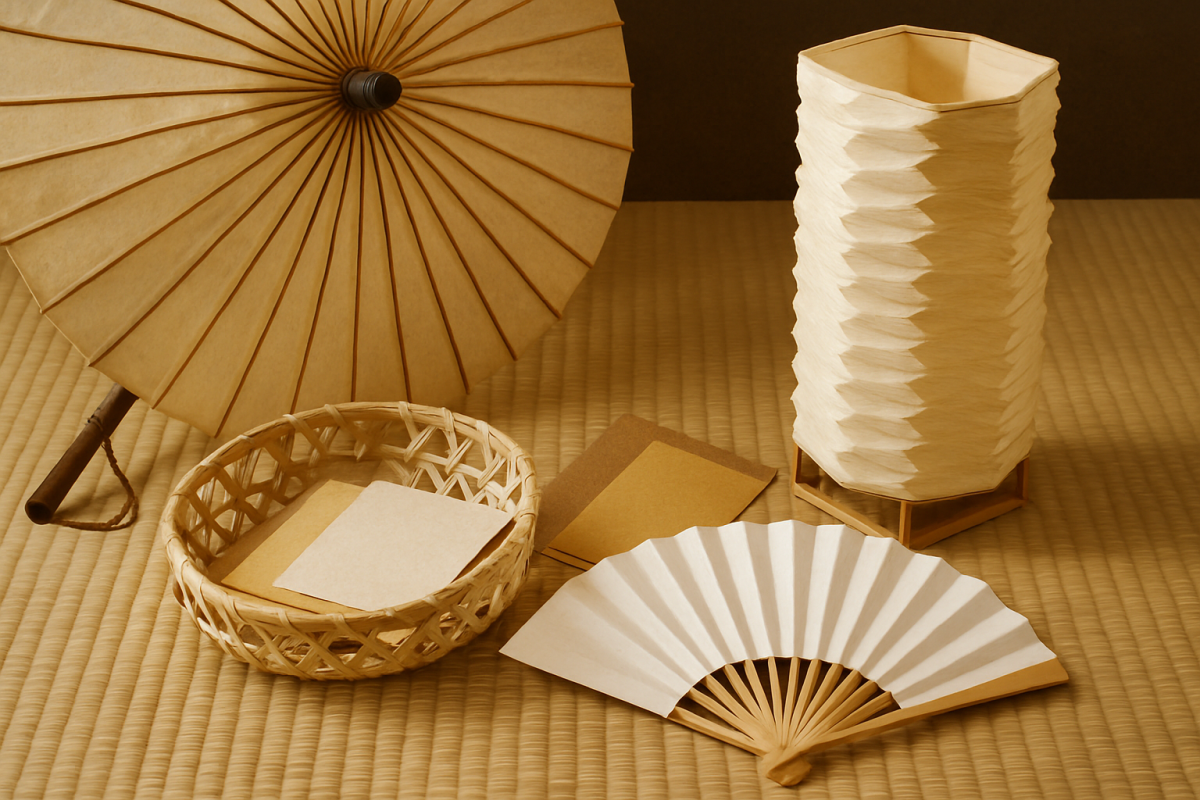

Paper and bamboo crafts
Paper & Bamboo Crafts
Introduction – Lightness and Strength
Japanese paper (washi) and bamboo crafts turn very simple materials into light, strong objects that shape everyday life in Japan. From shoji screens and lanterns to baskets, trays, and tea utensils, you will see paper and bamboo in homes, cafés, shrines, and ryokan. This guide explains the background and then focuses on where you can experience paper and bamboo crafts in Japan – through villages, museums, and hands-on workshops you can add to a cultural itinerary.
History & Cultural Background
Washi and bamboo have more than a thousand years of history in Japan. A very compact timeline:
- Nara–Heian periods: Papermaking techniques arrive from China and Korea and are adapted in Japan. Hand-made paper is used for Buddhist sutras, court records, and aristocratic poetry.
- Muromachi–Edo periods: Shoji screens, fusuma sliding doors, umbrellas, fans, and lanterns spread washi into daily life. Bamboo is essential for baskets, tools, tea ceremony utensils, and garden fences.
- Modern era: Machine-made paper and plastics appear, but traditional paper and bamboo remain important in rituals, preservation, and high-end crafts.
- Today: Traditional hand-made washi techniques in Mino (Gifu), Sekishu (Shimane), and Hosokawa (Saitama) are recognized together on UNESCO’s Intangible Cultural Heritage list, and Beppu bamboo craft in Oita is designated as a national traditional craft. These towns are now popular destinations for culture-first travel.
Washi – Handmade Paper from Nature
Washi is made from the inner bark of shrubs rather than from wood pulp. The result is paper that is thin yet surprisingly strong.
- Main fibers: Kozo (paper mulberry) for strength, mitsumata for smoothness, and gampi for a natural sheen.
- Basic process: Steaming and stripping the bark, cleaning and beating the fibers, suspending them in water with neri (a viscous plant solution), then scooping the mixture onto a bamboo screen and frame, pressing, and drying the sheets.
- Look & feel: Visible fibers, soft surface, and a “living” texture that changes slightly with humidity and light.
For travelers, it is helpful to know a few key paper regions:
- Mino Washi (Gifu): Known for translucent, strong paper once used for shoji screens and now for lighting and design goods. The old streets and Mino Washi Museum make this an atmospheric town to visit.
- Echizen Washi (Fukui): A compact “paper village” where workshops, the Paper & Culture Museum, and shops cluster together. It is easy to combine papermaking, a museum visit, and shopping in one day.
- Sekishu Washi (Shimane): Famous for especially strong paper used for doors, calligraphy, and conservation work. At Sekishu Washi halls you can learn about the history and even try simple papermaking.
- Hosokawa Washi (Saitama): Crafted in and around Ogawa Town and Higashi-Chichibu. It is crisp, durable paper long valued for books and documents; today you can visit studios and small shops and enjoy a rural day trip from Tokyo.
Bamboo Crafts – From Utility to Art
Bamboo crafts (takezaiku) transform fast-growing bamboo into everyday tools and refined art pieces. Thin strips are split, shaved, and carefully woven by hand.
- Common items: Flower baskets for tea ceremony, trays, chopsticks, bags, lamp shades, and interior objects.
- Weaving styles: Hexagonal and octagonal patterns, twill weaves, and fine latticework that create shadows and movement when light passes through.
- Materials: In many regions, craftspeople use locally grown madake or moso bamboo, chosen for its flexibility and strength.
Two places stand out if you want to understand bamboo craft as a traveler:
- Beppu (Oita): A major center of bamboo craft in Kyushu, known for Beppu take-zaiku. The Beppu City Traditional Bamboo Crafts Center and nearby studios show both historical tools and contemporary works, and often offer short workshops.
- Kyoto: Around Arashiyama and central Kyoto you will find shops and studios selling bamboo baskets, tea utensils, and interior pieces. Some offer demonstrations or small-group classes in basic weaving.
Aesthetic – Light, Shadow & Space
Paper and bamboo are central to how Japanese spaces feel. Rather than blocking light, they filter it.
- Soft light: Washi diffuses sunlight into a gentle glow, especially in shoji screens and paper lamps.
- Patterns of shadow: Bamboo blinds and baskets cast changing patterns on walls and tatami, adding movement to otherwise simple rooms.
- Wabi-sabi: Slight irregularities in fibers, color, and weave are appreciated as signs of handwork and time, not defects.
- Quiet sound: Paper shades and bamboo trays absorb sound and help create calm, intimate spaces.
Visiting Paper & Bamboo Towns – Where to Experience
Many paper and bamboo centers are compact towns or neighborhoods where you can walk between workshops, museums, and shops. A typical visit might look like this:
- Museum or craft hall: Start with an overview exhibit that explains tools, fibers, and historic pieces.
- Workshop or studio: Join a short class or watch craftspeople making paper sheets, baskets, or trays.
- Old streets: Stroll through preserved districts with traditional houses, shrines, and small cafés.
- Shopping time: End at local shops where you can compare textures, weaving patterns, and price ranges.
If your schedule is tight, choose one paper town and one bamboo area to add a strong craft “thread” to your trip.
Hands-On Experiences – What You Can Try
Workshops are usually beginner-friendly and take from 30 minutes to a few hours. Reservations are often required, especially on weekends and holidays.
- Simple papermaking: Use a bamboo screen and frame to scoop fibers from a vat, then press and dry your own sheets or postcards. Many Mino, Echizen, Sekishu, and Hosokawa workshops offer this.
- Decorating paper goods: Make notebooks, lampshades, or cards using patterned washi, offcuts, and stamps.
- Bamboo weaving basics: Learn how to split and weave pre-prepared strips into a small basket, tray, or accessory in Beppu or Kyoto.
- Studio tours: Visit working studios to see raw materials, storage rooms, and large pieces being prepared for exhibitions.
Check each facility’s website for language support, shipping options for finished pieces, and any clothing recommendations (rolled-up sleeves, no long jewelry, etc.).
Buying Guide – Choosing Paper & Bamboo Pieces
You do not need to be a collector to enjoy paper and bamboo at home. A few small, well-chosen items can add a lot of atmosphere.
- Look closely at the fibers: For washi, gently hold sheets up to the light. Even fiber distribution, a comfortable thickness, and a natural luster are good signs.
- Check the weave: For bamboo, run your fingers along the surface. Tight, smooth weaving without splinters or gaps usually indicates good craftsmanship.
- Think about use: Choose paper goods you will actually use – writing paper, envelopes, lamp shades, or wall pieces – and bamboo items that match your lifestyle, such as tea trays, storage baskets, or flower vases.
- Ask about origin: Studios and shops can tell you which town, workshop, and craftsperson made a piece. This story will make the item more meaningful when you return home.
- Budget wisely: Entry-level pieces and small accessories are usually affordable, while exhibition works can be very expensive. It is fine to start small.
Care & Everyday Use
With simple care, paper and bamboo pieces can last for many years.
- Avoid direct sun: Long, strong sunlight can fade colors and yellow paper.
- Keep dry but not sealed: Store items in a dry place with some air circulation to avoid mold.
- Handling: Wash bamboo trays or baskets quickly by hand, dry thoroughly, and avoid soaking. Keep paper away from oil and moisture.
- Seasonal rotation: Consider rotating delicate pieces seasonally so they are enjoyed but not overexposed.
Glossary – Useful Terms
- Washi: Traditional hand-made Japanese paper, usually from plant fibers such as kozo, mitsumata, or gampi.
- Kozo: Paper mulberry; its long fibers give washi strength and flexibility.
- Su / Keta: Bamboo screen and wooden frame used together to form sheets of paper.
- Neri: Plant-based thickening agent added to papermaking vats to help fibers spread evenly.
- Kakishibu: Fermented persimmon tannin used to strengthen and color paper or bamboo.
- Takezaiku: General term for Japanese bamboo crafts.
- Hanakago: Bamboo flower basket, especially for use in tea ceremony or ikebana.
FAQ
Q: Is washi too delicate for everyday use?
A: High-quality washi is surprisingly strong. It was historically used for doors, umbrellas, and books. For daily life, choose slightly thicker papers or laminated products such as lamps and trays.
Q: Can bamboo baskets be used in the kitchen or bathroom?
A: Yes, as long as they are dried thoroughly after use and not left sitting in water. Many people use bamboo trays for draining cups or storing small items where air can circulate.
Q: I only have one free day. Where should I go?
A: If you are based in Tokyo, a day trip to a paper town such as Ogawa / Higashi-Chichibu (Hosokawa washi) is realistic. From Kansai or Hokuriku, Echizen Washi Village is ideal. From Kyushu, Beppu combines hot springs with bamboo craft.
Internal links
- Beautiful Japanese Crafts & Artisans – overview
- Hands-on Crafts in Japan — Try, Make, Take Home
- Japan’s Craft Villages – Explore & Plan
- Japanese Cultural Itineraries by Region
External links
- UNESCO: “Washi, craftsmanship of traditional Japanese handmade paper”
- Echizen Washi Village – Official English site
- Beppu City Traditional Bamboo Crafts Center – Official information (EN)
- JNTO: Traditional Japanese craft workshops (washi, bamboo & more)
Plan Your Custom Trip
Turn what you discovered about Japanese indigo dye and textiles into a culture-first travel plan. Use our trip planning tools and itineraries to design 1–5 day routes.
✈ Plan Your Trip to Japan →