
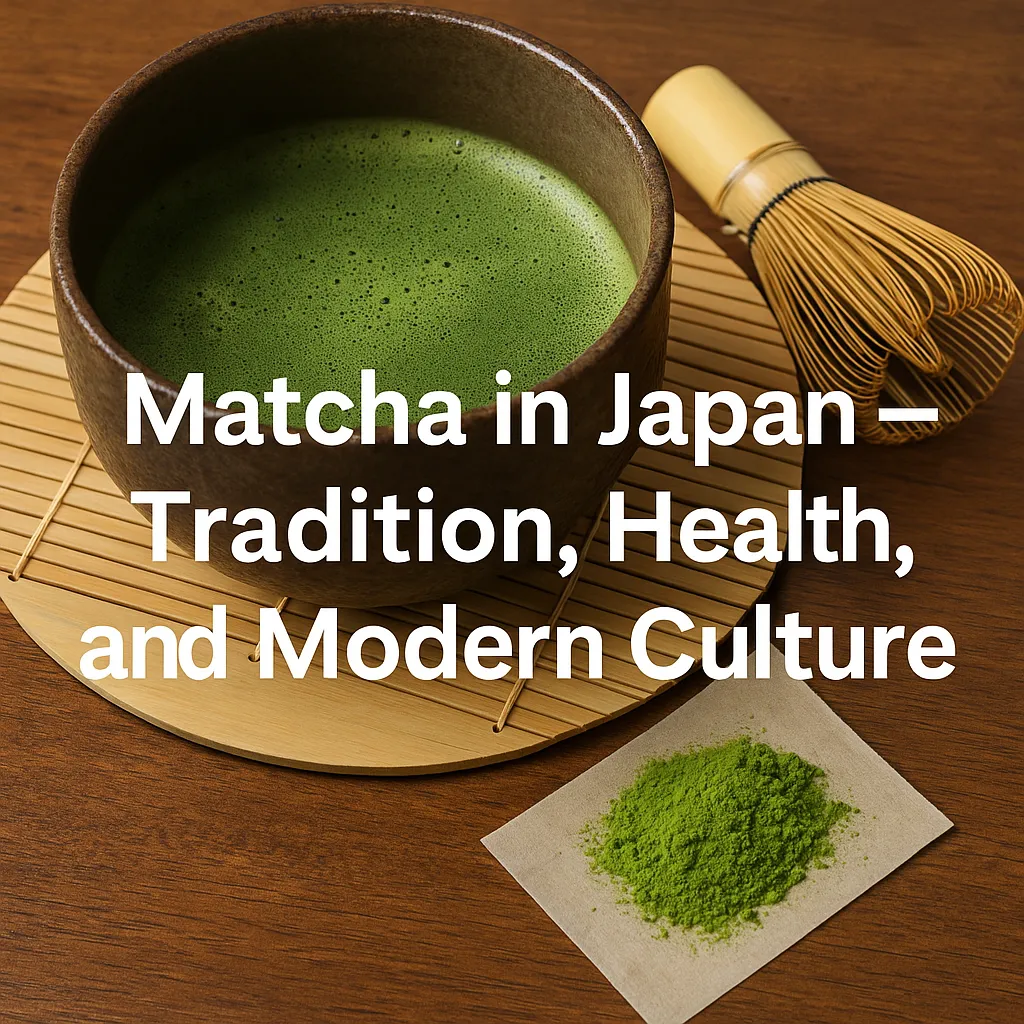

Matcha
Matcha in Japan — Tradition, Health, and Modern Culture
September 30, 2025 · Read time: ~2 minutes
Table of Contents
- Why Matcha Matters
- Background of Matcha
- Matcha in Autumn
- Modern Matcha Culture
- Customs and Etiquette
- Tips for Foreign Visitors
- FAQ about Matcha
- Learn More
Why Matcha Matters
Matcha is more than just powdered green tea — it represents Japanese aesthetics, mindfulness, and hospitality. Once reserved for Zen monks and samurai, today matcha is enjoyed by people worldwide, from traditional tea rooms to modern cafés.
Background of Matcha
Matcha was introduced from China in the late Heian period (12th century) but became uniquely Japanese during the Kamakura and Muromachi periods. Zen monks used it to aid meditation, and later, tea masters like Sen no Rikyū developed it into the refined art of the tea ceremony (chanoyu).
Matcha in Autumn
Autumn tea gatherings often highlight matcha with seasonal touches:
- Wagashi sweets made of chestnuts or persimmons served before tea.
- Tea bowls decorated with maple leaves or harvest motifs.
- Chaji tea gatherings held in gardens with autumn foliage.
- Matcha is also paired with autumn foods such as roasted sweet potatoes or seasonal cakes.
Modern Matcha Culture
- Cafés and bakeries offer matcha lattes, cakes, and ice cream.
- Health enthusiasts value its antioxidants and calming effects.
- Tourism promotes matcha experiences, especially in Kyoto and Uji.
- Matcha is also used in creative products like matcha beer and cosmetics.
Customs and Etiquette
- Accept the tea bowl with both hands.
- Rotate the bowl before drinking, avoiding the front.
- Drink in small, respectful sips, finishing in three or four gulps.
- Express thanks by saying oishii desu (it is delicious).
Tips for Foreign Visitors
- Visit Uji (Kyoto) or Shizuoka to experience authentic matcha.
- Join a short tea ceremony class to learn proper manners.
- Try both traditional matcha and modern sweets to appreciate its versatility.
- Buy high-grade ceremonial matcha for gifts, but avoid supermarket cooking matcha.
FAQ about Matcha
Q: How is matcha different from regular green tea?
→ Matcha is made from finely ground whole tea leaves, whisked into water, not steeped.
Q: Is matcha healthy?
→ Yes, it is rich in antioxidants, amino acids, and provides calm energy.
Q: Can I try matcha outside of tea ceremonies?
→ Absolutely. Cafés, shops, and even convenience stores in Japan offer matcha products.
Q: What does matcha taste like?
→ It has a rich, slightly bitter flavor balanced by natural sweetness, often paired with wagashi.