
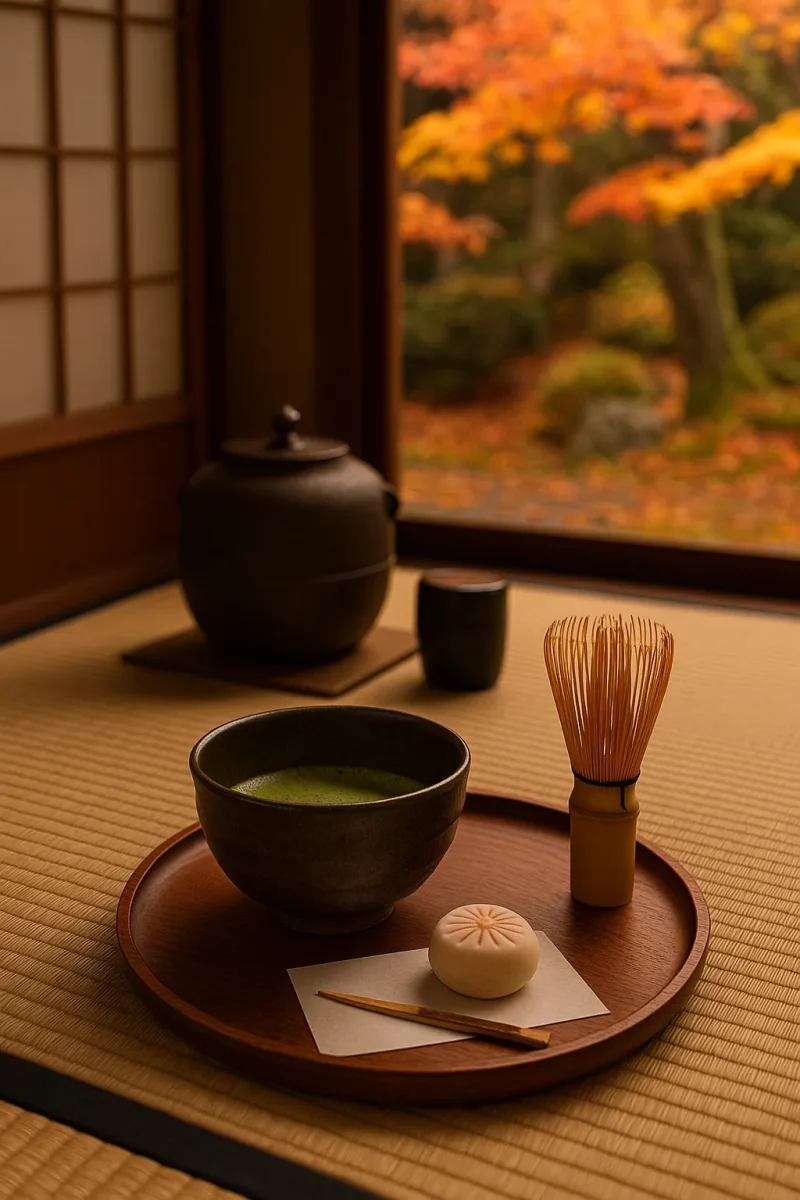

Tea Ceremony
Japanese Tea Ceremony in Autumn
Table of Contents
Why Tea Ceremony Matters in Autumn
Autumn in Japan symbolizes reflection and harmony with nature. The tea ceremony (chanoyu or chado) highlights seasonal sensibilities—colors, flavors, and textures—bringing calm after summer and gratitude for the harvest season.
Background of Tea Ceremony
Shaped by Zen aesthetics and the philosophy of wabi-sabi, the tea ceremony matured in the 15th–16th centuries under masters such as Sen no Rikyū. Over time, schools like Urasenke formalized practice and instruction, preserving etiquette and seasonal awareness that continue today.
Autumn Elements in Tea Gatherings
Typical autumn touches include:
- Wagashi sweets using chestnut or persimmon before tea.
- Tea bowls and scrolls with motifs of maples, moon-viewing, or harvest.
- Flowers such as chrysanthemum or pampas grass in simple arrangements (chabana).
- Quiet garden settings and dimmer light to encourage mindfulness.
Customs and Manners
- Bow when entering the tea room; remove shoes where required.
- Accept sweets and the tea bowl with both hands; rotate the bowl slightly before drinking.
- Drink respectfully in small sips and express gratitude to the host.
- Photography may be limited—follow host instructions.
Present-Day Practices
- Tea ceremony classes and demonstrations are offered year-round at cultural centers and schools.
- Autumn events often coincide with temple openings, foliage seasons, or moon-viewing gatherings.
- Many venues provide short introductions suitable for first-time visitors.
Tips for Foreign Visitors
- Reserve popular sessions in Kyoto or Kanazawa during foliage season.
- Don’t worry about perfection—sincerity and attentiveness matter most.
- Modest clothing is fine; formal kimono is not required for guests.
- Arrive a little early to settle in and enjoy the seasonal display.
FAQ about Tea Ceremony
Q: Do I need to wear kimono to join a tea ceremony?
→ No, simple and modest clothing is fine.
Q: What sweets are served in autumn ceremonies?
→ Chestnut- and persimmon-based wagashi are common.
Q: Can beginners enjoy the tea ceremony?
→ Yes, many sessions are designed for first-time participants.
Q: Is the tea always matcha?
→ Traditionally, yes—matcha (powdered green tea) is central to the ceremony.