
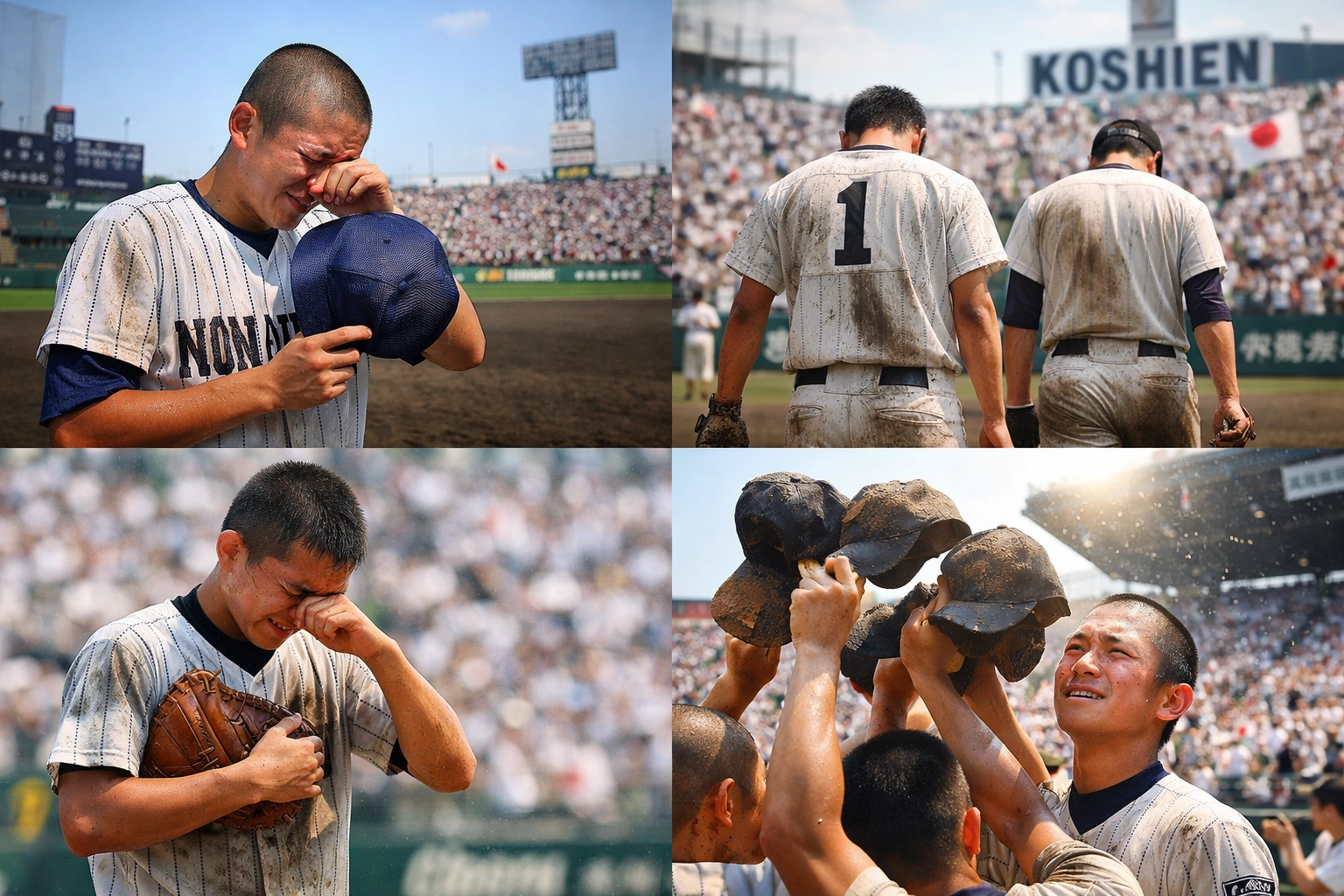

Koshien high school baseball
Youth, effort, and the emotional heart of Japanese baseball
Every spring and summer, millions of people across Japan stop to watch high school baseball games at Koshien. For many, it is more than a sports tournament. It is a symbol of youth, effort, and “beautiful defeats” that adults remember for the rest of their lives. This guide explores what Koshien is, why it is so emotional, and how it reflects Japanese cultural values of effort, teamwork, and respect, while also touching on today’s concerns about heat and player safety.
BASEBALL FAVORITES
Explore More Baseball Stories
Start here
- Baseball in Japan: NPB Beginner’s Guide
- NPB Teams in Japan: All 12 Japanese Baseball Teams
- How to Buy Baseball Tickets in Japan
Stadiums & travel
Players & culture
International events
Traditions & tournaments
- Koshien High School Baseball (Current page)
What is Koshien?
Koshien refers to the national high school baseball tournaments held at Hanshin Koshien Stadium in Nishinomiya, near Osaka. There are two main tournaments:
- Spring invitational tournament: teams are selected based on performance and regional balance.
- Summer championship: teams qualify by winning prefectural tournaments across Japan.
For many teenagers, stepping onto the all-dirt infield at Koshien is a once-in-a-lifetime dream. The stadium itself, with its ivy-covered walls and long history, feels like a stage where youth, effort, and destiny all intersect. Even people who rarely watch professional baseball may still follow Koshien every year.
The story of youth and effort
Koshien is often described with the word seishun (青春) – “youth.” Games are filled with images that Japanese people strongly associate with youth: shaved heads, sunburned faces, muddy uniforms, and teams shouting encouragement until their voices crack.
What people admire most is not only victory, but visible effort:
- players sprinting on and off the field, even when they are clearly exhausted
- pitchers giving everything they have before leaving the mound, often pausing to bow slightly to their teammates and the crowd
- fielders diving for balls they might not reach, simply because giving up is not an option
- bench players clapping, singing, and calling out support every pitch
These scenes echo a deep cultural belief in Japan: that sincere effort, even without a happy ending, has its own beauty. Koshien turns this belief into a shared national story that repeats every year.
Rituals, manners, and symbolism
Beyond the score, Koshien is full of rituals that express respect and gratitude. These gestures are small, but they leave a strong impression on viewers.
- Teams bow to the stands and to the field before and after games.
- Players line up along the foul lines to greet opponents and umpires.
- After a loss, some players kneel and touch the dirt as a way of saying thank you.
- Winning teams sometimes collect infield dirt as a keepsake to take home.
These actions reflect Japanese values of 礼儀 (reigi) – politeness and proper manners – and 感謝 (kansha), a sense of gratitude. They remind viewers that baseball is not only a competition, but also a relationship between players, schools, fans, and the stadium itself.
Spring and summer Koshien
The two Koshien tournaments each have their own mood and timing within Japan’s seasonal rhythm.
- Spring Koshien: Held in March and often associated with new beginnings, graduation, and the end of the school year. The air is cool, and games sometimes overlap with the first signs of cherry blossoms.
- Summer Koshien: Held in August, during the hottest time of year. Players and fans endure intense heat, and the image of sun, brass band music, and crowded stands has become iconic.
Together, these tournaments mark key emotional points in the Japanese year. Spring suggests hope and fresh starts; summer brings passion, exhaustion, and tears.
In recent years, however, the summer tournament has also become a topic of debate in Japan. Daytime games under extreme heat and humidity have raised concerns about player safety and heatstroke, and some people now question whether schedules or game times should be adjusted. At the same time, many people still feel emotionally attached to the traditional summer Koshien atmosphere, so the discussion continues.
Why adults cry over high school baseball
One of the most striking things about Koshien is how many adults openly cry while watching. Parents, alumni, and even casual viewers may find themselves wiping away tears during the final innings of a close game.
There are several reasons for this:
- Memories of their own youth: Watching teenagers give everything on the field reminds adults of a time when they, too, had big dreams and intense feelings.
- Visible, honest emotion: Players cry on live television – after victories, after defeats, and sometimes simply when they feel overwhelmed.
- Finality: For many third-year students, Koshien is the last official game of their baseball lives. When the tournament ends, so does their long daily routine of training.
In a society where adults often hide strong emotion in public, Koshien offers a socially accepted space for shared tears. The result is a powerful feeling of national catharsis.
How to experience Koshien as a visitor
Even if you are just visiting Japan, it is possible to feel the atmosphere of Koshien, especially during tournament season.
Watching live at the stadium
During spring and summer tournaments, tickets are sold for each game or for blocks of games. Crowds include students, families, alumni, and local fans. Brass bands play school songs and pop arrangements, cheer squads lead chants, and the entire stadium reacts to every pitch.
Public viewings and local screenings
Even if you cannot get a seat, big games are often shown in schools, community centers, sports bars, and family restaurants. Many people watch casually while eating lunch or taking a break from work.
Television and online broadcasts
National broadcasters and online platforms carry the games, often with detailed commentary about each school’s history and the players’ personal stories. For learners of Japanese, listening to these broadcasts can be an interesting way to practice.
Travel tips for Koshien days
If you plan to visit Koshien Stadium during tournament season, a little preparation will make your day smoother:
- Check the schedule: Tournament games can start in the morning and continue into the evening. Decide how many games you want to watch.
- Arrive early: Popular matchups can draw large crowds, especially when local or famous schools are playing.
- Prepare for the weather: Summer Koshien can be extremely hot and sunny. Hats, towels, sunscreen, and plenty of water are essential, and it is important to pay attention to official heat warnings.
- Use public transport: Koshien Station on the Hanshin Line is the nearest stop. The area becomes very busy on game days, and parking is limited.
- Consider nearby sightseeing: Koshien is between Osaka and Kobe, making it easy to combine baseball with city exploration.
Trivia: Small details to notice
- Many players shave their heads before the tournament, a tradition linked to ideas of unity, discipline, and starting “from zero.”
- School brass bands rehearse for months to support their teams, and some people tune in just to enjoy the music.
- After a game, you may see players carefully collecting dirt from the infield to take back to their school as a souvenir.
- Some schools travel from very distant prefectures, bringing large groups of students, teachers, and local supporters with them.
FAQ: Common questions about Koshien
Do I need to understand baseball rules to enjoy Koshien?
Not necessarily. Knowing the basics helps, but many people watch for the emotion, music, and atmosphere. Even if you only follow the score loosely, you can still feel the tension and excitement.
Is it okay to cheer loudly as a visitor?
Yes. Cheering is a big part of Koshien, and visitors are welcome to join in. Just follow the lead of the crowd, avoid rude language, and be mindful of people around you when waving towels or standing up.
Are tickets difficult to get?
That depends on the game and the day. Early-round games on weekdays can be easier to attend, while weekends and games featuring famous schools may be crowded. Checking in advance is recommended.
Can I visit Koshien Stadium outside of tournament season?
Yes. Koshien is also the home of a professional team, and stadium tours or museum exhibits may be available at certain times. Even from the outside, it is an interesting place to see.
BASEBALL FAVORITES
Explore More Baseball Stories
Start here
- Baseball in Japan: NPB Beginner’s Guide
- NPB Teams in Japan: All 12 Japanese Baseball Teams
- How to Buy Baseball Tickets in Japan
Stadiums & travel
Players & culture
International events
Traditions & tournaments
- Koshien High School Baseball (Current page)