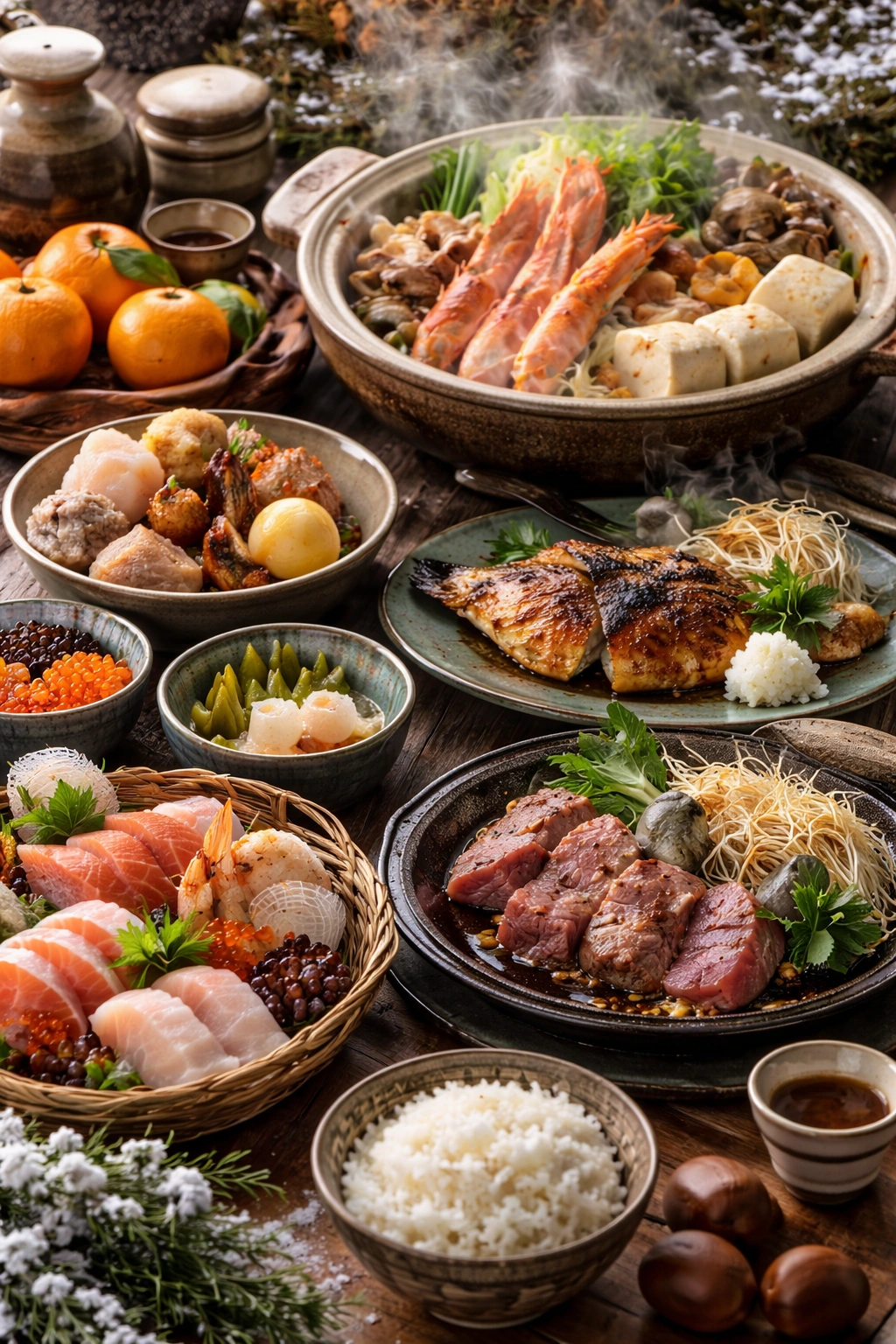

Winter foods in Japan
Winter foods in Japan are not only about ingredients, but about warmth, sharing, and enduring the cold season together. From nabe (hot pot dishes) and oden to oysters, fugu (pufferfish), yellowtail, and New Year foods, winter meals reflect comfort, tradition, and connection.
Contents
What are winter foods in Japan?
Winter foods in Japan are dishes and ingredients that provide warmth, nourishment, and comfort during the coldest months of the year. Unlike autumn, which emphasizes abundance, winter focuses on warmth, preservation, and shared meals.
The concept of shun (旬), meaning the peak season of an ingredient, still applies, but winter also emphasizes cooking methods such as simmering, boiling, and slow preparation, which help retain heat and deepen flavor.
Why winter foods matter in Japanese culture
Winter in Japan is associated with cold weather, shorter days, and a quieter rhythm of life. Food becomes a central way to create warmth, both physically and socially. Meals are often shared, and dishes are designed to bring people together.
This is why winter food culture is not only about taste. It reflects how people gather, slow down, and support each other during the coldest time of the year.
Main categories of winter foods in Japan
Winter seafood
Winter is the peak season for many types of seafood. Oysters are especially popular and known for their rich and creamy texture. Yellowtail, called buri, becomes fattier in winter and is often used in traditional dishes. Cod is also widely enjoyed in soups and hot pots.
Fugu (pufferfish) is one of the most distinctive winter delicacies in Japan. It must be carefully prepared by licensed chefs due to its natural toxicity. Despite this, it is highly valued for its delicate flavor and unique texture, and is often enjoyed as part of special winter dining experiences.
Nabe and shared meals
Nabe (hot pot dishes) is one of the most important elements of winter food culture in Japan. A pot is placed at the center of the table, and people cook and eat together. This makes nabe not just a dish, but a shared experience.
Popular types include sukiyaki and shabu-shabu. Oden, a simmered dish with daikon, eggs, tofu, and fish cakes, is also a winter staple that provides warmth and comfort.
Root vegetables and warming ingredients
Winter meals often feature root vegetables such as daikon (Japanese radish), napa cabbage, carrots, and taro. These ingredients store energy underground and provide nourishment during colder months.
They are commonly used in soups, stews, and simmered dishes, creating meals that feel both warming and satisfying.
Preserved and fermented foods
Winter also highlights preserved and fermented foods such as miso, pickles, and dried fish. These foods reflect traditional methods of storing ingredients for longer periods.
They are deeply connected to Japanese food culture and show how people adapted to seasonal conditions.
New Year and seasonal customs
Winter food in Japan reaches its cultural peak during the New Year. Dishes such as osechi (traditional New Year foods) and toshikoshi soba (year-crossing noodles) are deeply symbolic and reflect wishes for health, longevity, and prosperity.
These foods show that winter meals are not only practical, but also meaningful.
How people enjoy winter foods today
Today, winter foods are enjoyed in many ways, from home cooking to restaurants and convenience stores. Oden is commonly available in convenience stores, while nabe dishes are popular across different dining styles.
Seasonal desserts and limited winter menus also appear, adding a modern layer to traditional winter food culture.
Travel tips for trying winter foods in Japan
To experience winter foods in Japan, look for local specialties and seasonal menus. Trying nabe at a restaurant or enjoying oden from a local shop can provide an authentic experience.
Winter is also a good time to combine food with seasonal experiences such as hot springs, where warming dishes naturally complement the environment.
Trivia
Many winter dishes in Japan are designed to be cooked at the table. This not only keeps the food warm, but also creates a shared experience that reflects the importance of togetherness during winter.
FAQ
What is the most famous winter food in Japan?
Nabe (hot pot dishes) and oden are among the most iconic winter foods.
Why are hot pot dishes popular in winter?
They provide warmth and are designed to be shared, making them ideal for cold weather.
Is fugu safe to eat?
Yes, when prepared by licensed chefs. Strict regulations ensure safety in Japan.
Is seafood important in winter?
Yes. Many types of seafood, including oysters, yellowtail, and fugu, are at their best in winter.
What is osechi?
Osechi is a traditional set of New Year dishes, each with symbolic meaning.
Related guides
Official resources
SAKURA FAVORITES
Explore More Sakura Stories
Main guides
History & meaning
Bloom timing & stages
Planning & tools
Around the world
BASEBALL FAVORITES
Explore More Baseball Stories
Start here
- Baseball in Japan: NPB Beginner’s Guide
- NPB Teams in Japan: All 12 Japanese Baseball Teams
- How to Buy Baseball Tickets in Japan