


Hida takayama cultural itinerary
← Back to Cultural Itineraries
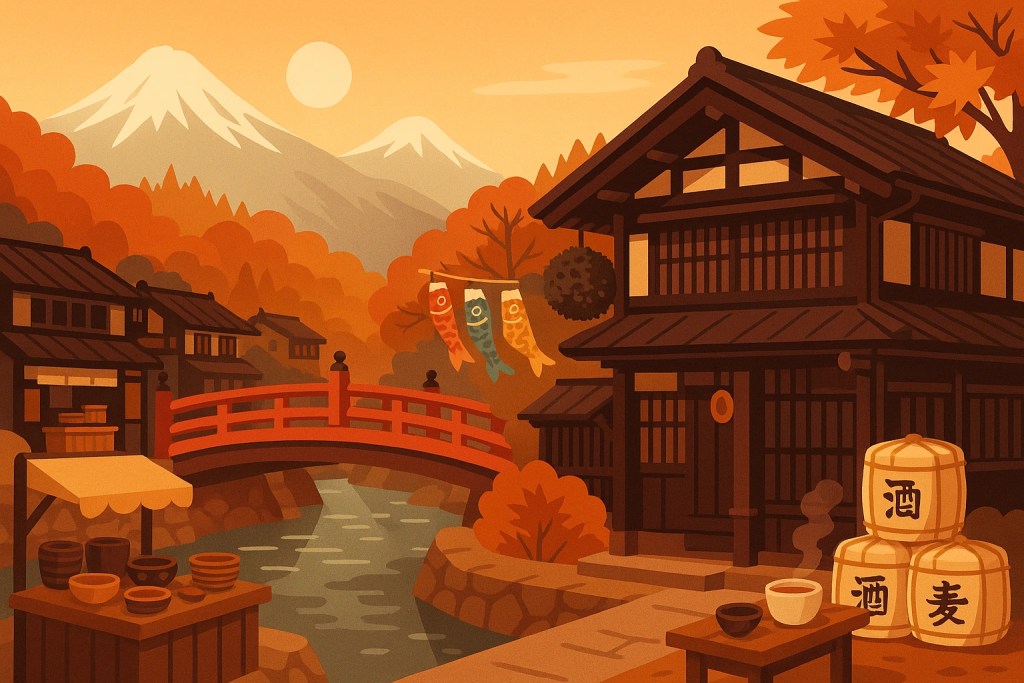
A one-day, culture-first plan in Hida Takayama (Gifu)—old town alleys, woodworking & lacquer, and seasonal festivals. Theme: “Wood & Sake Stroll” (Morning Market → Wood Studio → Sake Brewery).
Quick Facts
- Base: Takayama Old Town (Sanmachi) + Miyagawa & Jinya Morning Markets
- Theme: “Wood & Sake Stroll” — morning market → wood/lacquer studio → sake brewery
- Pace: Slow–medium; 3 blocks with tea/snack pauses
- Moves: No hotel move; compact on foot + brief bus/taxi if needed
- Best Seasons: Spring/Autumn; festival days (April 14–15 & Oct 9–10) are crowded but spectacular
- Passes: IC cards widely accepted; JR Takayama Line access (reserve Limited Express where possible)
- Budget tier: ¥¥ (see Budget)
- Map: See Access & Map
- Accessibility: See Accessibility & Family
How to Use – Hida Takayama Cultural Itinerary
Enter the morning market at opening for quiet browsing, place a wood/lacquer experience mid-day, and end with a brewery visit. Pre-book workshops and tastings; keep lunch light; add a tea stop every 2–3 hours.
Itinerary – Hida Takayama Cultural Itinerary
Accessibility links are listed at the bottom of this page.
-
Day 1 — Wood & Sake Stroll (Old Town)
Morning
Miyagawa & Jinya Morning Markets at opening; seasonal produce, sweets, and crafts. Ask vendors before close-up photos; keep lanes clear.
Afternoon
Wood/lacquer studio intro (Hida woodworking or Hida Shunkei). Observe tool areas; sleeves tidy; learn grain, joinery, and clear-lacquer care.
Evening
Sake brewery stroll in Sanmachi; short tasting flight and shop. ID may be requested; pace tastings with water and snacks.
Cultural connection: townscape craft economy; mingei lens (use in everyday objects); sake as seasonal expression.
Seasonal & Rainy Swaps
- Rainy: extend studio tour; add museum/craft gallery; warm café stops near Sanmachi.
- Spring: festival period around April 14–15; start earlier and book tastings.
- Summer: outdoors early/late; interiors mid-day; hydrate and rest in shade.
- Autumn: foliage + Oct 9–10 festival; avoid peak hours 11:00–14:00.
- Winter: clear air; watch for slick streets; add warm tea breaks.
Etiquette & Handy Phrases
- Markets: greet vendors; handle items gently; avoid blocking stalls when photographing.
- Studios: follow staff routes; don’t touch drying racks; short nails and no rings/watches for hands-on.
- Sake: legal drinking age 20; spit cups available in some tastings; “nomi-sugi” (overdrinking) is discouraged.
Phrases (romaji): “Shashin yoroshii desu ka?” / “Sawatte mo ii desu ka?” / “O-susume wa nan desu ka?” / “Arigatō gozaimashita.”
Accessibility – Hida Takayama Cultural Itinerary
Note: We do not accept questions about this itinerary. For hours, access, and on-site accessibility, please use the official links below.- Old Town & Morning Markets: Use the city’s Hida-Takayama Walking Map (EN, PDF). It marks multi-purpose/ostomate toilets and notes places that aren’t wheelchair-accessible.
- Takayama Jinya: See the official English site (User Guide & Access). For ramp assistance or room access questions, contact staff on arrival.
- Hida Folk Village (Hida no Sato): The official English pamphlet (PDF) includes a site map, facilities and ticket notes (including disability policy). Paths are hilly; allow extra time.
- Festival periods: The city’s Takayama Festival brochure (EN, PDF) shows barrier-free restrooms, accessible seating and wheelchair facilities on the route map.
- City buses: Route info for Machinami & Sarubobo buses (EN) and the Takayama City Line (EN). Some services and attractions (e.g., Shinhotaka Ropeway) note wheelchair accessibility—see the operator’s page before you go.
- Tourist Information: The Hida-Takayama Tourist Information Office (EN) provides multilingual maps and can advise on barrier-free routes and current conditions.
Tip: Surfaces in the preservation district include stone and uneven paving. When rain or snow is forecast, plan shorter outdoor blocks and use museums/covered streets as mid-day swaps.
Access & Map
- From Tokyo: Tokaidō Shinkansen to Nagoya → JR Ltd. Exp. “Hida” to Takayama; or Hokuriku Shinkansen to Toyama → JR to Takayama.
- From Kyoto/Osaka: Shinkansen to Nagoya → JR “Hida” to Takayama.
- From Kanazawa/Toyama: Hokuriku Shinkansen to Toyama → JR to Takayama.
- Airports: Chubu Centrair (NGO) for Nagoya connection; Komatsu (KMQ) / Toyama (TOY) for Hokuriku side.
- Getting around: Old Town is walkable; local buses reach Hida Folk Village and other sites; taxis useful for short hops.
- Pass / IC: Suica/PASMO/ICOCA work on JR gates; bus IC acceptance varies—carry small cash just in case.
- Accessibility: Takayama Station has elevators; some heritage streets have slopes/cobbles—allow extra time.
Takayama Station Hida-Furukawa Station Sanmachi (Old Town) Takayama Jinya Hida Folk Village Miyagawa Morning Market Shirakawa-go (Ogimachi)
Budget
| Item | ¥ Range | Notes |
|---|---|---|
| Transport (within Takayama) | ¥500–¥1,200 | Walk for Old Town; local buses/taxis for Hida Folk Village and outlying sights. |
| Admission | ¥0–¥1,500 | Many streets free; typical sites (Jinya/Folk Village/museums) modest fees. |
| Food / Tea | ¥2,000–¥4,000 | Casual lunch + café/snack; dinner depends on choice (try Hida beef specialties). |
| Optional | ¥0–¥4,000 | Workshops, extra exhibits, short taxi segments; day-trip buses priced separately. |
| Total (per person / day) | ¥5,000–¥11,000 | Tier: ¥¥ (standard) |
¥ = frugal (<¥5,000) · ¥¥ = standard (¥5,000–¥12,000) · ¥¥¥ = comfort (>¥12,000)
*Intercity rail (Nagoya/Toyama/Kanazawa ↔ Takayama) and airport transfers are extra; seasonal events may affect prices.
Related Guides
Official Resources
Want a tailored version? Plan with our Concierge.
You must be logged in to post a comment.