

Washi
Washi and Autumn Crafts in Japan
Table of Contents
Why Washi Matters
Washi is traditional Japanese handmade paper valued for its strength, lightness, and natural beauty. It appears in daily life (shoji screens, stationery) and in arts (printmaking, conservation). In autumn, warm textures and earthy colors of washi pair naturally with the season’s crafts and celebrations.
History & Noted Regions
Washi has over a millennium of history in Japan. Famous producing areas include Echizen (Fukui), Mino (Gifu), and Tosa (Kochi). Skilled papermakers cultivate fibers like kozo, mitsumata, and gampi, and refine them with clear water and meticulous techniques that have been preserved across generations.
Autumn Crafts with Washi
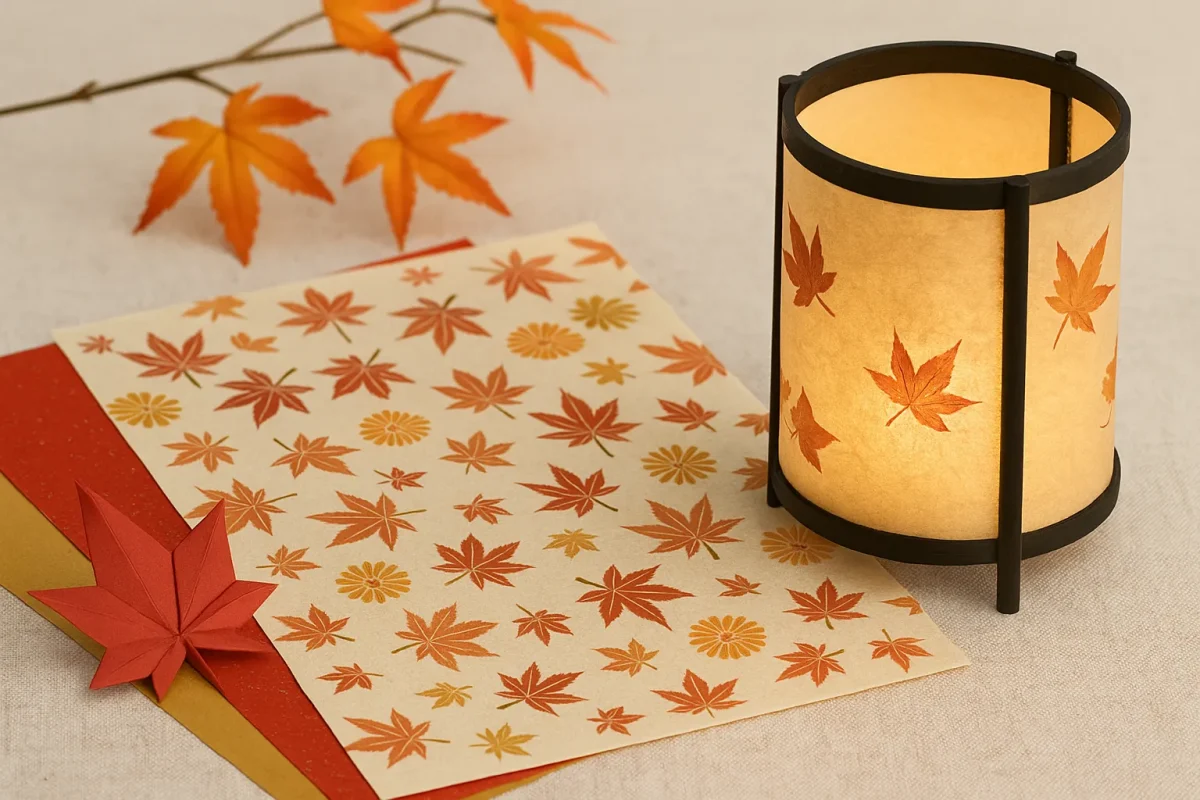
- Seasonal décor: maple-leaf motifs for lantern shades, shoji accents, and window art.
- Gift wrapping: washi envelopes and bands for autumn gifts and oseibo preparations.
- Stationery: letter sets for moon-viewing notes or festival invitations.
- Art projects: collage, printmaking, and pressed-leaf compositions using dyed washi.
Tools & Techniques
- Fibers: kozo (paper mulberry), mitsumata, gampi.
- Sheet forming: traditional nagashi-zuki method for strong, even sheets.
- Adhesives & sizing: plant-based additives to control absorbency.
- Dyeing: natural dyes for autumn hues—amber, persimmon, umber.
Etiquette & Care
- Handle with clean, dry hands; avoid lotions that transfer to fibers.
- Store flat in low-light, low-humidity areas to prevent warping.
- When gifting, use neat folds and simple bands; presentation is part of the value.
- For displays, keep away from direct sunlight to preserve color.
Tips for Foreign Visitors
- Look for workshops in washi towns (introductory sessions are often available in English).
- Choose thicker sheets for beginners; they’re easier for crafts and framing.
- Pack flat between cardboards when traveling to prevent creases.
- Pair washi gifts with seasonal sweets or tea for a thoughtful set.
FAQ about Washi
Q: Is washi only decorative?
→ No. It’s used for conservation, lighting, stationery, printmaking, and interiors.
Q: Can I write on washi with fountain pens?
→ Many types handle liquid ink well, but test first—absorbency varies by sheet.
Q: What fiber should beginners try?
→ Kozo papers are versatile and durable, good for crafts and practice.
Learn More
- Autumn Gift Giving in Japan
- Japanese Tea Ceremony in Autumn
- Matcha in Japan — Tradition, Health, and Modern Culture
- Autumn Leaves Viewing in Japan — Koyo Traditions and Manners
- UNESCO — Washi, craftsmanship of traditional Japanese handmade paper
- Agency for Cultural Affairs (Japan) — Cultural Heritage
- JNTO — Spotlight: Washi