

Introduction
The harvest moon is a time for reflection, gratitude, and celebration in Japan. One of the most charming customs is enjoying tsukimi-zake—drinking sake under the full moon. This practice combines seasonal appreciation with Japan’s deep sake culture.
History & Meaning
Tsukimi-zake dates back to the Heian period, when courtiers gathered outdoors to compose poetry, admire the moon’s reflection on water, and share sake. Sake was believed to purify and connect participants with nature and the divine.
Choosing the Right Sake
- Junmai or Ginjo: Mild, aromatic types pair beautifully with moonlit evenings.
- Cold or Warm?: Chilled sake works well in early autumn, but warm sake (atsukan) is ideal for cooler nights.
- Seasonal Limited Editions: Breweries often release special autumn brews (aki-agari) just for this season.
Food Pairings
Pairing food with sake enhances the experience:
- Tsukimi Dango: Traditional moon-viewing dumplings
- Grilled Sanma: The classic fish of autumn
- Chestnuts & Sweet Potatoes: Seasonal produce that complements the drink’s flavor
Hosting a Tsukimi Party
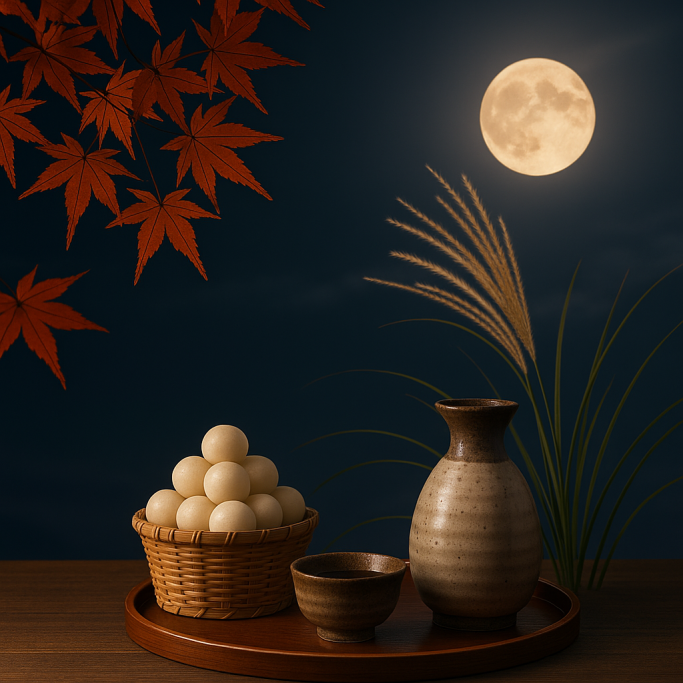
- Set up a small table outdoors with offerings of pampas grass and seasonal produce.
- Serve sake in small cups and encourage guests to write short poems or haiku.
- Play soft traditional music or enjoy the quiet of the evening.
Cultural Significance
Sake is more than just a beverage—it is a symbol of purification and connection. Drinking sake under the harvest moon reminds participants of the cycles of nature and the importance of gratitude.
Summary
Tsukimi-zake is a perfect way to celebrate the beauty of autumn nights. Choose your favorite sake, pair it with seasonal foods, and take a quiet moment under the moonlight to appreciate the passing of time.
FAQ
Q: What is tsukimi-zake?
A: It is the tradition of drinking sake under the harvest moon during the autumn full moon celebrations.
Q: Can I use any type of sake?
A: Yes, but seasonal or limited-edition brews enhance the experience and flavor pairing.