

Seasonal Japanese Stories
Even outside autumn, understanding the tsukimi dango meaning is one of the simplest ways to grasp how Japan “reads” the year. Tsukimi (moon viewing) follows seasonal and traditional calendar logic rather than a fixed Western date, which is why the tradition feels mysterious at first. This guide explains what tsukimi dango are, why they’re offered to the moon, and how the custom connects to harvest gratitude and Japan’s broader seasonal calendar culture.
Quick Summary
- What: Tsukimi dango are rice dumplings prepared for Tsukimi, Japan’s moon viewing tradition.
- Core meaning: An offering of gratitude for the harvest and a wish for well-being under the autumn moon.
- When: Often around the Mid-Autumn Moon (commonly called Chūshū no Meigetsu), typically in September–October.
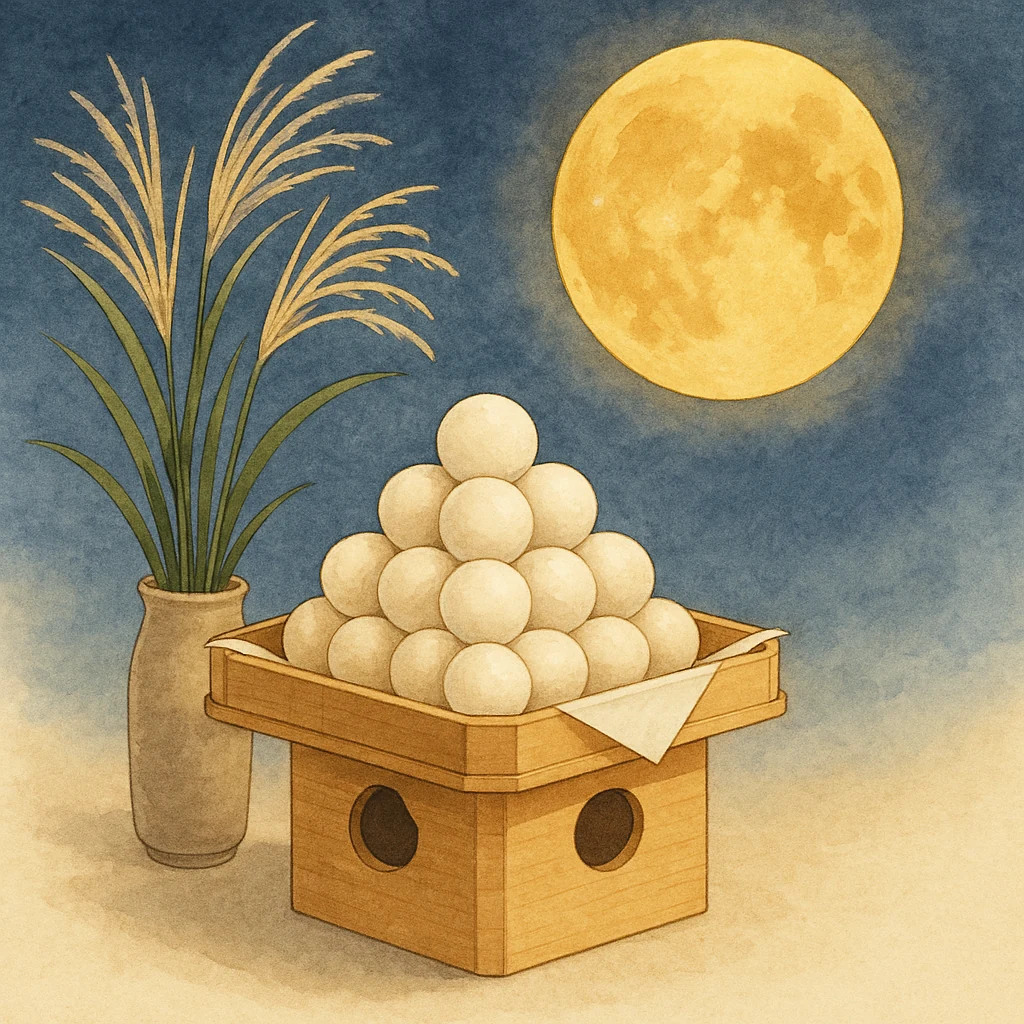
- How they’re shown: Often displayed in a small pyramid-like stack, sometimes with susuki (pampas grass).
- Not primarily “dessert culture”: The cultural role is the offering; eating them is secondary (and common after).
What is Tsukimi?
Tsukimi (月見) literally means “moon viewing.” It’s a seasonal custom where people appreciate the autumn moon, traditionally while acknowledging nature’s cycles—especially the harvest. In older Japan, the moon was more than scenery: it was a seasonal marker. Watching it was a quiet way to recognize time passing, give thanks, and reset your intentions.
You may also see the term Chūshū no Meigetsu (中秋の名月), often translated as “the Mid-Autumn Moon.” In many homes, Tsukimi is simple: a small seasonal display, a few offerings, and a moment to look up.
What Are Tsukimi Dango?
Tsukimi dango are small rice dumplings made from rice flour (or a rice-based dough), typically plain, soft, and lightly sweet (or not sweet at all). Their “simplicity” is the point: they represent staple foods and everyday gratitude, rather than luxury.
Unlike many festival foods that are designed to be eaten on the spot, tsukimi dango are most iconic as an offering. After the viewing or the next day, families commonly eat them—sharing the season after honoring it.
Tsukimi Dango Meaning and Symbolism
The tsukimi dango meaning sits at the intersection of harvest culture and seasonal aesthetics. Traditionally, they express:
- Gratitude for the harvest: Rice-based foods are deeply tied to Japan’s agricultural history, so an offering reflects “thank you” in the language of staples.
- A wish for health and continuity: Offering food can also carry the quiet hope that the coming season remains stable—good weather, good health, good fortune.
- Harmony with nature: Tsukimi is less about “celebration noise” and more about aligning with the season—an autumn pause to notice the sky.
The dumplings’ round shape naturally echoes the moon, but the symbolism is not only visual. A round form can also suggest wholeness and completion—fitting for an autumn milestone.
Another seasonal mochi offering is kagami mochi, prepared for the Japanese New Year as a symbol of renewal and continuity.
How They’re Displayed (and Why the Stack Matters)
You’ll often see tsukimi dango arranged in a small stacked shape—sometimes described as pyramid-like. The display feels ceremonial without being formal: it’s a “small altar” for the season.
A classic companion is susuki (ススキ), pampas grass. It visually resembles rice heads and is widely used as an autumn seasonal decoration. Together, dango and susuki create a quiet harvest tableau: grain, moon, and gratitude in one frame.
Households vary: some place the offering near a window, balcony, or veranda; others keep it on a small shelf or table. The consistent idea is the same—make a space that invites you to look up.
How Tsukimi Is Celebrated in Japan Today
Modern Tsukimi is often modest and flexible. Many people buy seasonal dango from supermarkets or wagashi shops, place them with a small autumn decoration, and enjoy a short moon-viewing moment—especially if the weather is clear.
In some places you’ll also see “Tsukimi” in food marketing (for example, moon-themed seasonal items). That commercial layer exists, but the cultural core remains recognizable: noticing the season, not just consuming it.
Tsukimi and Japan’s Calendar Logic
One reason Tsukimi can feel “mysterious” to overseas visitors is that the timing doesn’t always match a fixed Western calendar date. Traditional seasonal markers in Japan have long interacted with lunar or lunisolar rhythms and seasonal observation. That’s why the Mid-Autumn Moon is commonly experienced around September–October, but the exact date shifts year to year.
If you want to connect Tsukimi with other seasonal cues—holidays, festivals, and cultural timing—use our calendar tools: Japanese Calendar and (if you’re exploring auspicious day concepts) Rokuyo Calendar.
Travel Tips: Where You’ll See Tsukimi Dango
- Wagashi shops (traditional sweets): The most classic place to find seasonal dango displays.
- Supermarkets & department food floors: Often sell seasonal packs near other autumn items.
- Shrines, temples, and seasonal events: Some locations host moon-viewing gatherings or autumn cultural programs (varies by region and year).
If you’re planning an autumn itinerary, Tsukimi is a perfect “culture-first” moment: it doesn’t require a full-day commitment, but it leaves you with a strong seasonal memory.
Trivia
- “Tsukimi” is literally “moon viewing”: It’s a verb-like custom—what matters is the act of looking, not only the food.
- Susuki isn’t random decoration: It’s used because it resembles rice heads and carries a harvest-season feel.
- Eating comes after offering: Many families treat it like a seasonal “thank you,” then share the food afterward.
FAQ
Do Japanese people actually eat tsukimi dango?
Yes—very commonly. But culturally, they are most recognizable as an offering first. Eating them after the viewing is a natural “second act.”
Are tsukimi dango sweet?
They can be lightly sweet or nearly plain. Compared with many desserts, they’re intentionally simple—more “seasonal staple” than “sugar treat.”
Is Tsukimi a public holiday in Japan?
Usually, no. Tsukimi is a cultural custom rather than a nationwide public holiday, which is why it often shows up as a seasonal tradition at home and in shops.
What’s the difference between Tsukimi in Japan and Mid-Autumn Festival in China?
Both share the idea of appreciating the moon and seasonal abundance, but Japan’s Tsukimi often emphasizes quiet observation and offerings like dango, while China’s Mid-Autumn Festival is closely associated with mooncakes and broader family celebration traditions.
Official Resources
Tsukimi dango meaning