
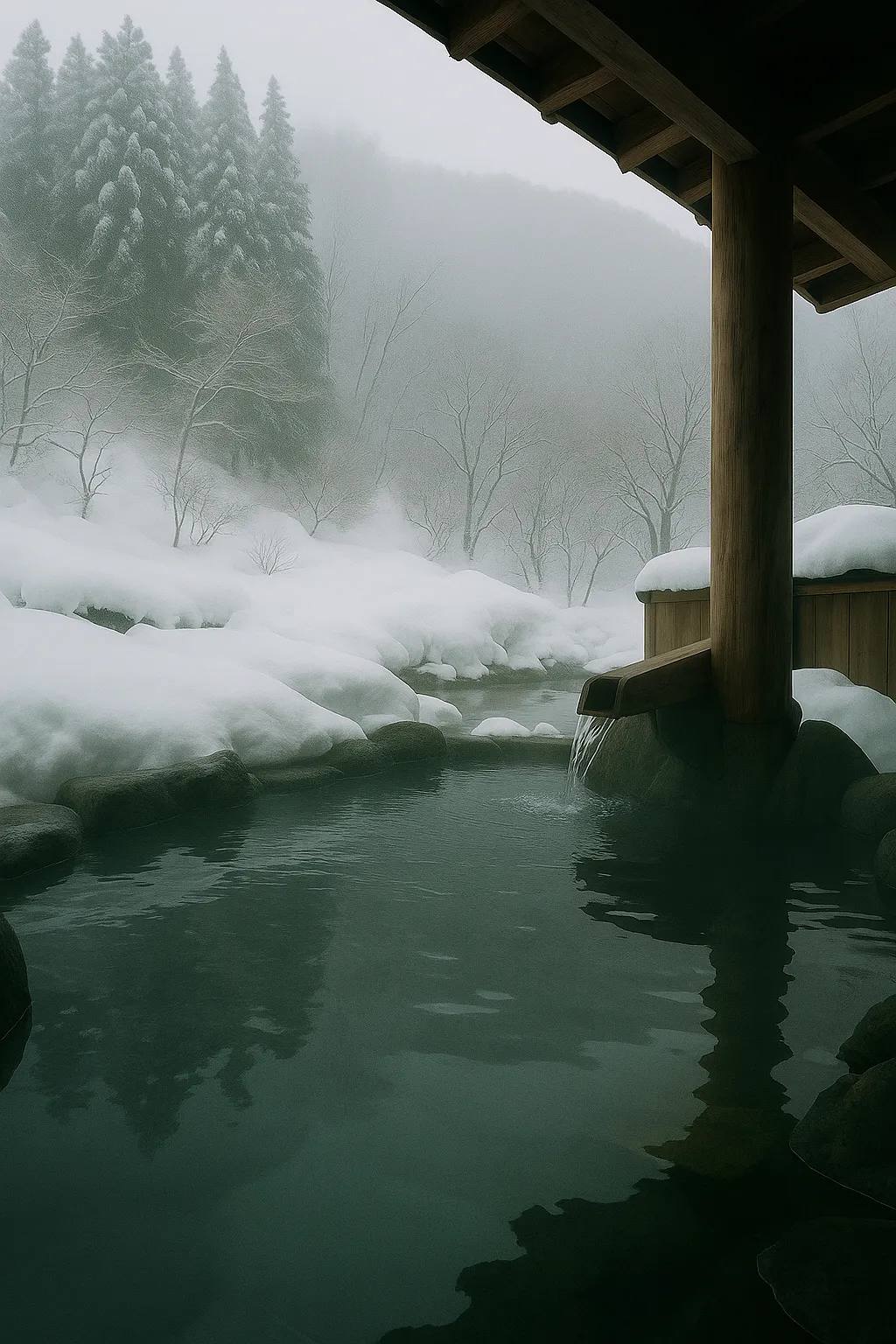

Snow onsen New Year
A culture-first guide to spending New Year in Japan through quiet hot-spring towns, early-morning shrine visits, and winter traditions.
Quick Summary
- Japanese New Year is very busy in big cities, but snowy onsen towns offer a calm, deeply cultural way to welcome the year.
- Pairing snow onsen + hatsumode (first shrine visit) helps you avoid crowds and experience Japan’s New Year traditions as they were meant to be felt: slowly and quietly.
- Great regions for this style of trip include Nagano (Shibu/Yudanaka), Kusatsu, Jozankei, Kinosaki, and Echigo-Yuzawa, each with local shrines and winter food traditions.
- For the quietest experience, visit shrines early on January 1 and book ryokan 3–6 months in advance if you want the peak New Year dates.
- Ideal trip length is 2–3 nights, arriving around December 30–31 and leaving on January 1–2.
Table of Contents
Why a snow onsen + hatsumode trip is perfect for New Year
New Year (shōgatsu) is the most meaningful season in Japan. Cities become crowded, famous shrines attract long lines, and popular areas like Asakusa or Meiji Shrine can feel overwhelming. If you step away from the big cities and into a snowy onsen town, the rhythm changes completely.
A snow onsen offers stillness, slow meals, and the quiet sound of falling snow. Pairing this with an early-morning hatsumode — your first shrine visit of the year — creates a peaceful start rooted in Japanese custom. You avoid the crowds while experiencing traditions the way many people in Japan actually enjoy them: quietly, with time to think.
This style of New Year trip is ideal for:
- Travelers who prefer culture-first experiences over bucket lists
- Couples or families who want a calm, reflective holiday
- Visitors who dislike big-city congestion and long queues
- Anyone who wants to feel Japanese New Year traditions in a slower, more atmospheric setting
How to plan your trip (2–3 night model itineraries)
A snow onsen and hatsumode trip works best if you give yourself enough time to slow down. The itineraries below are meant as templates you can adapt to different regions and onsen towns.
Sample 2-night, 3-day plan (Dec 30 – Jan 1)
Day 1 (December 30): Arrival and first onsen
- Arrive in your chosen onsen town by mid-afternoon.
- Check into a ryokan (traditional inn) and change into yukata.
- Take your first bath in an indoor or open-air onsen overlooking the snow.
- Enjoy a slow kaiseki-style dinner with local winter ingredients.
- Take a short evening walk through the quiet town streets.
Day 2 (December 31): Slow daytime, meaningful night
- Start the day with a morning onsen and relaxed breakfast.
- Explore the town on foot: small shrines, viewpoints, craft or sake shops.
- Return to your ryokan for an early dinner featuring winter dishes.
- Eat toshikoshi soba (year-crossing soba noodles) in the evening.
- Optional: Visit a nearby temple to listen to jōya-no-kane, the bell ringing that marks the new year.
Day 3 (January 1): Early hatsumode and departure
- Wake up before sunrise for an early-morning hatsumode at a local shrine.
- Walk along a snow-covered path while the town is still quiet.
- Make your wish for the new year, draw an omikuji (fortune) if you like, and warm up with amazake.
- Return to your ryokan for a final bath and breakfast.
- Check out late morning and head back to the city before traffic builds up.
Sample 3-night, 4-day plan (Dec 30 – Jan 2)
If you add one more night, you give yourself space to truly settle into the season. Here is how a 3-night trip can look:
- Keep Days 1 and 2 the same as the 2-night plan: arrival, onsen, slow walks, and New Year’s Eve soba.
- On Day 3 (January 1), take your time at the shrine for hatsumode, then spend the afternoon resting, reading, or enjoying the snow.
-
Add a second full day on January 2 for:
- A longer snow walk or snowshoeing experience
- Visiting a local sake brewery or winter festival if available
- Trying regional New Year foods such as different styles of zōni (New Year soup)
- One more unhurried onsen session before returning to daily life
Best areas for a snow onsen & hatsumode trip
The best regions combine reliable winter scenery, good hot springs, and access to shrines that are welcoming but not overwhelmingly crowded. The locations below are examples — you can adapt the idea to other onsen areas with similar conditions.
Nagano – Shibu / Yudanaka Onsen
- Classic narrow streets and wooden ryokan that feel timeless in the snow.
- Nearby shrines and temples offer a peaceful setting for hatsumode.
- Some inns are used to international guests and can help with local information.
- Side trip: the famous snow monkeys of Jigokudani, if crowds and weather allow.
Gunma – Kusatsu Onsen
- One of Japan’s most famous hot springs, with strong, mineral-rich water.
- The central Yubatake (hot water field) area is atmospheric in winter, especially at night when the steam rises into the cold air.
- Hatsumode at Kōsenji Temple above Yubatake gives you a view over the town.
- Good choice if you want a classic onsen-town feel with clear winter air.
Hokkaido – Jozankei Onsen
- Located not far from Sapporo, but surrounded by deep snow and nature.
- Many hotels have large, comfortable baths and winter-friendly facilities.
- Hatsumode can be combined with a visit to Hokkaido Shrine in Sapporo.
- Ideal if you want a more “northern winter” feeling with heavy snow.
Hyogo – Kinosaki Onsen
- Famous for its seven public bathhouses and yukata walks along a canal.
- When it snows, the willow trees and old bridges look especially beautiful.
- Hatsumode at a local shrine offers a small-town, intimate atmosphere.
- Excellent seafood, especially snow crab, is a highlight of winter stays.
Niigata – Echigo-Yuzawa
- Very easy access from Tokyo by shinkansen (around 70 minutes at the fastest).
- Good base for combining hot springs, snow views, and even skiing or snowboarding.
- Local shrines provide a quieter hatsumode compared to big-city spots.
- Plenty of winter comfort food and local sake to try near the station.
Hatsumode etiquette in snowy regions
Hatsumode in a snowy area feels calm and nostalgic, but there are a few practical things to keep in mind so you can participate respectfully and comfortably.
- Footwear: choose shoes with good grip. Leather soles and high heels are risky on ice. Sneakers or winter boots with warm socks are ideal.
- Approach: paths and steps can be icy. Use handrails if available and take your time; no one expects you to rush.
- Purification: if the water at the purification basin is frozen or unavailable, it is fine to skip it and simply bow lightly before approaching the main hall.
- Offering and prayer: at the main hall, toss a coin into the offering box, bow twice, clap twice, offer your silent wish, then bow once again.
- Omikuji and charms: you can buy a fortune slip (omikuji) or protective charm (omamori) if you like. Follow the local custom for tying a bad fortune or keeping a good one.
- Photography: many shrines allow photos in the approach and grounds, but not inside the main worship area. If you are unsure, look for signs or follow what locals do.
- Timing: early morning on January 1 or visits on January 2–3 are usually the quietest times.
What to eat on a New Year snow onsen trip
Food is a big part of how people in Japan experience the New Year. In snow onsen towns, you get the added comfort of hot dishes after walking in the cold.
- Toshikoshi soba: simple soba noodles eaten on New Year’s Eve to “cross” into the new year. Broth and toppings vary by region.
- Osechi ryōri: beautifully arranged New Year dishes served in lacquered boxes. Some ryokan offer a traditional or modern version.
- Zōni: New Year soup with rice cake (mochi). The flavor, vegetables and style differ widely by region, which is part of the joy.
- Nabe hot pot: shared hot pot meals with seasonal ingredients like local vegetables, mushrooms, or seafood in coastal areas.
- Local sake and amazake: warm drinks that fit perfectly with winter baths and snowy evenings.
What to pack for a snowy New Year trip
Packing slightly differently for a snow onsen trip makes a big difference to your comfort and safety.
- Non-slip shoes or boots that you can walk in for 10–20 minutes without pain.
- Layered clothing: thin thermal innerwear, a light sweater or fleece, then a warm coat.
- Gloves, a scarf or neck warmer, and a hat if you get cold easily.
- A small, quick-drying towel for onsen use (many ryokan provide towels, but having your own is convenient).
- A compact umbrella or hooded coat for falling snow.
- A power bank — phone batteries drain faster in cold weather.
- Small coins (especially 5-yen and 10-yen coins) for shrine offerings.
Best times to visit shrines during New Year
When you visit the shrine can completely change your experience of hatsumode. A snow onsen town gives you more flexibility than big cities.
- Just after midnight (around 0:00–1:00): for those who want to be there exactly at the year change. In smaller towns, this can still feel calm.
- Early morning on January 1 (around 5:00–7:00): often the quietest and most atmospheric time, with soft light and very few people.
- Late morning to afternoon on January 1: families tend to arrive; it may be busier but still far quieter than major city shrines.
- January 2–3: usually very relaxed, perfect if you prefer a slow start to the year without any sense of rush.
Recommended routes from Tokyo and Osaka
Many snow onsen areas are surprisingly accessible from major cities. Always check current timetables and winter conditions before you travel.
From Tokyo
- Nagano (for Shibu/Yudanaka): shinkansen plus local train or bus via Nagano. Good for combining with a city stay.
- Echigo-Yuzawa: direct shinkansen from Tokyo Station. Very fast and convenient for short trips.
- Kusatsu: JR train to Naganohara-Kusatsuguchi plus bus to the onsen town, or highway bus options from the city.
From Osaka and Kyoto
- Kinosaki Onsen: direct limited express trains from Osaka or Kyoto. A classic choice for a traditional onsen town experience.
- For northern or eastern regions, you can connect via shinkansen or domestic flights, but travel time is longer.
Sample budget for a 2–3 night trip
Costs vary by region, room type, and travel dates, but the rough estimates below give you a starting point for planning.
| Category | Estimated cost (per person) |
|---|---|
| Ryokan (2 nights, with meals) | ¥20,000–45,000 |
| Transport (round trip) | ¥10,000–25,000 |
| Additional meals and snacks | ¥6,000–15,000 |
| Shrine offerings and small purchases | ¥300–¥800 |
| Total (approximate) | ¥36,000–80,000 |
Sharing a room, traveling slightly off-peak, or visiting less famous areas can reduce costs. Luxury ryokan, private baths, and peak dates will push the budget higher.
Why this kind of New Year trip creates “breathing space”
In big cities, New Year can feel like a checklist: see the famous shrine, eat certain foods, post the right photos. In a snow onsen town, the focus shifts inward.
Hot springs slow down your body. Snow softens the sound of the town. Shrines feel like places for reflection again, not just sightseeing. Starting the year this way gives you a sense of “breathing space” — time to think about what you want from the coming months, while being surrounded by some of Japan’s most beautiful winter landscapes.
If you want to feel Japanese New Year in a way that is calm, atmospheric, and deeply cultural, a snow onsen and hatsumode trip is one of the most rewarding choices you can make.
FAQ: Snow onsen & hatsumode for New Year
Do I need to book my snow onsen stay very early?
For popular onsen towns and peak dates (December 30 to January 1), it is wise to book 3–6 months in advance. If you plan to arrive after January 1 or choose a less famous area, you may find rooms closer to the date, but availability is never guaranteed.
Is it OK to visit a shrine in casual clothes, not kimono?
Yes. Kimono is not required. Neat, warm everyday clothing is perfectly fine for hatsumode. In snowy regions, shoes with good grip, warm layers, and gloves are more important than formality. If you happen to have something a little dressy, that is a nice extra, not a rule.
How busy are shrines in onsen towns compared to big cities?
Much quieter. You may see local families, but the long, tightly packed lines you find at major city shrines are rare. Early morning on January 1 and visits on January 2–3 are usually calm, with plenty of space to move and time to reflect.
Is driving safe in the snow if I rent a car?
It depends on your experience and comfort level with winter driving. Many roads are cleared and rental cars often come with winter tires, but snow and ice still require skill and caution. If you are not used to driving in snow, trains, buses and taxis are safer and less stressful options.
Are restaurants and shops open over New Year in onsen towns?
Many ryokan include dinner and breakfast over New Year, so your main meals are usually covered. Some local shops may close on January 1, but convenience stores and larger facilities near train stations often remain open. It is a good idea to buy snacks and drinks before the evening of December 31, when many places close early.