
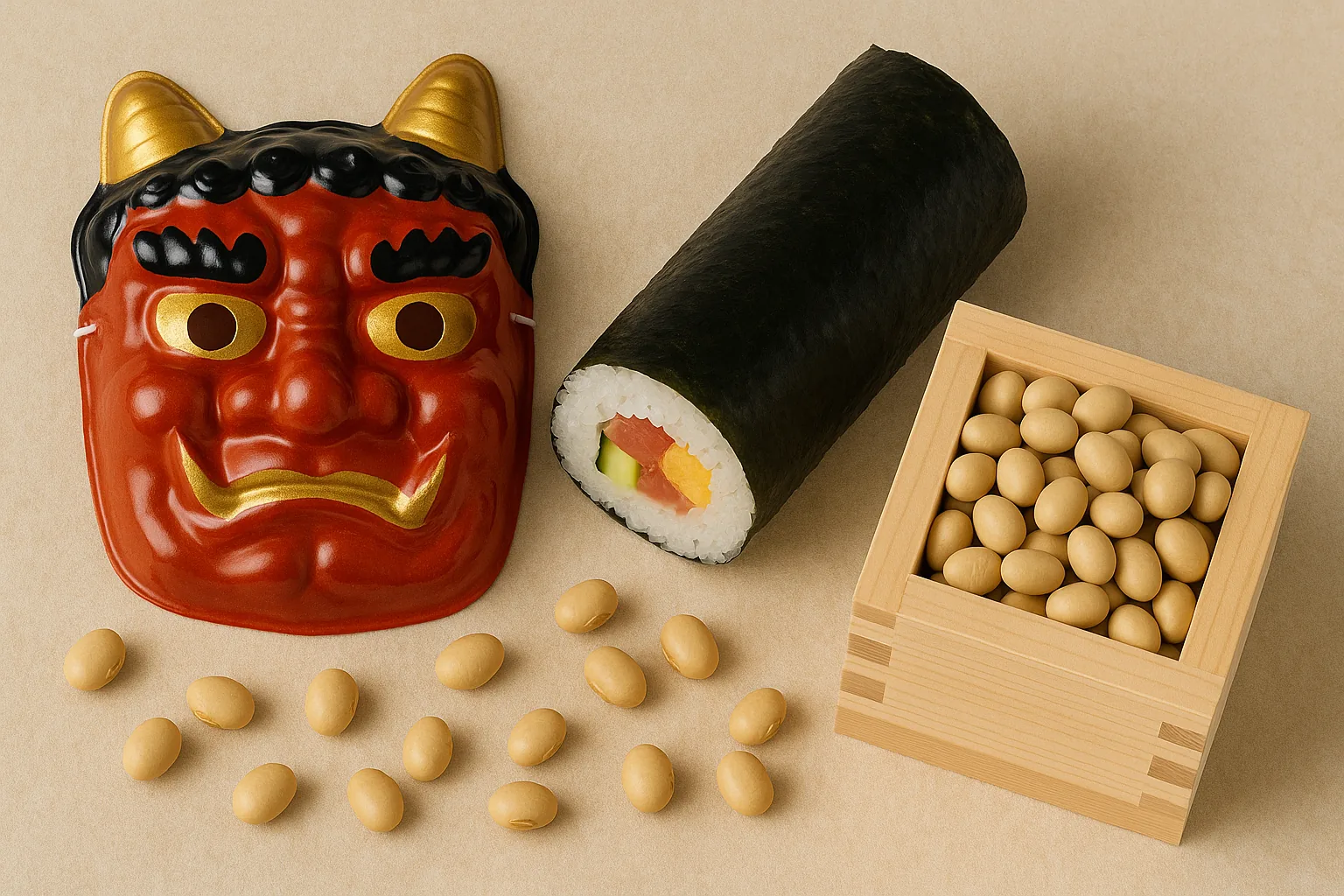

Setsubun in Japan
Quick Summary
Setsubun in Japan is a lively seasonal tradition held around early February, marking the symbolic transition into spring. Families throw roasted soybeans in a ritual called mamemaki to drive away misfortune and invite good luck, and many people also enjoy ehomaki, an uncut sushi roll eaten while facing the year’s lucky direction. From home celebrations to major shrine festivals, Setsubun is one of the most joyful ways to experience Japan’s culture of seasonal renewal.
Setsubun in Japan: What It Is
Setsubun (節分) literally means “seasonal division.” Today, it is most strongly associated with the shift from winter to spring, usually celebrated around February 3. While it is not a public holiday, it is widely loved and practiced across Japan.
The modern image of Setsubun is joyful and a little theatrical: someone at home may wear a demon mask, children and parents throw beans, and everyone chants “Oni wa soto! Fuku wa uchi!” — “Demons out! Good fortune in!”
Why February 3? Setsubun is defined as the day before Risshun (立春), the “first day of spring” in the traditional seasonal calendar. That is why it is usually celebrated on February 3. Because the date of Risshun is based on solar calculations, Setsubun can occasionally fall on February 2 or February 4 depending on the year.
Origins and Cultural Meaning
Setsubun has roots in older purification customs that aimed to remove spiritual pollution and unlucky forces before a new seasonal cycle began. Over time, these ideas blended with court and temple rituals, gradually spreading to the wider public.
Why it matters: cultural logic of renewal & purification
In Japan, seasonal turning points are often treated as moments when luck can “shift,” routines can reset, and a new cycle can begin with intention. Setsubun gives people a shared, simple way to clear out what feels unwanted and welcome what they hope for next.
- Purification made practical. The ritual turns a big idea—cleansing and renewal— into something any household can do in minutes.
- Oni as a symbol, not a literal fear. The demon mask is a playful stand-in for misfortune, bad habits, illness, or “what you don’t want to carry forward.”
- Beans as a “good-luck tool.” Roasted soybeans are everyday food, so the act feels approachable. In popular explanations, beans are also linked to wordplay and “driving out” misfortune— a small ritual that feels satisfying and clear.
- A community rhythm. From homes to shrines, Setsubun creates a synchronized seasonal moment: you see the same symbols, foods, and phrases across Japan in early February.
- Hope with structure. The chant and actions give shape to an emotion many people share at winter’s end: “Let’s start fresh.”
Why Japanese think/do this: Seasonal change has long been seen as a moment when boundaries feel thinner and luck can shift easily. Setsubun offers a simple, shared way to “clean the air,” reset the mood, and welcome the next season with intention.
Mamemaki: The Bean-Throwing Ritual
Mamemaki (豆まき) is the classic Setsubun ritual of throwing roasted soybeans to drive away misfortune. The beans are typically fukumame (lucky beans), prepared specifically for this day.
How families do it at home
- One person may act as the oni (demon), often wearing a playful mask.
- Others throw beans toward the doorway or the “oni,” chanting: “Oni wa soto! Fuku wa uchi!”
- Afterward, many people eat the same number of beans as their age (sometimes plus one) to invite health and good fortune.
The ritual is simple enough for anyone to try, which is part of its charm: it turns a big cultural idea — purification and renewal — into a warm family moment.
Ehomaki: The Lucky Sushi Roll
Ehomaki (恵方巻) is an uncut, thick sushi roll eaten during Setsubun. The custom is especially associated with western Japan and has grown nationwide in recent decades.
The basic idea is to face the year’s lucky direction (ehō) and eat the roll without speaking, making a quiet wish for the year ahead. Convenience stores, supermarkets, and department stores now sell many variations, from classic seafood to modern, family-friendly options.
Shrines, Temples, and Public Events
Many shrines and temples hold large-scale Setsubun ceremonies where priests, local figures, and sometimes celebrities throw beans to the crowd. These events can feel like cheerful community festivals, mixing spiritual symbolism with seasonal excitement.
If you attend, you may see special prayers, performances, or local food stalls. It is a wonderful chance to experience how Japan blends formal ritual with everyday warmth and fun.
Setsubun Today in Japan
Setsubun remains widely practiced, but like many seasonal customs in Japan, it has adapted to modern lifestyles. Families still enjoy mamemaki at home, yet the format is often simplified to fit busy schedules and smaller households.
The biggest visible change is the nationwide popularity of ehomaki. What was once more regional is now a major seasonal food event, with creative rolls, smaller sizes, and even non-sushi variations aimed at families and solo diners.
You may also notice a shift toward more mindful celebrations. Some households choose peanuts instead of soybeans for easier cleanup, while others focus on a shorter ritual and a shared meal. Public events at shrines and temples continue to thrive, offering a festive atmosphere where tradition and entertainment comfortably overlap.
In short, Setsubun today is not fading — it is becoming more flexible. The heart of the tradition remains the same: clearing away what you do not want to carry forward and welcoming the next season with hope.
Travel Tips
- Check shrine and temple websites in late January for Setsubun schedules, as popular events can be crowded.
- If you want an easy cultural experience, buy fukumame and an ehomaki from a supermarket and try a simple in-room celebration.
- Expect seasonal displays and limited foods across Japan’s stores during this period.
- If traveling with children, Setsubun is a friendly, playful way to introduce a deeper cultural idea without heavy explanation.
Trivia
- The phrase “Oni wa soto! Fuku wa uchi!” varies slightly by region and household.
- Some areas use peanuts instead of soybeans, especially where cleanup or storage is a concern.
- The nationwide spread of ehomaki accelerated with modern retail promotions, turning a regional custom into a mainstream seasonal food.
FAQ
Is Setsubun always on February 3?
It is usually around February 3, but the exact date can shift slightly depending on the traditional calendar and seasonal calculation.
Do I need to say the chant in Japanese?
Not at all. Even if you simply understand the meaning — sending misfortune out and welcoming good fortune in — you are participating in the spirit of the tradition.
What if I can’t find roasted soybeans?
Many supermarkets in Japan sell Setsubun bean packs in late January and early February. Outside Japan, you can use roasted soybeans if available, or treat the ritual as a symbolic gesture focused on intention rather than perfect materials.