

Sanganichi in Japan
Sanganichi (三が日) refers to the first three days of the New Year in Japan—January 1 to 3. Traditionally, these days are reserved for rest, family time, and quiet rituals that mark a fresh start. This guide explains what typically happens on each day, what people often do today, and why store opening hours during Sanganichi have been changing in recent years.
- Sanganichi covers January 1–3.
- These days emphasize rest, family, and symbolic renewal.
- Store hours vary widely; more shops now close or shorten hours.
- What people do today depends on whether it’s Jan 1, 2, or 3.
What Is Sanganichi?
Sanganichi literally means “the three days.” In Japan, it refers specifically to the first three days of the New Year: January 1, 2, and 3. These days have long been treated as a special period separate from ordinary time.
Traditionally, people avoided work, cleaning, and heavy obligations during Sanganichi. The idea was to welcome the year calmly, without haste, and to preserve good fortune by keeping life quiet and orderly.
Even today, although lifestyles have modernized, Sanganichi still carries the expectation that one should slow down, spend time with family, and mentally reset before returning to everyday routines.
January 1: New Year’s Day
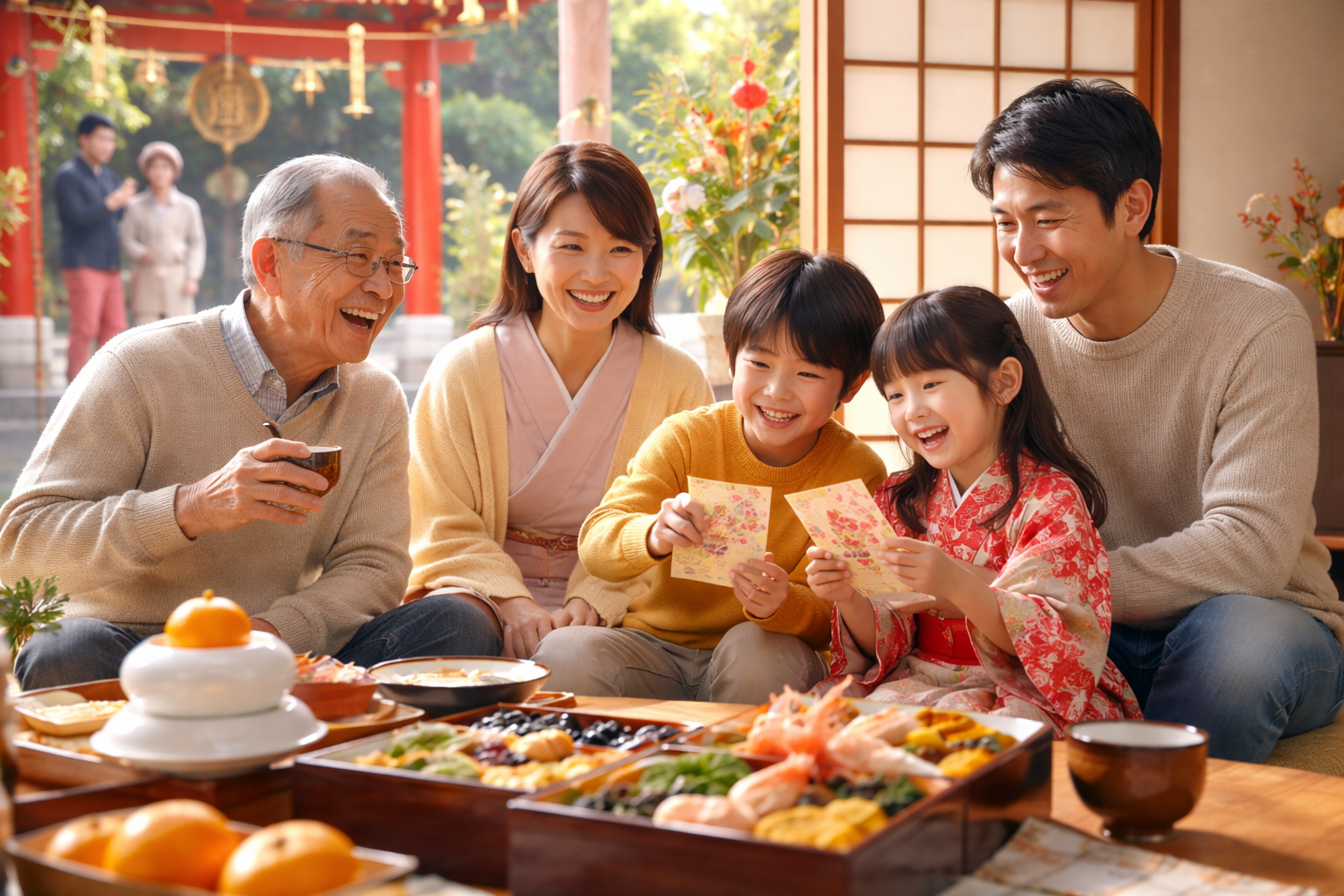
January 1 is the most important day of Sanganichi. Many people wake up early to see the hatsuhinode (first sunrise), eat osechi dishes, and visit a shrine or temple for hatsumode, the first prayer of the year.
Families exchange New Year greetings, and children receive otoshidama (New Year money). The atmosphere is quiet, respectful, and strongly family-centered. Making big plans or rushing around is generally avoided.
Cultural note: Sanganichi is not about “doing a lot.” The calmness itself signals respect for the New Year and helps people enter the year with a clear mind.
January 2: A Relaxed Continuation
January 2 continues the New Year mood but with slightly more flexibility. People may visit relatives, take short outings, or enjoy New Year sales that begin at some department stores.
Compared to January 1, this day feels more open. Travel between family homes is common, and the pace of life becomes gently more social.
January 3: Easing Back to Normal
By January 3, many people begin preparing for normal routines. Some return home from family visits, tidy their living spaces, or plan schedules for the coming week.
While still part of Sanganichi, January 3 often marks the psychological transition from New Year mode back to everyday life.
Shopping and Store Hours During Sanganichi
In the past, it was common for supermarkets and department stores to remain open throughout Sanganichi, sometimes even on January 1—especially in large cities. That made daily life convenient during the holiday period.
Today, opening hours during Sanganichi vary widely by chain, branch, and region. Some supermarkets operate on reduced schedules, while many department stores now close for one or more days. If shopping matters to your plan, check official store notices in advance and keep a backup option in mind.
Practical backup: convenience stores and transport hubs are often the most reliable for basics during the first few days of January, even when other stores shorten hours.
Why More Stores Are Closing During Sanganichi
In recent years, more businesses in Japan have chosen to close or shorten hours during Sanganichi. One major reason is a growing focus on work-life balance—allowing employees to spend New Year’s Day with family is increasingly seen as socially important.
Labor shortages and rising awareness of employee well-being also play a role. For some retailers, operating during Sanganichi no longer makes sense when staffing is difficult and customer numbers are lower than during regular business weeks.
In a way, this shift returns Sanganichi to its older meaning: a shared pause across society, rather than a normal week with holiday decorations.
What Do People Usually Do Today?
What people do today during Sanganichi depends on the date:
- If today is January 1: Stay close to family, eat osechi, make a shrine visit, and keep plans minimal.
- If today is January 2: Visit relatives, enjoy light outings, or relax at home.
- If today is January 3: Travel back, organize your space, and mentally prepare for normal routines.
In Japanese culture, doing “nothing special” during Sanganichi is not laziness. Rest itself is considered a meaningful way to honor the New Year.
Trivia
- Cleaning is traditionally avoided on January 1 to preserve good fortune.
- Many businesses reopen gradually after January 3.
- Sanganichi values calmness more than celebration.
FAQ
Is everything closed during Sanganichi?
Not everything. Convenience stores, transportation, and some supermarkets usually operate, but hours may be limited. Department stores are more likely to close or shorten hours.
Can tourists enjoy sightseeing during Sanganichi?
Yes, but expect crowds at shrines and limited access at some attractions. Flexible planning is recommended, especially on January 1.