

Hokkaidō – Japan’s Northern Wonderland
PREFECTURE GUIDE
Hokkaido: culture-first travel guide
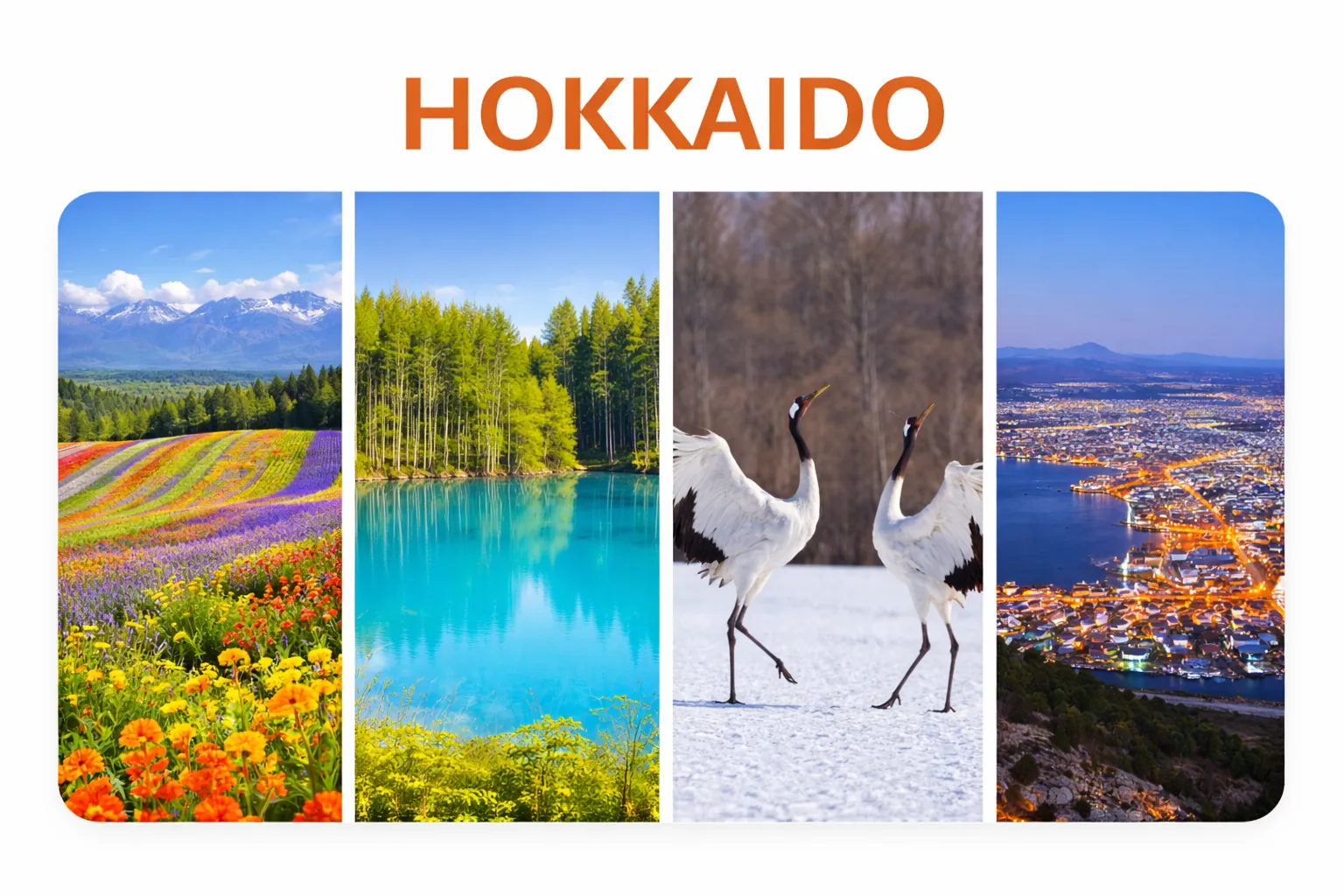
Hokkaido is Japan’s northern frontier of deep winters, onsen towns, wide-open nature, and warm everyday culture. Use this page to pick a season, choose a base, then shortlist spots with official links, Google Maps, and image search.
Quick facts
- Best seasons: Winter (snow + onsen), Summer (flowers + hikes), Autumn (crisp air), Spring (city strolls + shrine season).
- Easy bases: Sapporo (all-round), Hakodate (history + night view), Furano/Biei (scenery), Noboribetsu (onsen), Niseko (powder + summer outdoors).
- Signature culture: onsen etiquette, seafood markets, shrine visits, winter festivals, Ainu cultural heritage.
- Getting around: Sapporo/Hakodate are easy by rail + tram/bus; nature areas often need bus timing or a car.
Culture cues (what makes it feel “Hokkaido”)
Onsen towns = nightly ritual
Bathing is social calm: wash first, soak quietly, hydrate after. Winter onsen is peak Hokkaido mood.
Seafood is “local pride”
Markets aren’t just food—they’re weekend culture. Try seasonal crab, uni, and grilled snacks.
Shrines & parks as everyday culture
Locals do seasonal walks, small prayers, and picnic rhythms—simple, repeatable traditions.
Ainu heritage (living culture)
Learn respectfully through museums, performances, crafts, and place-stories—especially around Shiraoi.
Top areas & spots
How to shortlist (fast)
- Pick a season → show spots that match your travel window.
- Pick an area → if you want a simple base plan.
- Use links per spot: Official → Map → Photos → Search (quick verification + visuals).
Filters are for shortlisting, not “ranking.” Always confirm hours/closures/festival dates on the official link.
Season
Area
Search
Sapporo
City parks, shrine culture, beer history, and easy day walks.
Odori Park
Why it matters: a central “season stage” where local life becomes visible—markets, strolls, winter festival energy.
- Culture cue: parks are where Japan does everyday seasonal rhythm.
- Plan it: pair with TV Tower area + Susukino dinner.
Hokkaido Shrine (Hokkaido-jingu)
Why it matters: shrine visits are living tradition—seasonal prayers, amulets, and quiet forest paths near the city.
- Culture cue: spring blossoms + shrine culture = classic local outing.
- Plan it: combine with Maruyama Park for a half-day.
Maruyama Park
Why it matters: a city-forest edge where locals do seasonal strolls—simple, everyday culture.
- Culture cue: “park + shrine” is a classic Japanese weekend rhythm.
- Plan it: spring is especially popular for blossoms.
Sapporo Clock Tower
Why it matters: a compact, easy “history check” that adds story to a city day.
- Culture cue: Japan loves small museums that turn a landmark into narrative.
- Plan it: 30–45 minutes is enough for most travelers.
Sapporo Beer Museum
Why it matters: an easy culture-through-food stop—industrial history + local pride in one place.
- Culture cue: “museum + tasting” is a popular Japan format.
- Plan it: pair with nearby dinner (Jingisukan lamb is classic).
Moerenuma Park
Why it matters: modern Japanese park culture—design, walking, light, and space.
- Culture cue: public parks can be “art you live inside.”
- Plan it: best with good weather; bring a slow-walk mindset.
Otaru
Canal vibes, retro streets, glassware, sweets, and night strolls.
Otaru Canal
Why it matters: a “Taisho-romantic” mood walk—history becomes atmosphere.
- Culture cue: Japan loves preserved streetscapes that you experience by walking.
- Plan it: go near dusk for the best light; add dessert stops.
Sakaimachi Street
Why it matters: the “browse culture” street—souvenirs, glass, sweets, and small discoveries.
- Culture cue: strolling + snacking is a Japanese travel classic.
- Plan it: link it with the canal area; avoid peak crowds by going early.
Otaru Music Box Museum (Orgel Doh)
Why it matters: craft nostalgia—sound becomes souvenir.
- Culture cue: Japan’s “small wonder” museums are big on atmosphere.
- Plan it: perfect when weather turns; combine with glass shops.
Furano & Biei
Flower fields, scenic roads, and “slow photography” landscapes.
Farm Tomita
Why it matters: Hokkaido summer in one scene—color, scent, and open skies.
- Culture cue: seasonal “flower trips” are a real local tradition.
- Plan it: go early; check bloom timing on the official site.
Shikisai-no-Oka
Why it matters: the “wide view” Hokkaido feeling—fields like a landscape painting.
- Culture cue: Japan turns seasonal color into a travel calendar.
- Plan it: bring layers—weather changes fast on the plateau.
Shirogane Blue Pond
Why it matters: a “quiet wow” spot—minimal, photographic, and very Hokkaido.
- Culture cue: Japan’s nature spots often reward stillness over speed.
- Plan it: visit early/late to avoid crowds; check local updates in winter.
Ningle Terrace
Why it matters: storybook craft culture—small shops in a forest setting.
- Culture cue: Japan loves “night atmosphere” stops for slow travel.
- Plan it: perfect after skiing or a scenic drive day.
Noboribetsu
Onsen town energy, “Hell Valley” landscapes, and winter soaking culture.
Noboribetsu Jigokudani (Hell Valley)
Why it matters: the “origin story” of onsen—steam, mineral smell, and otherworldly land.
- Culture cue: Japan frames landscapes with myth-like names and local mascots (demons here).
- Plan it: do a short loop walk before your bath time.
Dai-ichi Takimotokan (Onsen)
Why it matters: a straightforward way to experience deep onsen culture—especially in snow season.
- Culture cue: bath variety is part of the “healing” narrative in Japan.
- Plan it: confirm day-use hours and rules on the official site.
Hakodate
Night view, port history, and easy “walkable story” neighborhoods.
Mt. Hakodate Ropeway
Why it matters: a “must-see” that is still cultural—night viewing is a Japanese travel ritual.
- Culture cue: viewpoints are often treated like seasonal events.
- Plan it: check weather/wind and last ropeway time on the official site.
Goryokaku Tower
Why it matters: history as geometry—seeing the star fort from above makes the story click.
- Culture cue: Japan loves “viewpoints that explain history.”
- Plan it: spring blossoms are especially popular; confirm timing locally.
Kanemori Red Brick Warehouse
Why it matters: a preserved port vibe where you can shop, eat, and feel Hakodate’s trading history.
- Culture cue: “old warehouse → lifestyle space” is a common Japan reuse style.
- Plan it: combine with bay walk and sunset photos.
Hakodate Morning Market
Why it matters: market breakfast is real travel culture—locals + travelers share the same morning ritual.
- Culture cue: “morning market + donburi” is a Hokkaido classic.
- Plan it: go early; confirm opening hours on official.
Shiretoko
Wild nature and rules that protect it—visit with respect.
Shiretoko Goko (Five Lakes)
Why it matters: pristine landscape with clear visitor rules—nature + responsibility in one experience.
- Culture cue: Japan often protects nature through “how to visit” etiquette.
- Plan it: always confirm access restrictions and bear safety rules on official.
Shiretoko (World Heritage / Park info)
Why it matters: for a wild destination, official guidance matters—closures, trails, and protected areas change.
- Culture cue: “protect what we love” is part of modern travel culture.
- Plan it: check official notes before finalizing routes.
Niseko
Powder snow, summer trails, and onsen recovery.
Niseko United
Why it matters: one base can do two worlds—winter powder and summer outdoors.
- Culture cue: Japan’s resort towns still run on seasonal “peak moments.”
- Plan it: check lift status/weather on the official site.
Niseko Annupuri Onsen Yugokorotei
Why it matters: the “reset” step—bath culture after outdoor days is peak Japan.
- Culture cue: onsen is not just a bath; it’s pacing and recovery.
- Plan it: confirm tattoo policy and day-use hours before you go.
Shiraoi (Ainu culture)
A respectful, modern way to learn about Ainu heritage in Hokkaido.
Upopoy (National Ainu Museum and Park)
Why it matters: it connects place, story, and people—Ainu culture is living heritage, not a “past-only” topic.
- Culture cue: respectful learning is part of culture-first travel.
- Plan it: check program times and closures before you go.
This page is cultural & planning guidance, not a live status feed. For the latest local information (hours, closures, trail limits, festivals), always confirm on each spot’s official website.
