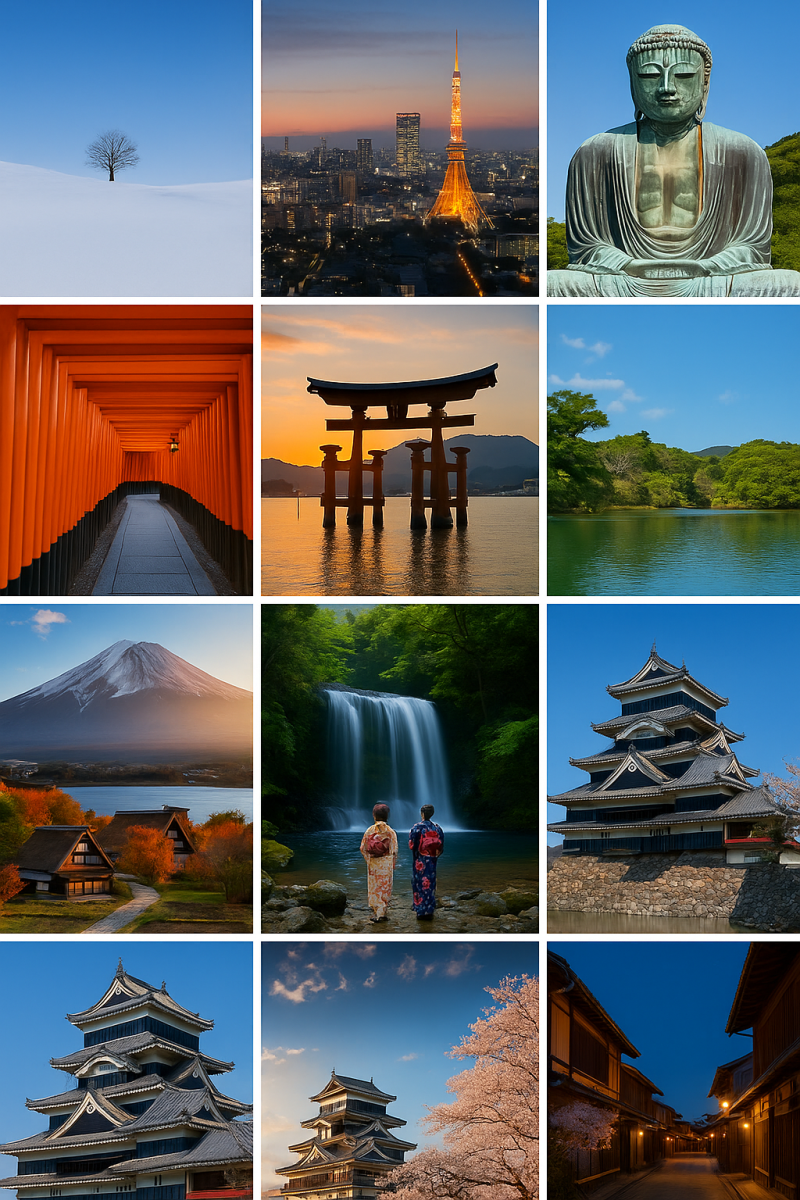
Japan has 47 prefectures, each with its own flavor — food, crafts, festivals, hot springs, city life, and quiet nature. Use this page to pick a region, scan highlights, and jump to detailed guides.
How to Use This Page
- Choose a region (Hokkaidō & Tōhoku / Kantō / Chūbu / Kansai / Chūgoku / Shikoku / Kyūshū & Okinawa).
- Skim the quick highlights and signature foods.
- Open the prefecture guide you like for routes, budgets, and seasonal tips.
Tip: If your trip starts in Tokyo or Osaka/Kyoto, look for “Easy access from Tokyo/Osaka” notes.
Regions at a Glance
HOKKAIDŌ & TŌHOKU
Vibe: Big skies, snow scenes, seafood, summer festivals.
Best for: Nature, winter sports, hot springs, farm-to-table.
Don’t miss:
- Hokkaidō — national parks, lavender fields, Sapporo ramen. → [/prefectures/hokkaido/]
- Aomori — Nebuta floats, apples, coastline drives. → [/prefectures/aomori/]
- Iwate — Hiraizumi temples, Geibikei Gorge. → [/prefectures/iwate/]
- Miyagi — Matsushima Bay, Sendai food culture. → [/prefectures/miyagi/]
- Akita / Yamagata / Fukushima — rustic onsen towns, rice terraces, mountain shrines.
Easy access from Tokyo: Shinkansen to Sendai, Yamagata, Morioka, or Aomori; flights to Sapporo/Asahikawa.
KANTŌ
Vibe: Japan’s largest metro area + easy day trips.
Best for: City break + shrines, beaches, mountains.
Don’t miss:
- Tokyo — neighborhoods, museums, cuisine from everywhere. → [/prefectures/tokyo/]
- Kanagawa — Yokohama bayside, Kamakura temples, Shōnan coast. → [/prefectures/kanagawa/]
- Chiba / Saitama / Ibaraki / Tochigi / Gunma — Narita culture, river towns, Nikko World Heritage, onsen and hiking.
Easy access from Tokyo: Local rail, limited express, and frequent buses make day trips simple.
CHŪBU
Vibe: Alps, castles, old post towns, crafts.
Best for: Scenic trains, sake towns, traditional stays.
Don’t miss:
- Nagano — mountain resorts, snow monkeys. → [/prefectures/nagano/]
- Gifu — Takayama old town, Shirakawa-go. → [/prefectures/gifu/]
- Ishikawa — Kanazawa art & gardens, crafts. → [/prefectures/ishikawa/]
- Shizuoka / Aichi / Niigata / Toyama / Fukui / Yamanashi — Mt. Fuji views, tea fields, seafood, sake.
Easy access: Shinkansen (Tōkaidō/Hokuriku), scenic limited express routes.
KANSAI
Vibe: Tradition meets bustle — classic temples plus vivid street food.
Best for: First-timers, culture lovers, foodies.
Don’t miss:
- Kyoto — temples, tea culture, seasonal gardens. → [/prefectures/kyoto/]
- Osaka — street eats, lively nights, castles. → [/prefectures/osaka/]
- Nara / Hyōgo / Shiga / Wakayama / Mie — deer parks, Himeji Castle, lake views, sacred pilgrimage trails.
Easy access: Base in Kyoto/Osaka; day-trip everywhere.
CHŪGOKU
Vibe: Inland Sea views, art islands, heritage towns.
Best for: History, peace sites, oysters, island hopping.
Don’t miss:
- Hiroshima — Peace Memorial, Miyajima shrine gate. → [/prefectures/hiroshima/]
- Okayama / Yamaguchi / Shimane / Tottori — gardens, samurai streets, dunes, shrine pilgrimages.
Easy access: Shinkansen to Hiroshima/Okayama; ferries for island art sites.
SHIKOKU
Vibe: Pilgrimage routes, bridges, udon, river gorges.
Best for: Scenic drives, cycling, quiet towns.
Don’t miss:
- Kagawa — Sanuki udon, art sites linkage. → [/prefectures/kagawa/]
- Tokushima / Ehime / Kōchi — whirlpools, castle towns, clear rivers.
Easy access: Bridges from Honshū, domestic flights, ferries.
KYŪSHŪ & OKINAWA
Vibe: Volcanoes, hot springs, subtropical islands.
Best for: Onsen-hopping, beach time, unique food cultures.
Don’t miss:
- Fukuoka — yatai food stalls, gateway city. → [/prefectures/fukuoka/]
- Kumamoto / Ōita / Nagasaki / Kagoshima / Miyazaki — caldera views, Beppu steam baths, historic ports, shochu.
- Okinawa — Ryūkyū heritage, coral seas, island cuisine. → [/prefectures/okinawa/]
Easy access: Shinkansen (north Kyūshū), domestic flights elsewhere; ferries to Okinawa islands.
What Each Prefecture Guide Includes
- Top 5 highlights (nature, culture, food, crafts)
- 2–3 sample routes (1–3 days; public transit friendly)
- Seasonal picks (festivals, blossoms, foliage, snow)
- Food & drink (signature dishes, specialty sweets, sake or shochu)
- Hands-on activities (crafts, workshops, museums)
- Practical info (access from Tokyo/Osaka, IC cards, luggage tips)
Quick Picks by Interest
- Foodies: Hokkaidō seafood / Kanazawa kaiseki / Fukuoka yatai / Osaka street eats
- Onsen: Gunma/Kusatsu, Ōita/Beppu, Nagano, Kagoshima
- Heritage & Gardens: Kyoto/Nara, Kanazawa, Nikko, Himeji, Okayama
- Island & Sea: Okinawa, Shikoku coasts, Setouchi islands
- Hiking & Views: Japanese Alps (Nagano/Gifu/Toyama), Kumano Kodo (Wakayama), Daisetsuzan (Hokkaidō)
Planning Notes
- Rail passes: Consider national or regional rail passes if riding long-distance trains several times.
- Luggage: Use station lockers or takkyūbin (luggage forwarding) between stays.
- Cash & IC: Cities take cards/IC widely; rural shops may prefer cash.
- Etiquette: Quiet on trains, no eating in packed local trains, shoes off where signed.
- Weather: Summers are hot/humid; winters vary (heavy snow up north/in the mountains).
FAQ (Q/A)
Q: How many prefectures can I see in one week?
A: Two regions or 2–3 prefectures is comfortable; avoid packing too many long transfers.
Q: Is it okay to rent a car?
A: Yes for rural areas (Hokkaidō, Kyūshū, Shikoku). In major cities, trains are easier.
Q: Do I need Japanese to travel?
A: Not required on main routes. Station signs and ticket machines usually have English; translation apps help in rural areas.
Q: When’s the best season?
A: Spring and autumn for mild weather and color; winter for snow scenes and onsen; summer for festivals and beaches.
Q: Can I do everything by public transport?
A: Most itineraries work by rail/bus. Some remote sights are faster by rental car or tour.