

Hydrangea highlights in Japan
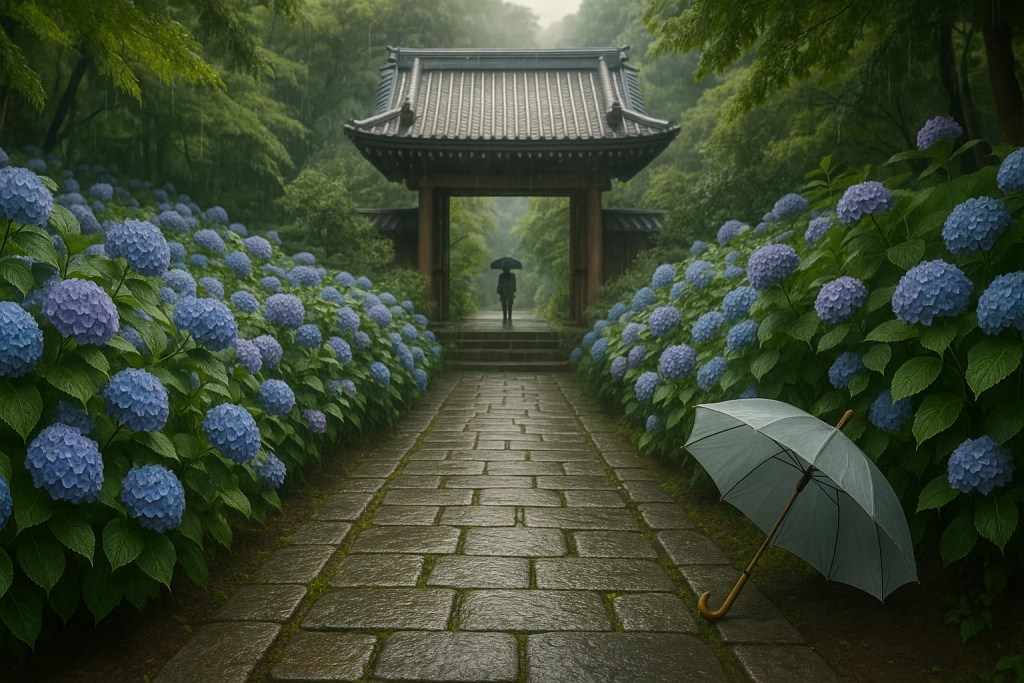
Hydrangea highlights in Japan appear during the rainy season, when temple paths, old railway lines, and quiet residential streets are filled with soft blue, purple, and pink blooms. This guide explains what these flowers mean in Japanese culture and how to enjoy hydrangea highlights in Japan with realistic timing and a relaxed mindset.
Who this guide is for: travelers who love gardens, photography, and slower cultural experiences, and who want to make the most of Japan’s early-summer rains.
Hydrangea highlights in Japan: overview
- Season: typically from late May to early July, depending on region and altitude.
- Best mood: light drizzle or cloudy skies that make colors look extra vivid.
- Where: temple gardens in Kamakura and Kyoto, hillside paths, and scenic railways such as Hakone.
- Combine with: hot springs, temple visits, café stops, and indoor museums for rainy days.
Unlike cherry blossoms, which often disappear in just a few days, hydrangea highlights in Japan last for several weeks. As a result, you can plan your trip with a little more flexibility and still enjoy beautiful scenes.
When to see hydrangea highlights in Japan
Hydrangeas bloom during Japan’s rainy season (tsuyu), which usually starts in early June on the main islands. Timing can shift slightly each year, so it is helpful to think in ranges rather than fixed dates.
Normal-year timing by region
- Kanto & Kansai (Tokyo, Kamakura, Kyoto, Osaka): early June to early July is usually the main season.
- Kyushu & Shikoku: often slightly earlier; late May to mid-June can already be beautiful.
- Tohoku & higher elevations: blooms may continue into mid or even late July.
First, choose your base city, for example Tokyo or Kyoto. Then check the year’s rainy-season forecast and flower event information shortly before you travel. In addition, for a broader seasonal overview, you can look at our Seasonal Events in Japan and Japanese Calendar guides.
Where to find hydrangea highlights in Japan
Below are some of the most popular and easy-to-access places to enjoy hydrangea highlights in Japan. You do not need to visit them all. Instead, choosing one area around Tokyo and one around Kyoto is usually enough for a first trip.
Kanto: Tokyo & Kamakura hydrangea highlights
Meigetsu-in (Kamakura)
Kamakura · “Hydrangea Temple”
Often called the “Hydrangea Temple,” this small Zen temple is famous for narrow stone paths and thousands of blue hydrangeas in early summer.
CULTURE: The soft, even “Meigetsu-in Blue” encourages visitors to slow down and look carefully rather than chase dramatic scenery. Quietly following a single color through mist and rain feels close to Zen practice. In this way one simple view becomes a gentle example of hydrangea highlights in Japan.
Hase-dera (Kamakura)
Kamakura · Hillside temple with sea views
A hillside temple with sea views and terraced paths covered in different hydrangea varieties, plus a famous statue of Kannon, the bodhisattva of compassion.
CULTURE: Many visitors first offer prayers to Kannon for family safety, then walk slowly through the flowers toward the sea view. This simple flow—prayer, walking, and looking—shows how spiritual practice and casual sightseeing often blend naturally in Japanese temple towns. As a result, Hase-dera is one of the most memorable hydrangea highlights in Japan for first-time visitors.
Hakone Tozan “Hydrangea Train”
Hakone · Mountain railway
A mountain railway where hydrangeas bloom along the slopes between Hakone-Yumoto and Gora. During peak season some trains run at night with illuminated flowers.
CULTURE: Turning an everyday train into a limited “Hydrangea Train” reflects Japan’s love of short seasonal events, or gentei. For many riders, the memory is not only the view but the feeling that “this ride exists only for a few weeks each year,” which is a very typical shape of hydrangea highlights in Japan.
Hondo-ji Temple (Matsudo, Chiba)
Chiba · Local “Hydrangea Temple” near Tokyo
A historic temple known for tens of thousands of hydrangeas and irises that bloom together in early summer, just outside greater Tokyo.
CULTURE: Local families often visit Hondo-ji every year, watching the same slopes change color through different stages of life. In this way the temple garden becomes a shared seasonal “backyard,” connecting personal memories with the wider rhythm of hydrangea highlights in Japan.
Kansai: Kyoto & Nara hydrangea highlights
Mimuroto-ji (Uji, Kyoto)
Uji, Kyoto · “Flower Temple”
A “flower temple” with a vast hydrangea garden arranged in gentle slopes and patterns, along with seasonal azaleas, lotus, and autumn leaves.
CULTURE: Beds of hydrangeas are planted almost like brushstrokes, guiding where visitors naturally pause and turn. It is a good place to feel how Japanese garden design tells a quiet story with color, height, and paths instead of words. Therefore Mimuroto-ji is often mentioned in lists of classic hydrangea highlights in Japan.
Yatadera (Kongosen-ji Temple)
Nara · Hillside hydrangea temple
A hillside temple above Yamatokoriyama with a sprawling hydrangea garden and many Jizo statues, lively with visitors in June and July.
CULTURE: Climbing stone steps lined with Jizo statues and flowers feels like a small rainy-season pilgrimage. People leave prayers for children, health, and travel safety, so the garden carries the weight of many private wishes beneath the bright colors. In this way, Yatadera shows a very local side of hydrangea highlights in Japan.
Other regions in Japan
Hydrangea temples in Hiroshima & Chugoku
Hiroshima & Chugoku · Castle towns and hills
In the Chugoku region, several temples are nicknamed “Hydrangea Temples,” where slopes and ponds are surrounded by colorful blooms from mid-June to mid-July.
CULTURE: On weekends, families and older couples stroll slowly through these temple gardens, often stopping at small food stalls or local events. It is a gentle way to feel how regional Japan turns an ordinary early-summer weekend into a shared seasonal outing.
Kyushu’s hydrangea temples & waterfalls
Kyushu · Early rainy-season blooms
Around Fukuoka, Oita, and other Kyushu areas, hydrangeas bloom at mountain temples and cool waterfall spots, often celebrated with small local festivals in June.
CULTURE: People in Kyushu often talk about seiryo-kan—the feeling of coolness in sound and air. Hydrangeas, falling water, and misty forest light create that sense naturally, offering a traditional way to “cool down” with the five senses before summer fully begins.
Later-season gardens in the north
Tohoku & Hokkaido · Later hydrangea season
Cooler regions in Tohoku and Hokkaido often see hydrangeas blooming later, sometimes into July, in large hillside gardens and park-style landscapes.
CULTURE: For some travelers, these northern gardens feel like a quiet “afterword” to the main rainy season further south. They express a Japanese comfort with subtle seasonal shifts—one flower can have an early chapter in Kyushu and a late final chapter in Hokkaido.
How to enjoy hydrangea highlights in Japan respectfully
Hydrangea spots are often inside temple grounds, residential areas, or along narrow paths. Because many people and local residents share these spaces, a little etiquette makes the experience better for everyone.
Basic manners at hydrangea spots
- Stay on the paths: do not step into flower beds or lean over too far for photos.
- Do not touch or pick the flowers: even a light touch can damage delicate petals and leaves.
- Share the view: avoid blocking a popular angle for too long, especially on busy weekends.
- Umbrella & tripod etiquette: close umbrellas in narrow areas when possible, and check each location’s rules before using tripods.
- Respect temple rules: follow signs, keep voices low, and avoid photographing people who are praying without their permission.
Overall, these small habits help maintain a calm atmosphere that matches the gentle mood of hydrangea highlights in Japan.
Sample half-day hydrangea highlights in Japan itinerary (Tokyo & Kamakura)
If you are based in Tokyo, Kamakura makes an easy day trip. The outline below is only an example; however, it shows how you can combine several hydrangea highlights in Japan into one relaxed outing.
Example route: Meigetsu-in and Hase-dera
-
Morning – Kamakura arrival & Meigetsu-in
Take an early train to Kita-Kamakura Station. Then visit Meigetsu-in soon after opening to enjoy the paths before they become crowded. -
Late morning – Hase-dera & sea views
Next, move to Hase Station and walk up to Hase-dera. Stroll the hydrangea path and pause at viewpoints overlooking the coastline. -
Lunch – Café or local restaurant
After your temple visits, try a small café or Japanese-style lunch in Kamakura town. On rainy days, warm dishes and tea pair nicely with the misty scenery. -
Afternoon – Komachi-dori or Tsurugaoka Hachimangu
Finally, finish with a walk along Komachi-dori shopping street or a visit to Tsurugaoka Hachimangu shrine before returning to Tokyo.
You can adjust this itinerary based on weather and your walking pace. For more route ideas, you can also browse The Wa Story’s Japanese Cultural Itineraries.
Practical tips for hydrangea highlights in Japan travelers
What to bring and how to prepare
- Clothing: lightweight, quick-drying layers; a light jacket or cardigan for cooler rainy days.
- Shoes: comfortable waterproof shoes or sandals with good grip—stone steps can be slippery.
- Gear: compact umbrella, small towel, plastic bag for wet items, and a lens cloth if you take photos.
- Timing: early mornings or late afternoons are usually less crowded and have softer light.
- Backup plan: combine hydrangea viewing with nearby indoor options such as museums, cafés, or onsen in case of heavy rain.
By preparing in this way, you can still enjoy hydrangea highlights in Japan even when the weather changes quickly.
Related hydrangea highlights in Japan guides on The Wa Story
- Seasonal Events in Japan – overview of major festivals and traditions by month.
- Cherry Blossom in Japan – planning tips for spring sakura trips.
- Autumn Leaves in Japan (Koyo) – how to enjoy Japan’s famous fall foliage.
- Japanese Calendar – key seasonal markers and traditional ideas of time.
- Japanese Culture Guides – etiquette and background stories that deepen each visit.
Official & useful resources
- Japan National Tourism Organization (JNTO) – seasonal travel updates and regional information.
- Local city or prefectural tourism websites – many publish hydrangea festival dates, illumination evenings, and access information each year.

You must be logged in to post a comment.