

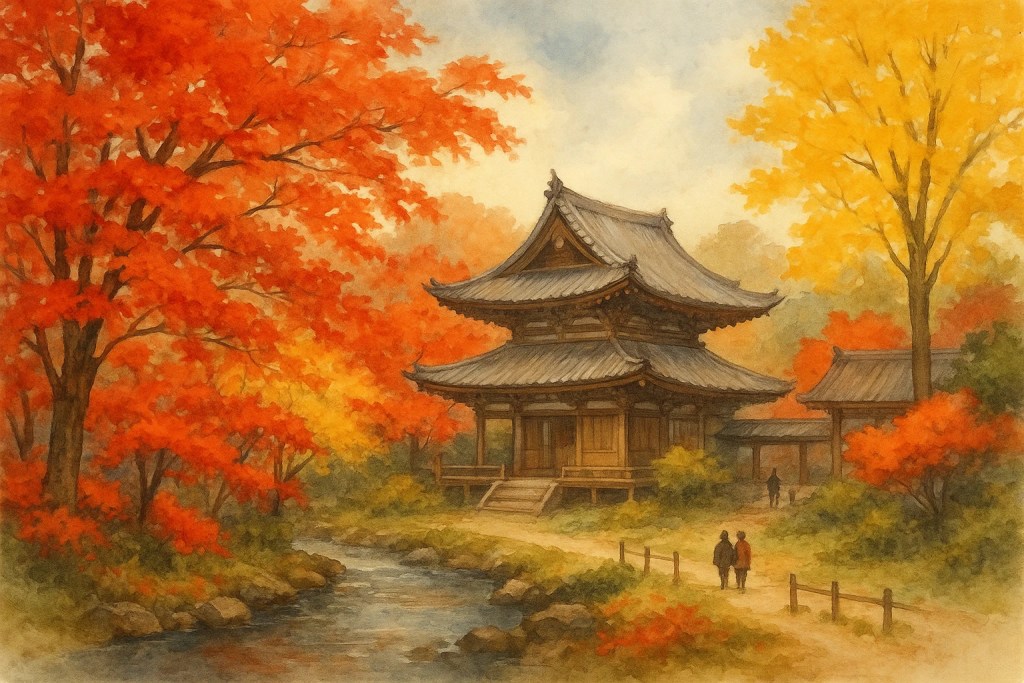
Autumn leaves in Japan (koyo)
Autumn leaves in Japan (koyo): culture, timing and travel tips
Autumn leaves in Japan (koyo) turn mountains, gardens and city streets into deep reds and golds. In this guide, you will find what autumn leaves in Japan mean in local culture and how to think about timing by region, so you can plan a relaxed, meaningful trip instead of chasing one single “perfect” day.
For a broader view of how autumn fits into Japan’s seasonal rhythm, see the Japanese Calendar.
Why koyo season matters in Japan
In Japan, autumn is not only about cooler weather. It is also a season when people go out specifically to enjoy the colors of the trees. This custom is called momijigari, literally “hunting for red leaves,” and it has deep roots in poetry, painting and courtly life.
Over many centuries, writers have compared red maples to glowing embers, torches in the mountains and even to the emotions of the human heart. Because the colors appear for a short time and then fade, they naturally invite reflection on change, aging and the passing of the year.
Today, autumn leaves in Japan connect everyday life with this older culture. Families and friends take weekend trips to see the foliage. Couples walk through gardens at night during special illuminations. At the same time, seasonal food—like mushrooms, chestnuts, sweet potatoes and persimmons—appears in restaurants and bento boxes. Taken together, koyo becomes a gentle reminder to slow down and enjoy the present moment.
When is koyo at its best in Japan?
How the koyo season moves through Japan
Because Japan stretches from northern Hokkaido to subtropical Okinawa, autumn leaves in Japan do not change color all at once. Instead, the “autumn color front” moves gradually from the high mountains in the north down to the lowlands in the south.
In a normal year, leaves begin to turn in parts of Hokkaido from early September. Many popular spots in Honshu reach their best color in October and November, while lower and warmer regions often peak in late November or early December. However, the exact timing can shift by one to two weeks depending on temperature and rainfall, so it is wise to keep a little flexibility in your plans.
Typical timing for autumn leaves in Japan by region (normal year)
Use the table below as a rough seasonal guide when you think about your travel window. Each month is divided into three small boxes (early, mid and late in that order). Colored boxes show when autumn leaves in Japan are usually at their best in a normal year.
| Region | Main examples | Typical timing (normal year) |
|---|---|---|
| Hokkaido (mountain areas) | Daisetsuzan National Park, Sounkyo Gorge, Onuma Park |
Early September to early October
|
| Northern Tohoku | Towada–Oirase, Hakkoda Mountains, Naruko Gorge |
Late September to late October
|
| Central Honshu mountains | Japanese Alps, Kamikochi, Tateyama Kurobe Alpine Route |
Early October to early November
|
| Kanto (Tokyo region) | Tokyo gardens, Nikko, Hakone |
Late October to late November
|
| Kansai (Kyoto, Osaka, Nara) | Kyoto temples and gardens, Arashiyama, Nara parks |
Mid November to early December
|
| Chubu & Fuji area | Fuji Five Lakes, Kiso Valley, Kenrokuen Garden |
Late October to late November
|
| Chugoku & Shikoku | Miyajima, Sandankyo Gorge, Iya Valley |
Early November to late November
|
| Kyushu | Aso–Kuju region, Kikuchi Valley, Yabakei Gorge |
Early November to early December
|
| Okinawa & southern islands | Subtropical forests, castle ruins, coastal walks |
Late November into December (limited maple color)
|
In the small grid above, each column shows one month from September (9) to December (12). Within each month, the three boxes represent early, mid and late parts of the month. Colored boxes indicate periods when autumn leaves in Japan are typically at their best.
This page offers cultural and seasonal guidance only. For year-by-year information, you can check the Japan National Tourism Organization’s Autumn Leaves Forecast (English) during your trip.
For more practical planning advice on timing, routes, and travel style, visit Plan Your Trip.
Cultural koyo: where scenery meets stories
If you would like your koyo experience to carry a strong cultural story, the following examples can be a helpful starting point. They are not a full list, but they show how temples, gardens and landscapes can deepen the meaning of autumn leaves in Japan. In addition, they are easy to combine with broader itineraries that include food, crafts and everyday neighborhoods.
To understand the cultural meaning behind autumn colors, seasonal festivals, and daily customs, explore our Japanese Culture Guides.
Northern and highland koyo highlights
Daisetsuzan National Park, Hokkaido
Hokkaido · High mountain koyo
In Hokkaido’s high mountains, autumn arrives early. Daisetsuzan is sometimes called “the roof of Hokkaido” and “the playground of the gods.” Alpine plants, rowan trees and larch forests turn vivid red, orange and gold while the peaks already hint at winter.
CULTURE: This landscape invites a very quiet style of autumn leaves in Japan. Rather than crowds in a city park, you walk along mountain trails, stay at simple hot-spring lodges and watch the colors change with the light. As a result, it is a powerful way to feel how quickly the seasons turn in northern Japan.
Nikko shrines, Irohazaka road and Kegon Falls, Tochigi
Tochigi · Sacred mountains and World Heritage
Nikko combines World Heritage temples and shrines with dramatic mountain scenery. The winding Irohazaka road and viewpoints around Kegon Falls and Lake Chuzenji are classic places to see deep red and yellow leaves against cliffs, waterfalls and stone lanterns.
CULTURE: Nikko developed as a sacred landscape honoring the Tokugawa shoguns. When you see bright foliage around the ornate shrine buildings, you can sense how religion, politics and nature intertwine in Japanese history and in the story of autumn leaves in Japan.
Rikugien Garden, Tokyo
Tokyo · Edo-period strolling garden
Rikugien is a classic Edo-period strolling garden tucked into modern Tokyo. In autumn, its maples and ginkgo trees reflect in ponds and frame winding paths. Special evening illuminations create a dreamlike atmosphere in the middle of the city.
CULTURE: The garden was originally designed to express themes from traditional poetry. When you move through carefully composed scenes of rocks, water and color, you are experiencing autumn leaves in Japan as a kind of living literature.
Shinjuku Gyoen National Garden, Tokyo
Tokyo · National garden in the city center
Shinjuku Gyoen National Garden is a wide oasis of lawns, ponds and tree-lined paths surrounded by high-rise buildings. Its mix of traditional Japanese garden, formal French garden and open English landscape makes it one of the most varied places to enjoy autumn leaves in Japan inside Tokyo.
CULTURE: Once a residence of a feudal lord and later an imperial garden, Shinjuku Gyoen was opened to the public after the war as a national garden. Walking here in autumn, you feel how ideas of nature, modern city life and imperial history overlap in one calm space, from maple groves and ginkgo avenues to the view of towers beyond the trees.
Lake Kawaguchi (Fuji Five Lakes), Yamanashi
Fuji area · Lakeside koyo with Mt. Fuji views
Around Lake Kawaguchi, red maples often frame views of Mt. Fuji. During the autumn leaves festival, paths lined with trees create natural tunnels of color, especially near the so-called “Maple Corridor.”
CULTURE: This area expresses a familiar image of Japan: a sacred mountain, a calm lake and seasonal color together. Even if you are not climbing Mt. Fuji, you can feel the tradition of viewing the mountain from below and appreciating it from a respectful distance while enjoying autumn leaves in Japan.
Koyo in Kyoto, Kanazawa and Kyushu
Arashiyama and Togetsukyo Bridge, Kyoto
Kyoto · Classic riverside and mountain scenery
In western Kyoto, the slopes of Arashiyama turn rich red and orange behind the wooden Togetsukyo Bridge and the Katsura River. Smaller temples such as Jojakkoji and Gioji add quiet corners of moss, bamboo and maple trees.
CULTURE: Since the Heian period, aristocrats have come here to enjoy the seasons, write poetry and go boating. When you cross Togetsukyo or look back at the mountains from the riverbank, you are sharing a view that has inspired artists for more than a thousand years of autumn leaves in Japan.
Kiyomizudera Temple, Kyoto
Kyoto · Temple valley of red maples
Kiyomizudera’s famous wooden stage looks out over a valley filled with maples. During peak season, the temple buildings seem to float above a sea of red and orange, especially when night illuminations add a soft glow.
CULTURE: The temple is one of Kyoto’s most beloved religious sites and part of a UNESCO World Heritage area. When you visit in autumn leaves season in Japan, you walk the same slopes and stone paths that pilgrims have climbed for centuries, now framed by seasonal color instead of lantern light alone.
Kenrokuen Garden, Kanazawa (Ishikawa)
Kanazawa · Feudal lord garden
Kenrokuen is one of Japan’s most celebrated feudal lord gardens. In autumn, red maples, golden larches and evergreen pines create rich layers of color around ponds, stone lanterns and teahouses.
CULTURE: The garden’s design expresses six ideal qualities of a landscape: spaciousness, seclusion, artifice, antiquity, water and scenic views. Seeing autumn leaves in Japan here adds a seasonal layer to that careful balance between nature and art.
Kuju Mountains and Aso–Kuju National Park, Kyushu
Kyushu · Highlands, hot springs and koyo
In Kyushu, the Kuju mountain range offers wide views of rolling hills and valleys covered in autumn color. Trails, highland roads and suspension bridges such as Kokonoe Yume Otsurihashi open up dramatic perspectives on the landscape.
CULTURE: Here, autumn leaves in Japan blend with hot springs, rural life and volcanic scenery. After a day of hiking, many visitors stay at traditional inns and soak in outdoor baths, watching steam rise into the cool evening air.
You do not need to visit all of these places in one trip. Instead, choose one or two that fit your route and let their stories deepen your experience of autumn leaves in Japan. For broader route ideas, you can also browse The Wa Story’s Japanese cultural itineraries.
How to plan your autumn trip in Japan
Choosing your autumn travel window
It is very tempting to aim for the exact weekend of peak color in a famous city. In practice, even local residents cannot guarantee that kind of precision. Weather, typhoons and temperature changes all shift the season a little every year, so it is safer to think in flexible ranges.
A helpful approach is to start with your preferred region and then pick a period of one to two weeks that overlaps with the typical timing for autumn leaves in Japan in that area. This way, you build in a natural buffer for early or late seasons while still traveling at a suitable time.
Keeping your koyo plans flexible
Once you have a travel window, it helps to keep the details of your plans light and adjustable. If you prefer ready-made routes, you can also look at The Wa Story’s Japanese cultural itineraries and adjust them to match the region and month that suits your schedule.
-
Choose a window, not a single date
Pick a travel period of around one to two weeks for your chosen region. This way, you still have a good chance to see beautiful color even if peak timing shifts slightly earlier or later. -
Stay flexible inside your itinerary
Once you are in Japan, use local tourism websites, information centers and weather apps to move activities by a day or two. For example, you might swap a city walk and a mountain outing if colors change faster in the hills. -
Combine foliage with other cultural experiences
Mix autumn leaves in Japan with tea, gardens, museums, craft workshops or neighborhood strolls. Then your trip stays rewarding even if you arrive slightly before or after the strongest color. -
Balance famous spots and quieter places
Big-name temples and gardens can be extremely crowded in the afternoon. In contrast, smaller local parks, riversides and residential streets often offer gentler scenes, especially in the early morning.
Enjoying the koyo season beyond “peak color”
One of the most helpful mindset shifts is to enjoy every stage of the season, not only the weekend when guidebooks say “peak.” As you move through Japan, you may even experience early, peak and late colors in different places on the same trip. In this way, you see a broader picture of autumn leaves in Japan instead of a single postcard moment.
-
Early hints of color
At higher altitudes and in northern areas, leaves at the top of the trees may start turning while lower branches stay green. This contrast can look especially beautiful in clear, dry air. -
Approaching peak
When part of the forest has already turned and part is still in transition, hillsides and gardens show many shades at once. As a result, photos often feel softer and more complex than at absolute peak. -
Peak under different skies
A blue sky makes colors feel bright and crisp. However, cloudy days create a gentler, more nostalgic mood. Soft light can also be kinder for portraits and close-up shots. -
Falling leaves and autumn carpets
As leaves begin to drop, paths, temple steps and river surfaces can become covered in color. Many people find this late stage especially moving, because it expresses the idea that beauty and impermanence are closely connected.
Etiquette for enjoying koyo
Because many people visit the same places at the same time, a little consideration helps everyone enjoy the season. Many of the points are similar to hanami etiquette in spring. However, crowded paths, night illuminations and fragile old trees give autumn its own challenges too.
-
Do not damage trees or plants
Avoid breaking branches, pulling leaves or stepping into planted areas for photos. Even small actions, repeated by many visitors, can harm old trees. -
Follow local rules about tripods and drones
Some gardens do not allow tripods, light stands or drones, especially during illuminations. Therefore, it is important to check signs at the entrance and follow staff instructions. -
Keep pathways clear
When taking photos, try not to block narrow bridges, gateways or stairways. Instead, step to the side after you have taken your picture so others can pass. -
Take all rubbish with you
Bins can be limited, particularly in natural areas. Bringing a small bag for your trash is an easy way to show respect. -
Remember that many sites are religious spaces
Temples and shrines are not only backdrops; they are active places of worship. Keeping voices low and clothes reasonably modest helps keep a calm atmosphere.
For more everyday manners beyond koyo season, you can also read our guide to Japanese etiquette basics.
If you miss the peak of koyo
Even if your travel dates do not match the strongest color in a particular city, autumn in Japan still offers many beautiful scenes. In some regions, late autumn and early winter feel especially calm and intimate, which can be a pleasant contrast to high season.
- later-turning trees and evergreen forests, which create subtle contrasts of green and gold,
- silver grass fields on volcanoes and high plateaus,
- clear views of mountains and night skies in the crisp, dry air,
- seasonal food and hot springs that feel even better on cool days.
Every season in Japan has its own character. If you miss peak autumn leaves in Japan this time, you may discover temples at dusk, quiet streets or local festivals that feel even more personal to you. You can also explore crafts and off-season ideas in our Japanese crafts overview and the practical tips in Plan Your Trip.
Summary: relax and enjoy the koyo season
Autumn leaves in Japan are famous for a reason, but they do not have to become a source of stress. Instead of chasing a single perfect forecast, you can focus on understanding what koyo means in Japanese culture, choose a realistic travel window, and enjoy whichever stage of the season you encounter.
This page is designed as general cultural and seasonal guidance, not a live forecast. For the latest local information, before you go, always check the spot’s official website close to your trip. With a flexible plan and an open mind, almost any autumn day in Japan can become a memorable momijigari day.
Official resources
・Japan National Tourism Organization – Autumn Leaves Forecast
・JNTO – Autumn Leaves (Koyo) of Japan overview
・JNTO – Autumn in Japan seasonal guide
You must be logged in to post a comment.