
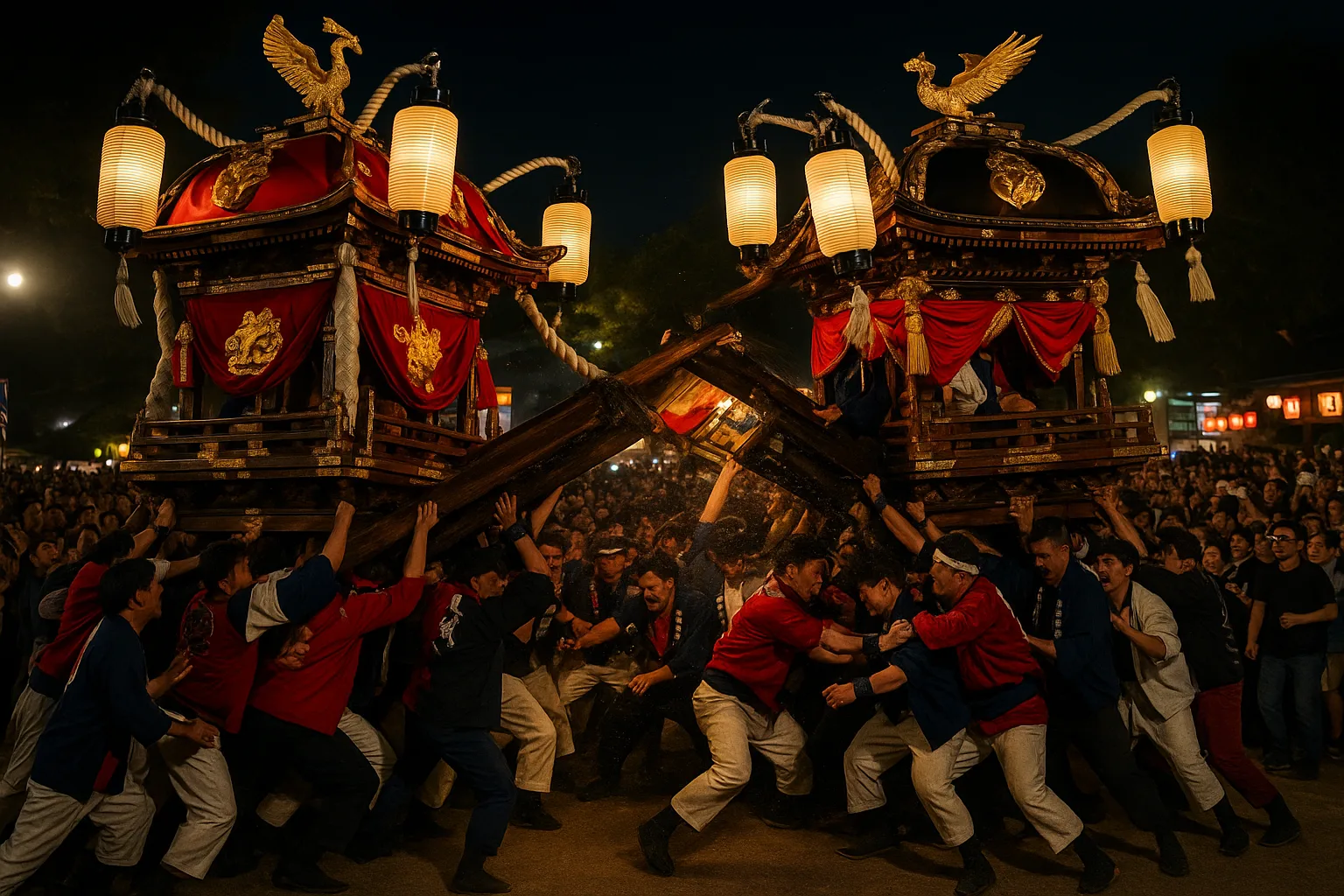

Nada no kenka matsuri is one of Japan’s most intense autumn festivals. Every year on October 14 and 15, huge floats and portable shrines collide in front of Matsubara Hachiman Shrine in Himeji, Hyogo. The name literally means “fighting festival,” and the mood is loud, colourful, and physically demanding for the participants. For visitors, nada no kenka matsuri 2025 is a chance to see strong local faith and energy, as long as you watch from safe areas and follow local rules. In this guide, we explain what to expect, where to watch safely, and how to follow good manners for crowds and photography.
Table of Contents
- What Is Nada no Kenka Matsuri?
- 2025 Dates, Schedule & Basic Flow
- Main Highlights – Yatai Floats & Fighting Mikoshi
- Best Viewing Spots & Simple Route Plan
- Safety & Festival Manners at Nada no Kenka Matsuri
- Access from Himeji & Nearby Sights
- Nada no Kenka Matsuri FAQ
- Related Internal Links
- External Resources
What Is Nada no Kenka Matsuri?
First, a quick overview. Nada no kenka matsuri is the grand autumn festival of Matsubara Hachiman Shrine in the coastal Nada area of Himeji. It belongs to a group sometimes called the “three great wild portable shrine festivals” of Japan. During the event, groups of men from seven neighbourhoods carry enormous wooden floats and portable shrines. They shout, jostle, and even slam them together in powerful rituals that pray for good harvests and protection for the community.
In everyday life, the festival also works as a symbol of local pride. Each district looks after its float all year, and younger members train so they can join the carrying teams. As a result, nada no kenka matsuri feels less like a show and more like the town’s own celebration. For visitors, it is important to remember that you are stepping into someone else’s annual milestone, not just watching a performance.
2025 Dates, Schedule & Basic Flow
Next, let us look at the basic schedule, because timing shapes your whole visit. Nada no kenka matsuri takes place every year on October 14 and 15. In 2025, the core days stay the same, with detailed timetables confirmed closer to the time by Himeji City and the shrine.
October 14 – Yoimiya (Eve Festival)
The first day is often called yoimiya, or eve festival. From late morning, the seven districts parade their decorated floats, called yatai, through local streets. Eventually they enter Matsubara Hachiman Shrine one after another. After a purification rite, the groups show a preview of the next day’s energy by lifting and jolting the yatai in the shrine grounds. The atmosphere is already intense, yet it is still easier for first-time visitors to follow than the main fighting scenes.
October 15 – Main Festival Day
The second day is the true climax of nada no kenka matsuri. Before dawn, men carrying the portable shrines purify themselves in the sea, and then gather again at the shrine. Later in the day, three mikoshi and seven yatai head to the festival field, where the most famous “fighting” scenes take place. During these moments, the mikoshi slam into one another again and again in a ritual sometimes called mikoshi awase or neriawase. Crowds cheer, drums echo, and the field becomes a swirl of colour and movement.
However, exact times can change with weather and local decisions. Therefore, you should always check the official festival site or Himeji tourism pages shortly before your visit for the latest timetable.
Main Highlights – Yatai Floats & Fighting Mikoshi
Nada no kenka matsuri has many small moments, but two main elements stand out for most visitors: the yatai floats and the fighting mikoshi. If you keep these in mind, it becomes easier to understand what you are seeing.
Yatai – Massive Carved Floats
Each of the seven former villages in the Nada area owns a tall wooden yatai. These floats can weigh several tons and feature carved wood, lacquer, gold leaf, and embroidered curtains. Dozens of men lift each yatai on their shoulders while drummers play inside. As the yatai sway above the crowd, you can feel both the weight and the pride behind them.
During nada no kenka matsuri 2025, you will see yatai parading through narrow streets, entering the shrine, and clashing gently with each other as part of the ritual. Sometimes they seem almost to dance rather than fight. Even if you do not catch every detail of the schedule, following one yatai for a while gives you a strong sense of the festival’s rhythm.
Fighting Mikoshi – The Core Ritual
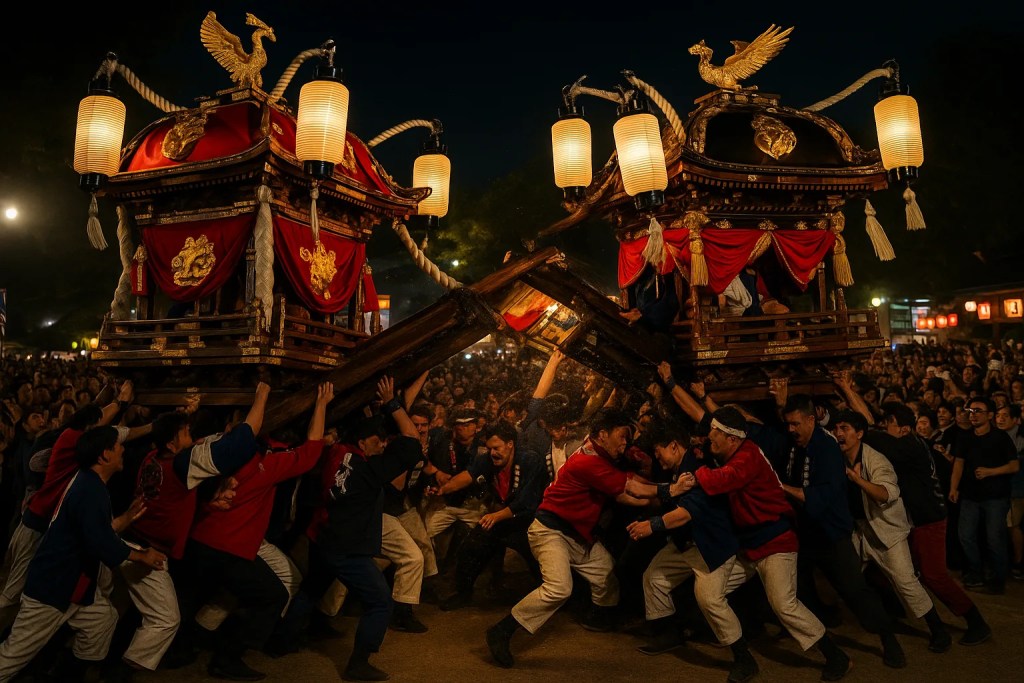
The fighting mikoshi provide the most famous images of nada no kenka matsuri. Three portable shrines, each carried by a different age group of men, are brought together in the festival field. At key moments, the groups run toward each other and slam the mikoshi together. The impact looks fierce, yet it follows set patterns and signals from leaders who watch both the crowd and the carriers.
From the outside, this can seem almost like a sport. Even so, it remains a religious rite done with real risk and real weight. Spectators must never try to join the carriers or step into the fighting area. Instead, you should enjoy the sight from designated viewing zones and let the trained locals handle the dangerous work.
Best Viewing Spots & Simple Route Plan
Because nada no kenka matsuri spreads over two full days and several locations, it helps to choose a simple plan rather than trying to see everything. Otherwise you may end up tired and lost. The following ideas work well for a first visit.
- Shrine approach on October 14. On the eve festival, watch the yatai enter Matsubara Hachiman Shrine. Standing a little back from the gate gives you a good view as each float arrives, turns, and pushes its way into the grounds.
- Festival field on October 15. For the main fighting mikoshi scenes, head to the designated viewing areas around the field where the clashes happen. Try to arrive early, because these zones fill up quickly and late arrivals often see only the backs of other visitors.
- Side streets for a calmer angle. Between big events, explore nearby streets. You may see yatai resting, musicians taking breaks, or groups preparing for the next round. These slower scenes help you enjoy details that disappear during the main battles.
As a simple route, you can base yourself near Himeji Station, travel to Shirahama-no-miya or Shirahamanomiya Station for the festival, and then return to the city centre for food and rest. Staying one night in Himeji lets you enjoy the festival and still have time for Himeji Castle or nearby gardens the next day.
Safety & Festival Manners at Nada no Kenka Matsuri
Nada no kenka matsuri is powerful and beautiful, but it is also physically dangerous for participants. Spectators stay much safer if they follow a few clear rules. Think of these as your personal festival manners checklist.
Physical Safety & Crowd Tips
- Stay behind barriers. Never cross ropes or fences, even for a better photo. Barriers mark the line between viewing space and active fighting space.
- Follow staff and police directions. When staff ask you to move, stop, or wait, respond quickly. They manage both crowd flow and emergency access, so listening helps everyone.
- Watch your footing. Streets and fields can become dusty, muddy, or slippery. For this reason, wear shoes with good grip rather than sandals.
- Protect children and small adults. If you come with kids or if you are shorter, stand farther back from the densest crowds. It is easier to breathe and easier to leave if you need a break.
- Know your exit. Before the main battles begin, look around and note where you would leave in a hurry. That way you will not need to push through the heaviest areas if something feels uncomfortable.
If you ever feel overwhelmed by noise or crowds, step back toward quieter streets or rest near a shop. After a short pause, you can always re-enter the viewing area later when you feel ready.
Photography & Respectful Watching
Because nada no kenka matsuri is so dramatic, it attracts many photographers. However, cameras and tripods can easily disturb others. A few points keep things respectful and also protect you from accidents.
- Avoid blocking people behind you. If you raise a camera or phone, check that you are not completely blocking someone’s only view, especially children or older visitors.
- Use tripods with care. In crowded zones, tripods and large monopods are often forbidden. Even when they are allowed, set them up at the back or side, never in the main flow of people.
- Turn off flash near performers. Flash can distract carriers and drummers who already work under heavy stress. Instead, raise your ISO or accept a slightly darker image.
- Be gentle with close-ups. When you want tight shots of faces, take them from a respectful distance or ask permission outside the most intense moments.
Above all, remember that nada no kenka matsuri is a religious event, not just a show. Watching with care and gratitude fits the local spirit much better than chasing the perfect photo at any cost.
Access from Himeji & Nearby Sights
Access to nada no kenka matsuri is straightforward, although festival crowds can slow things down. First, travel to Himeji Station by JR from Osaka, Kyoto, or Okayama. From there, change to the Sanyo Dentetsu Line and ride a short distance to Shirahama-no-miya / Shirahamanomiya Station. Matsubara Hachiman Shrine lies within walking distance of the station, and signs or staff help guide festival visitors.
Because the festival attracts large crowds, trains and local buses can be busy, especially before and after the main events. Therefore, try to add some buffer time to your plan, and avoid the very last train back if you can. Booking accommodation in Himeji for at least one night makes the schedule much more relaxed.
While you are in Himeji, you might also visit Himeji Castle or Koko-en Garden on a quieter morning or the day after the festival. These spots show a calmer side of the city and nicely balance the intensity of nada no kenka matsuri.
Nada no Kenka Matsuri FAQ
Is nada no kenka matsuri safe to watch?
In general, yes. It is safe as long as you stay in spectator areas and follow staff directions. The danger lies mainly with the carriers of the heavy mikoshi and yatai. Spectators should never attempt to join or step into the fighting area.
Do I need a ticket?
General viewing around the shrine and streets is usually free. However, some years offer paid reserved seats or special tours. If you prefer a fixed seat, check Himeji tourism information in advance.
What should I wear?
Wear comfortable shoes with good grip and clothes you do not mind getting dusty. Layers work best in October, because daytime and evening temperatures can feel quite different.
Can children attend?
Yes, many families attend. Even so, parents should keep children close and avoid the densest parts of the crowd. Watching from slightly farther back or from raised viewpoints can be more comfortable for them.
Is nada no kenka matsuri cancelled in bad weather?
Light rain does not always stop the festival, but strong wind or heavy rain can change the schedule. Therefore, always confirm on official sites or local news on the day of your visit.
Related Internal Links
External Resources
- Japan National Tourism Organization – Nada Fighting Festival
- Kansai Guide – Nada no Kenka Festival
- Himeji Tourism – Nada no Kenka Matsuri Information
- Matsubara Hachiman Shrine – Official Festival Site (Japanese)
You must be logged in to post a comment.