

Kurashiki cultural itinerary
← Back to Cultural Itineraries
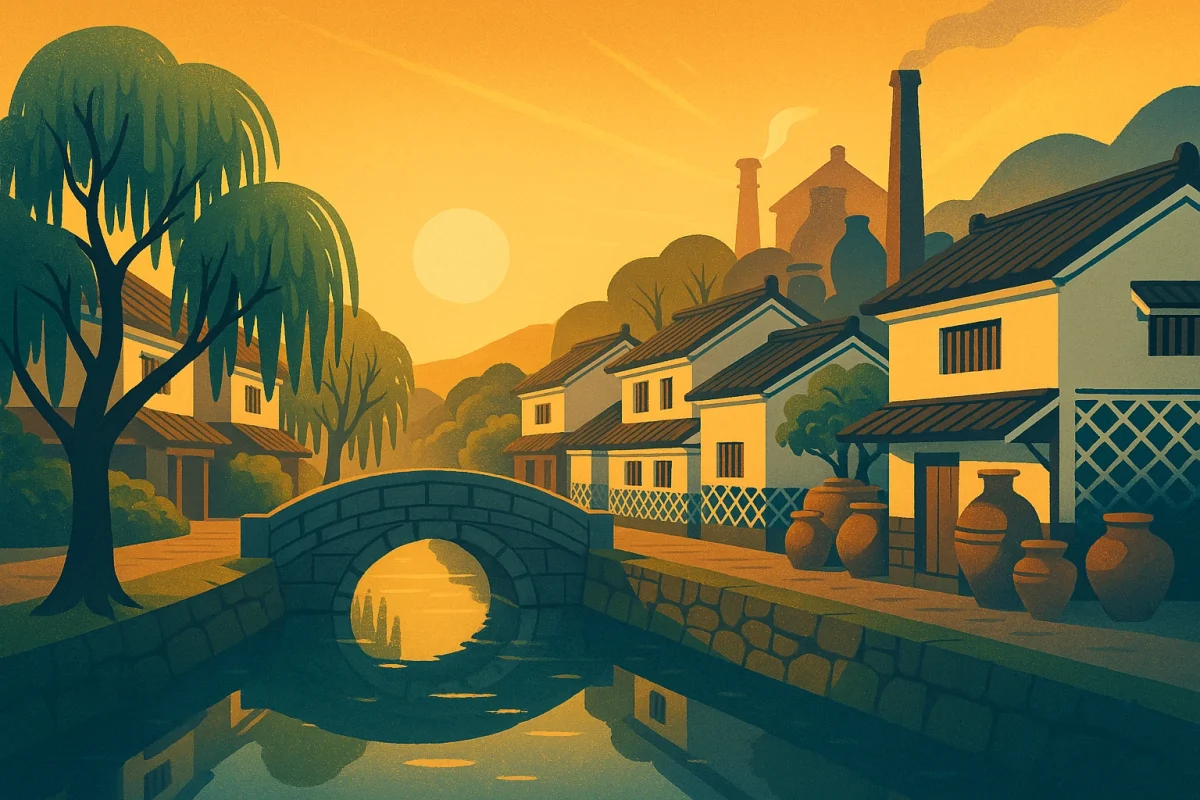
This Kurashiki cultural itinerary moves at a calm, craft-forward pace. First, wander the willow-lined canal and white kura storehouses. Next, anchor your day with the Ohara Museum to frame a mingei perspective. Then, pause for tea on backstreets before browsing small studios. Finally, add Bizen pottery—historic kilns, galleries and a short hands-on—just before dusk.
Quick Facts
- Base: Kurashiki (Okayama) — Bikan Historical Quarter
- Pace: Medium · culture-first · minimal hotel moves
- Days: Modular — take the first N days to match your stay (e.g., 2–3 nights)
- Best for: Edo-period canals & white-walled storehouses, Ohara Museum of Art, Kurashiki Ivy Square, Kojima denim/indigo crafts
- Season: Spring/Autumn best; Summer hot/humid; Winter quieter
- Pass / IC: ICOCA / Suica etc. on JR & buses; JR West Sanyo Area Pass optional
- Day trips (optional): Okayama (Korakuen Garden & Castle), Kojima Jeans Street, Naoshima (if time)
- Budget tier: ¥¥ (see Budget)
- Map: See Access & Map
- Accessibility: See Accessibility & Family
Contents
What makes Kurashiki & Bizen different?
Kurashiki and Bizen are where everyday commerce and craft shaped a distinctly grounded aesthetic. In Kurashiki, merchant culture developed around storage, trade, and waterways, while nearby Bizen became known for one of Japan’s oldest forms of pottery, valued for its natural textures and simplicity.
What you experience here is not refined elegance or large-scale production, but a quiet balance between function and beauty — from white-walled storehouses and canal streets to unglazed ceramics shaped by fire and clay.
If Kanazawa feels refined and Arita feels outward-looking, Kurashiki and Bizen feel understated and tactile — a place where culture emerges from use, material, and the rhythms of everyday work.
How to Use
Start at Day 1 and take the first N days to match your stay. Moreover, reserve any Bizen hands-on in advance; otherwise, weekend slots sell out. Alternatively, on rainy days swap in museum time and covered streets. Therefore, keep your base in Kurashiki to minimize transfers. This Kurashiki cultural itinerary is modular, so you can reorder around weather or closures.
Itinerary
Accessibility links are listed at the bottom of this page.
-
Day 1 — Canal town & mingei walk
Morning
First, walk the Bikan Historical Quarter: willow-lined canal, stone bridge and white kura facades.
Afternoon
Then, visit the Ohara Museum for an overview of mingei and modern collections; afterward, browse craft lanes and pause for tea.
Evening
Finally, unwind at Ivy Square or along the canal when lamps are lit.
Cultural connection: canal-town mercantile heritage; mingei sensibility; brick-mill renewal at Ivy Square.
-
Day 2 — Museums, kura streets & tea
Morning
Next, pair gallery time with annex spaces; meanwhile, step into smaller folk-craft rooms to compare techniques.
Afternoon
Afterward, explore kura backstreets for paper, dye or basket shops; instead, choose a short studio demo if you prefer.
Evening
Finally, book a relaxed tea stop and watch the quarter settle.
Cultural connection: everyday craft in merchant districts; modest hospitality and seasonal sweets.
-
Day 3 — Bizen kilns & pottery hands-on
Morning
Then, transfer to Imbe for historic climbing kilns and galleries; notice unglazed clay tones and fire marks.
Afternoon
Afterward, try a short clay session; consequently, you’ll read surface textures with new eyes.
Evening
Finally, pick a small piece to take home, or return to Kurashiki before dinner.
Cultural connection: Bizen’s wood-firing lineage; form over decoration; touch as a way of seeing.
Traditional & Local Foods
Kurashiki and nearby Bizen are less about one dominant signature dish than about a slower regional food culture shaped by merchant-town life, Setouchi ingredients, and everyday hospitality. This section focuses on foods with cultural meaning rather than sightseeing-oriented gourmet picks.
Quick taste summary: Kurashiki may suit you if you enjoy calm cafés, regional seafood, fruit, and meals that feel tied to daily life rather than highly formal dining. It may feel less ideal if you mainly want a very concentrated “food capital” atmosphere.
Core Cultural Foods
- Okayama barazushi: one of the clearest regional foods connected to the wider area. Taste-wise, it feels varied, balanced, and visually appealing rather than heavy.
- Setouchi seafood: nearby waters shape much of the region’s food identity. Taste-wise, dishes often feel clean and seasonal rather than strongly seasoned.
- Tea and café culture: Kurashiki’s slower canal-town rhythm suits pauses in converted merchant spaces and quieter backstreet cafés. Taste-wise, the mood often matters as much as the menu.
Secondary Local Specialties
- Okayama fruit: especially muscat grapes and peaches in season. Taste-wise, these bring a lighter, gift-oriented side to the region’s food culture.
- Regional sweets: small sweets and café desserts fit especially well after museum or canal walks. Taste-wise, they are often mild and easy to pair with tea.
- Bizen-side simple meals: on pottery days, the food rhythm often becomes practical and slower rather than destination dining.
Traditional Drinks
- Tea: tea works naturally with Kurashiki’s museum-and-craft rhythm. Taste-wise, it supports a gentler pace and quieter stops.
- Local sake or regional drinks: depending on where you eat, these may appear in a more understated way than in more sake-focused destinations.
If this may suit your taste: Kurashiki and Bizen may be a good match if you enjoy regional food in a calmer setting, fruit, seafood, tea, and the feeling that small pauses matter as much as the main sights.
Best fit within this itinerary: Day 1 suits canal-side tea or a relaxed local meal after the Ohara Museum; Day 2 fits café and sweets especially well; Day 3 works best with a lighter meal around Bizen pottery browsing and hands-on time.
Seasonal & Rainy Swaps
- Rainy: However, extend museum time and shorten the outdoor canal loop.
- Summer heat: Meanwhile, schedule walks early or late; interiors at midday.
- Autumn: Therefore, time canal views to late-afternoon light for reflections.
- Winter: If cold intensifies, carry layers and allow for earlier closures.
Etiquette & Handy Phrases
- Typically, ask before handling objects and return items as found.
- When possible, keep voices low on residential backstreets.
- Above all, avoid flash and strong fragrances in small galleries.
Phrases: “Excuse me,” “Thank you,” “Two tickets, please,” “May I take photos?” “Where is …?”
Accessibility — Official links for this itinerary
For hours, access, and on-site accessibility, please use the official links below.
- Kurashiki City Official Tourism — Official site (EN)
- Ohara Museum of Art — Official site (EN)
- Kurashiki Ivy Square — Official site
- Okayama Prefecture Tourism — Official site (EN)
- Imbe / Bizen Pottery Village — Official spot page
- Bizen Ware Traditional Industry Hall — Official page
Note: Historic streets in the Bikan quarter are mostly flat but can include cobbles and uneven edges. Pottery areas may have workshop thresholds or uneven surfaces, so allow extra time.
Access & Map
- From Tokyo: Tokaidō/Sanyō Shinkansen to Okayama → JR Sanyō Main Line to Kurashiki.
- From Kyoto/Osaka: Sanyō Shinkansen (or JR rapid) to Okayama → JR to Kurashiki.
- From Hiroshima: Sanyō Shinkansen to Okayama → JR to Kurashiki.
- Air: Okayama Momotaro Airport (OKJ) → airport bus to Okayama Station → JR to Kurashiki.
- Getting around: Bikan Historical Quarter is walkable; local buses/taxis useful for Ivy Square and outlying spots. For Kojima Jeans Street, JR to Kojima Station then bus/walk.
- Optional day trip: Naoshima via JR to Uno → ferry.
- Pass / IC: ICOCA/Suica/PASMO widely accepted on JR/buses in the area.
- Accessibility: Kurashiki Station has elevators; Bikan quarter mostly flat with some cobbles—allow extra time.
- Luggage: Coin lockers at Kurashiki/Okayama Stations.
Kurashiki Station, Okayama Station, Okayama Airport (OKJ), Bikan Historical Quarter, Ohara Museum of Art, Kurashiki Ivy Square, Kojima Jeans Street, Kojima Station, Uno Port (Ferry)
Budget
| Item | ¥ Range | Notes |
|---|---|---|
| Transport (within Kurashiki) | ¥500–¥1,200 | Walk for Bikan quarter; short JR/bus hops to Ivy Square / Kojima. |
| Admission | ¥0–¥2,000 | Ohara Museum and select exhibits charge modest fees; streets/canal area free. |
| Food / Tea | ¥2,000–¥4,000 | Casual lunch + café/snack; dinner depends on choice. |
| Optional | ¥0–¥4,000 | Workshops (indigo/denim), extra exhibits, short taxi segments. Day trip to Naoshima adds JR + ferry. |
| Total (per person / day) | ¥5,000–¥12,000 | Tier: ¥¥ (standard) |
¥ = frugal (<¥5,000) · ¥¥ = standard (¥5,000–¥12,000) · ¥¥¥ = comfort (>¥12,000)
*Intercity rail (Kyoto/Osaka/Hiroshima/Tokyo ↔ Kurashiki) and airport transfers are extra; seasonal events may affect prices.
Official Resources
- Kurashiki City Official Tourism (EN)
- Ohara Museum of Art (official)
- Kurashiki Ivy Square (official)
- Okayama Prefecture Official Tourism (EN)
- Imbe (Bizen Pottery Village) — Official spot page
- Bizen Ware Traditional Industry Hall (official)
- Inbe Tourist Information Center (official)
- Bizen Pottery Association — History (EN)

You must be logged in to post a comment.