

Kodo (香道), the Japanese art of incense appreciation, is often called a quiet cousin of tea ceremony and flower arrangement. In autumn, cool air and long evenings make it easier to notice delicate fragrance. Because of this, kodo feels especially natural in this season. This guide explains basic kodo incense etiquette for beginners, simple background, and modern ways to try incense at home or in workshops.
Table of Contents
- About Kodo Incense
- Why Kodo Fits Autumn
- Tools for Kodo Incense
- Kodo Incense Etiquette Basics
- Trying Kodo at Home
- Joining Kodo Workshops
- Trivia about Kodo
- Kodo Incense FAQ
- Related Internal Links
- External Resources
About Kodo Incense
First, kodo literally means “the way of fragrance.” It is counted as one of the three classical Japanese arts of refinement, together with tea ceremony and flower arrangement. Instead of simply burning incense, kodo focuses on “listening to fragrance.” During a gathering, guests pass a small censer, handle tools with care, and quietly enjoy the scent of fragrant wood.
Historically, the practice grew from Buddhist incense into a refined pastime at court and among samurai. Over time, formal schools appeared. They developed set patterns of movement, games that compare scents, and seasonal themes tied to poetry. For beginners, however, the key idea is simple. Incense is not just room fragrance; rather, it is a way to calm the mind and share a short, quiet moment with others.
Why Kodo Fits Autumn
Next, think about the season. Autumn in Japan brings clear skies, long evenings, and sharper air. As humidity drops, fragrance becomes easier to notice. Warm incense and cool air make a pleasant contrast. Many people feel that this balance fits the gentle, thoughtful mood of the season.
In addition, autumn is a time of reflection in Japanese culture. Moon viewing, reading, and slow walks are common images. Incense appreciation matches these activities very well. A short kodo-style session before or after tea helps you reset your senses. If you already enjoy autumn stories on Seasonal Japanese Stories, kodo simply adds a “fragrance layer” to the same time of year.
Tools for Kodo Incense
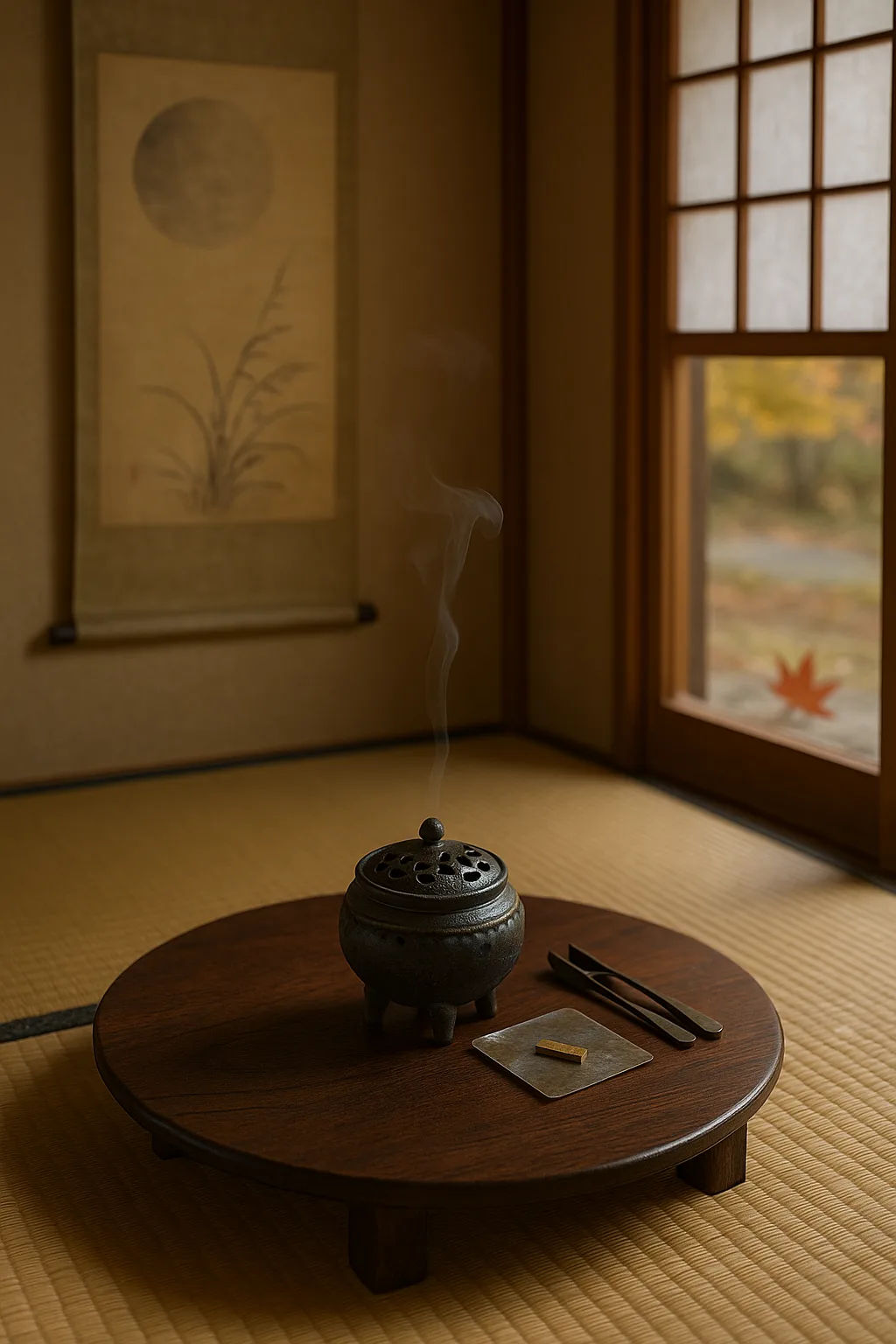
To enjoy kodo incense etiquette, it helps to know the main tools. Traditional kodo does not usually use smoky incense sticks. Instead, it gently heats a tiny chip of fragrant wood so that only aroma rises. The main materials are high-quality aloeswood and sandalwood, sometimes mixed with spices and medicinal herbs.
A basic kodo incense setup includes:
- Incense burner (kōro). A small ceramic or metal vessel that holds ash and charcoal.
- White ash. Clean ash supports the charcoal and helps control heat.
- Charcoal. A small piece buried in the ash provides steady warmth.
- Mica plate (gin-yo). A thin plate placed over the charcoal. The wood chip rests on this plate so it heats without burning.
- Fragrant wood chip. A tiny piece of aloeswood or sandalwood, often smaller than a fingernail.
- Small tools (kika dōgu). Tweezers, ash shapers, and other implements used to prepare the burner.
During a full ceremony, the host prepares the burner in advance so guests see only a tidy censer. As a result, the process looks very smooth and quiet. If you like learning about tools and craft techniques, you can also explore them through Traditional Crafts in Japan on this site.
Moreover, Japanese museums sometimes display incense burners and related utensils beside ceramics and lacquerware. For example, the Tokyo National Museum occasionally shows incense tools in its galleries. Seeing the real materials can make your next kodo incense etiquette lesson feel more concrete.
Kodo Incense Etiquette Basics
Now let us look at manners. Kodo incense etiquette looks strict at first, but the heart is simple: treat fragrance, tools, and people with quiet respect. The following basic points will help you feel relaxed in a lesson or trial session.
- Arrive calmly and on time. Ideally, come a little early so you can settle before the incense begins. Rushing in at the last moment makes it hard to focus.
- Choose clean, simple clothing. Avoid strong perfume, hair products, or fabric softeners, because they conflict with the incense. Soft colors and comfortable clothes are best.
- Silence your phone. Turn off sound and vibration. During kodo, even small noises break concentration.
- Watch the host first. When the censer comes to you, notice how the person before you holds it. Then follow the same movement unless the host gives special instructions.
- Hold the censer with care. Use both hands if asked, and keep it level. Try to move smoothly rather than quickly.
- “Listen” to the fragrance. Bring the censer to a comfortable distance from your nose, often near your chest. Take two or three gentle breaths. Do not sniff loudly.
- Return the censer neatly. After enjoying the scent, lower the censer, turn it slightly if instructed, and pass it on or set it back in its place.
- Keep comments short and kind. Many sessions use simple impressions such as “soft” or “woody.” Therefore, there is no need for clever or long speech.
- Follow house rules. Some schools ask guests to bow at certain times or to avoid crossing arms and legs. When you are unsure, ask quietly before the session starts.
In summary, if you remember only three things for kodo incense etiquette, they are: come without perfume, move slowly, and listen more than you speak.
Trying Kodo at Home
For many people, a home practice is the easiest first step. You can enjoy a gentle version of kodo incense etiquette without a full set of tools. It will not be a formal ceremony, but it can still train your senses and calm your mind.
- Choose your incense. If fragrant wood is not available, start with a single high-quality stick or cone. Simple scents such as sandalwood or aloeswood are easier to notice.
- Prepare a safe space. Use a stable burner, open a small window for air, and keep flammable items away. Most importantly, never leave burning incense unattended.
- Set a short time limit. Decide to sit for five to ten minutes. Then put your phone in another room so you are not tempted to check it.
- Light and “listen.” Light the incense, then sit quietly and breathe as usual. Try to notice how the fragrance changes from the first smoke to the softer scent that stays in the room.
- Write a few notes. After you finish, record simple words: sweet, dry, cool, warm, woody, or floral. Over time, these notes will show what you like.
Finally, once you feel comfortable, you can compare two or three types on different evenings. This small habit prepares you for deeper kodo experiences later. If you follow the seasons using our Japanese Calendar and Seasons guide, you can also match incense to each time of year.
Joining Kodo Workshops
Another step is to join a class. In Japan, incense shops, cultural centers, and museums sometimes offer kodo incense workshops. These sessions often last 60 to 90 minutes and introduce basic tools, a short game, and simple etiquette.
When you search for classes, consider the following places:
- Traditional incense makers and schools. Long-established incense houses and kodo lineages sometimes host small group lessons. Many require advance booking and may offer limited English support.
- Museums and cultural programs. Art and history museums occasionally include incense appreciation in special events. For example, the Kyoto National Museum has displayed incense utensils in exhibitions related to classical culture.
- Local cultural centers. City and ward cultural halls sometimes run short courses on tea, flower arrangement, and incense as a set. Therefore, it is worth checking local listings during autumn and winter.
Before you reserve, check the level of formality, language support, and any dress code. As long as you follow the kodo incense etiquette in this guide, most hosts will be happy to welcome beginners.
Trivia about Kodo
Interestingly, traditional writings describe the “Ten Virtues of Incense.” These poetic lines say that good incense can sharpen the senses, calm the mind, purify body and spirit, and refresh you even in small amounts. They also note that incense is not unpleasant when used often and does not spoil easily when stored well.
Another fun detail is the idea of “incense games.” In some classical games, guests guess whether several censers contain the same wood or different ones. Answers are recorded in simple line diagrams. Later, similar patterns appeared as family crests and kimono designs. In other words, you may already have seen kodo-inspired shapes without realizing it.
Kodo Incense FAQ
Do I need to sit in seiza for kodo incense etiquette?
Not always. Many modern lessons allow chairs or a relaxed kneeling style. If seiza is difficult, it is better to tell the host in advance.
Is the smell very strong?
Generally, no. In formal kodo, the fragrance is usually gentle. Only a tiny chip of wood is heated, so you feel a soft, layered scent rather than heavy smoke.
What is the difference between kodo incense etiquette and just burning sticks?
In kodo, hosts use careful tools and focus on one scent at a time, often without visible smoke. The goal is to “listen” to fragrance in a quiet, shared setting. Everyday incense burning is more casual and usually scents the whole room.
Can beginners join a kodo incense class?
Yes. Many workshops are designed for first-timers. As long as you follow basic etiquette—no perfume, quiet behavior, and gentle handling of tools—you will be fine.
May I take photos during a session?
Policies differ. Some hosts allow photos before or after the ceremony but not during it. To be safe, always ask permission first, and avoid photographing other guests without consent.
Related Internal Links
External Resources
- Tokyo National Museum – Official English Site
- Kyoto National Museum – Official English Site
- Agency for Cultural Affairs, Japan
You must be logged in to post a comment.