
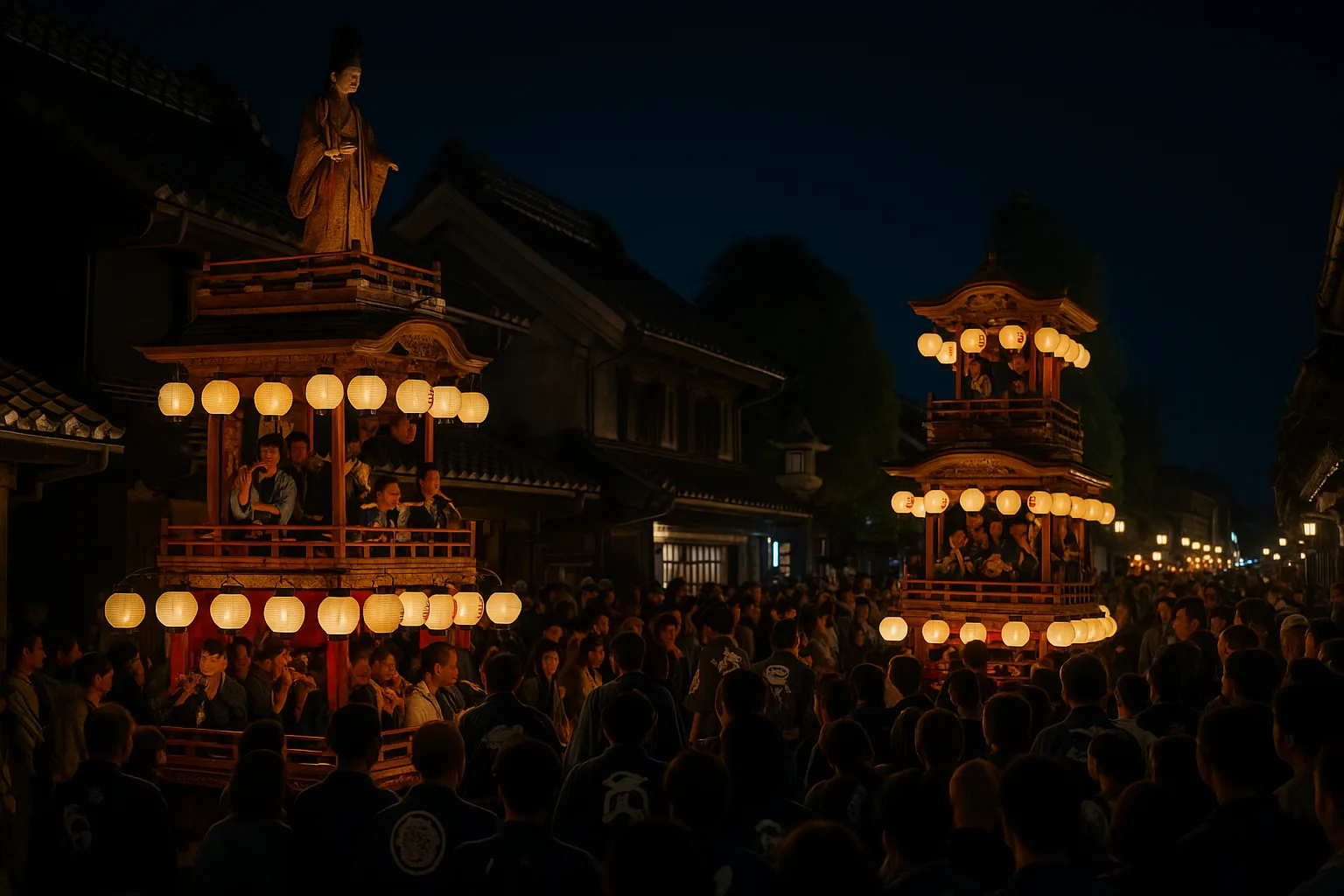

Kawagoe festival 2025 brings giant wooden floats, festival music, and crowds of locals in happi coats to the old warehouse streets of Kawagoe in Saitama. The event is famous for its lively hikkawase scenes, where floats meet and bands “battle” each other. This preview and etiquette guide explains when and where to watch, how to move through the crowds, and how to handle trash and photos politely.
Table of Contents
- Kawagoe Festival 2025 Overview
- Dates, Times, and Basic Schedule
- What Is Hikkawase and Where to Watch It?
- Best Viewing Areas and Walking Route
- Crowd Navigation and Safety Etiquette
- Trash, Food Stalls, and Restroom Tips
- Photography and Video Etiquette
- Families, Accessibility, and Quiet Spots
- TRIVIA
- Kawagoe Festival FAQ
- Related Internal Links
- External Resources
Kawagoe Festival 2025 Overview
First, a quick picture of the festival itself. Kawagoe Festival, also called Kawagoe Matsuri, is an autumn float festival held in the historic district known as “Little Edo.” Each neighborhood operates its own tall wooden float decorated with carved wood, lanterns, and a small stage for dolls or performers.
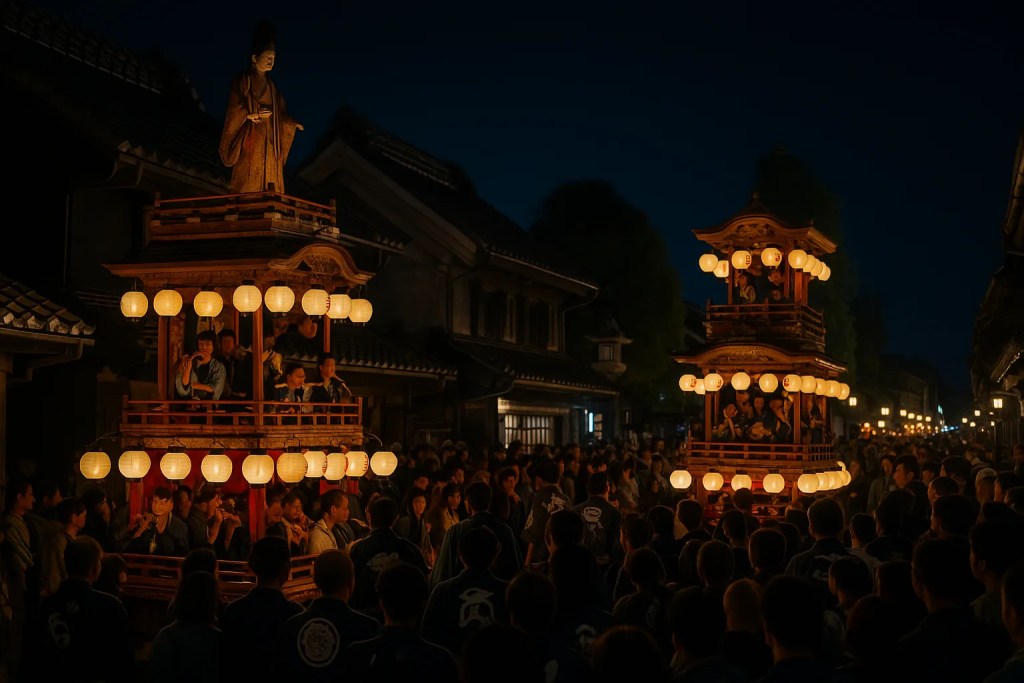
During kawagoe festival 2025, bands of musicians ride the floats and play flutes, drums, and bells. At night, lanterns light up the streets, and floats pass through rows of old storehouses. The atmosphere feels both nostalgic and very energetic. Because the event attracts many visitors from Tokyo and abroad, a bit of advance planning makes your experience much smoother.
Dates, Times, and Basic Schedule
Next, let us look at timing. Kawagoe festival 2025 is scheduled for the weekend of October 18–19, 2025. Daytime parades usually start around midday, while the most dramatic lantern-lit scenes happen in the evening.
On both days, floats leave their home neighborhoods and head toward the central streets near the Kurazukuri warehouse district and the bell tower. Midday processions show off the decorations and musicians. After sunset, the floats return with lanterns lit, and more intense hikkawase meetings take place at major intersections.
Exact times can change with weather or local decisions. Therefore, you should check the latest schedule on the official Kawagoe festival or city tourism website shortly before your trip.
What Is Hikkawase and Where to Watch It?
Hikkawase is the highlight of Kawagoe Festival. The word means something like “pulling together.” When two or more floats meet at a crossing, the groups stop and face each other. Then the musicians on each float play their festival music at full strength. Dancers and puppets may also perform while supporters shout encouragement.
As the music overlaps, the mood becomes very lively. However, the meeting still follows clear rules, and staff members guide both floats and visitors. To watch comfortably, stand back from the immediate corner and allow a little space between you and the nearest float.
Popular hikkawase spots include major intersections in the Kurazukuri area and along the main shopping street. These places fill up quickly in the evening. If you want a good view, arrive a little before the expected meeting time and avoid pushing to the front at the last minute.
Best Viewing Areas and Walking Route
Because the festival spreads across several streets, it helps to choose a simple route. A common plan is to start near Kawagoe Station or Hon-Kawagoe Station and walk toward the old warehouse district. Along the way, you pass food stalls, side streets with floats, and smaller performances.
Once you reach the Kurazukuri area, you can loop slowly up and down the main street. Narrow lanes connect to other float routes, so you often hear drums and flutes from different directions. To reduce stress, pick one or two key intersections where you want to see hikkawase, then enjoy the walk between them instead of trying to chase every float.
Side streets just off the main route sometimes give a calmer view. You might see floats waiting for their turn or bands taking a short rest. These quiet moments can feel just as memorable as the main show.
Crowd Navigation and Safety Etiquette
Kawagoe festival 2025 will bring heavy crowds, especially on Saturday evening. Good crowd etiquette keeps everyone safe and allows local residents to move around their own city.
- Follow staff and police directions. If staff ask you to stop, move back, or cross at a different point, please do so. They manage both visitor safety and float movement.
- Keep walking lanes clear. When you stop to watch, stand to the side of the street instead of the center. Leave space for people to pass behind you.
- Avoid sudden direction changes. Before you step sideways for a photo, glance over your shoulder. This simple habit prevents many small collisions.
- Stay off the floats and ropes. Never touch or lean on ropes, wheels, or wooden parts of the floats. These are important cultural objects and also heavy moving machines.
- Meet up away from crossings. If you lose friends, choose a landmark slightly away from the busiest corners. That way you do not block other visitors while you wait.
In short, move like you are in a narrow train station: steady pace, small steps, and eyes open for people around you.
Trash, Food Stalls, and Restroom Tips
Festival food is part of the fun. You will see stalls selling yakitori, takoyaki, sweet potatoes, and more. However, trash etiquette in Japan can surprise visitors, because public bins are limited.
- Use stall-side trash cans. Many food stalls provide bins only for items bought there. After you finish eating, take your skewers, cups, and plates back to the same stall when possible.
- Carry a small trash bag. For packaging or items without a clear bin, keep a plastic bag in your daypack and sort it later at your hotel.
- Avoid eating in the tightest spots. To prevent spills, step to a wider area or side street before you eat. Then you will not block the flow of people.
- Plan restroom breaks early. Lines grow longer as the evening goes on. When you see a restroom with a short queue, take the chance.
If you want more background on everyday manners, you can also read our guide Japanese Etiquette Basics before your trip.
Photography and Video Etiquette
Float festivals are very photogenic, so it is natural to take many pictures. At the same time, cameras can easily disturb other visitors if you use them without care. A few simple rules keep things pleasant.
- Turn off flash whenever possible. Flash flattens the lantern light and can distract performers. Raise your ISO or use a small tripod if allowed.
- Keep tripods and selfie sticks out of the flow. If you use them, set up far from corners and crossings. Never stretch equipment over people’s heads in a dense crowd.
- Do not stand in the street to film. Stay inside the lines that staff mark for visitors. When floats move, streets need to clear quickly.
- Be gentle about close-ups of children. Many local kids join as musicians or dancers. If you want a tight shot of a child’s face, ask a guardian first when possible.
Remember that your eyes and ears are also important. After you capture a few photos of each float, put your camera down for a moment and simply enjoy the music.
Families, Accessibility, and Quiet Spots
Kawagoe festival 2025 can be exciting for children and visitors of all ages. However, the mix of sound, light, and crowds may feel strong if you are sensitive to noise or use mobility aids.
Families with small children may want to arrive earlier in the afternoon, when streets feel less packed. A compact stroller works better than a wide one. Alternatively, a carrier allows you to move more easily, though it may grow heavy as the night goes on.
If you use a cane or wheelchair, check festival maps for wider streets and temporary barrier-free routes. In general, the areas closer to stations have broader sidewalks, while the warehouse district has narrower roads. When you need a break, step into a café or convenience store slightly away from the main route and rest before heading back.
TRIVIA
Kawagoe Festival traces its roots to Edo-period float events held in front of Kawagoe Hikawa Shrine. Over time, merchants in the castle town added more elaborate floats and music troupes. Today’s festival keeps many of these elements while adapting to modern safety rules.
The nickname “Little Edo” comes from Kawagoe’s role as a key town north of old Edo (Tokyo). During the festival, you can feel this link strongly: lanterns light old storehouses, while modern trains continue to bring day-trippers from the capital.
Kawagoe Festival FAQ
Is there an entry fee for kawagoe festival 2025?
No general ticket is needed to walk around the festival area. However, some paid seating or special viewing spots may require advance reservations.
What happens if it rains?
Light rain usually does not stop the festival, although schedules may change. Heavy rain or strong wind can cancel float parades for safety. Always check local announcements on the day.
What should I wear?
Comfortable walking shoes and layers are best. Streets can be uneven, and evenings in October may feel cool once you stop moving.
Can I drink alcohol while I walk?
Some people buy drinks from stalls, but you should stay in control and avoid loud behavior. Public drunkenness makes it harder for staff to manage crowds.
How early should I arrive?
If you want a relaxed visit, come in the early afternoon, explore the old town, and then stay through dusk. Arriving only for the evening peak means heavier crowds and less time to find good viewing spots.
Related Internal Links
External Resources
You must be logged in to post a comment.