


Ise Jingu holds Kanname-sai as one of its most important yearly rites. During this festival, priests offer new rice and seasonal foods to Amaterasu-Omikami to thank for the harvest. The main rituals happen in mid-October, and smaller ceremonies spread across several days. This guide explains Kanname-sai in simple terms: what it means, when it happens, and how you can watch it politely as a visitor.
Table of Contents
- What Is Kanname-sai at Ise Jingu?
- Kanname-sai Dates and Schedule Window
- Where Kanname-sai Happens – Naiku and Geku
- New Rice Offerings and Meaning
- Kanname-sai Viewing Etiquette for Visitors
- Planning an Autumn Visit to Ise Jingu
- TRIVIA
- Kanname-sai FAQ
- Related Internal Links
- External Resources
What Is Kanname-sai at Ise Jingu?
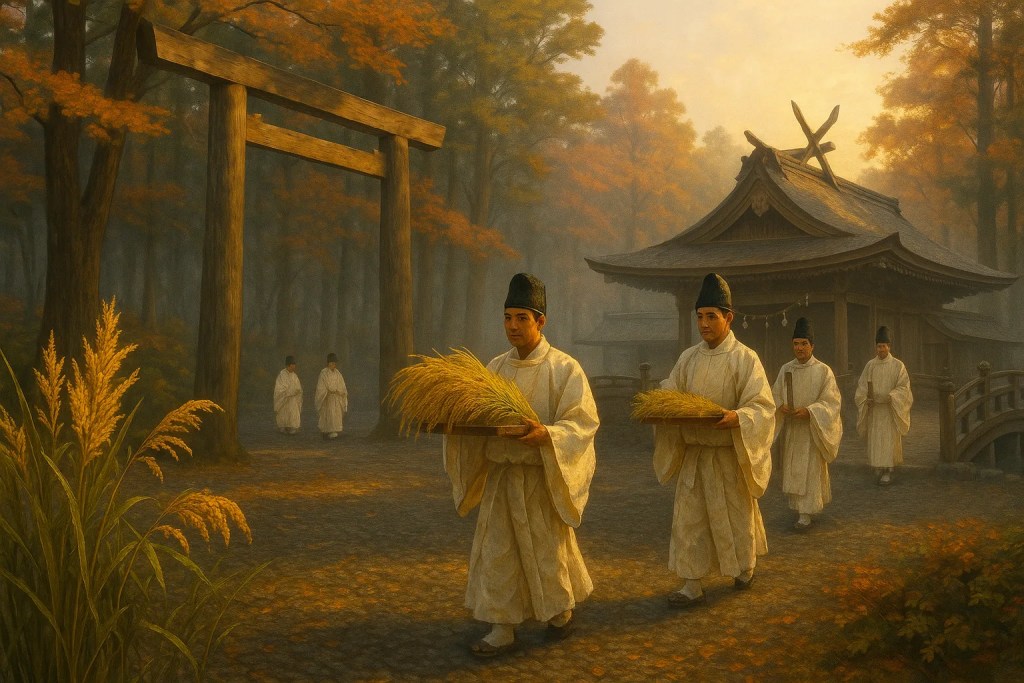
First, Kanname-sai works as the central harvest festival of Ise Jingu. The shrine’s own guide calls it the most important ceremony of the year. During Kanname-sai, priests bring the first rice from Jingu’s sacred fields, together with other foods, and present them to Amaterasu-Omikami. The Emperor also sends an ear of new rice grown under his care.
Ise Jingu stands in Mie Prefecture and people see it as the most sacred Shinto shrine complex in Japan. The inner shrine (Naiku) honors Amaterasu. The outer shrine (Geku) honors Toyouke Omikami, a deity linked to food and daily life. Kanname-sai connects these deities, the rice fields, and the imperial family, so it sits at the center of Ise’s ritual year.
Kanname-sai Dates and Schedule Window
Next, look at the dates. Kanname-sai does not happen in a single moment. The ritual calendar of Ise Jingu shows a festival period from about October 15 to around October 25 each year. Within this window, priests carry out the most intense rites on a few key days in the middle.
Many guides point to October 15–17 as the main cluster for Kanname-sai. During these days, priests offer rice at night and again in the morning at both Geku and Naiku. Imperial envoys present special cloth and rice on behalf of the Emperor. A related rite called Kammiso-sai on October 14 prepares the way for the main festival.
Ordinary visitors cannot enter the innermost halls during these moments. Still, you can feel a clear change in Ise City during the festival period. On important days, you may notice processions of priests, people carrying offerings, and more worshippers than usual at both shrines.
Where Kanname-sai Happens – Naiku and Geku
Kanname-sai at Ise Jingu involves both the outer shrine (Geku) and the inner shrine (Naiku). In many years, Geku holds its Kanname-sai rites first, and Naiku follows with similar rituals soon after. This order reflects Toyouke’s role in preparing food for Amaterasu.
Visitors walk only in the public areas. You cross Uji Bridge at Naiku, follow stone paths through the forest, and approach the outer fences of the main sanctuary. During Kanname-sai, these paths feel more formal than on an ordinary day. Extra staff, police, and simple banners all show that the shrine hosts a special event.
Naiku and Geku sit a few kilometers apart. To keep your visit relaxed, pick one area for each day or half-day. Many travelers spend one day mainly at Geku and the next day at Naiku. This plan gives you time to rest, eat, and enjoy the town as well as the shrines.
New Rice Offerings and Meaning
Kanname-sai follows the rhythm of rice growing. Shrine workers and local farmers plant and care for sacred paddies linked to Ise Jingu. They harvest the rice in late summer and store it with great care, then priests bring it out during Kanname-sai.
Government and shrine publications explain that people treat rice as a direct gift from Amaterasu. The first ears from each year carry this idea in a clear form. During Kanname-sai, priests place the new rice on special trays, add vegetables, fish, and sake, and offer the whole “meal” to the kami. At almost the same time, the Emperor stands in the Imperial Palace, faces toward Ise, and offers new crops in his own Kanname-sai ritual.
For modern visitors, it may help to imagine Kanname-sai as a national “thank you” for food and life. You may not see the rice directly, yet you can still pause under the tall cedars, think about the year’s harvest, and offer your own quiet thanks.
Kanname-sai Viewing Etiquette for Visitors
Because Kanname-sai counts as a sacred festival at Japan’s most important shrine, manners matter. The following points keep you and those around you comfortable.
- Check dates and rules in advance. Before your trip, read the latest notes on official sites. Gate times, one-way routes, or waiting areas can change from year to year.
- Dress neatly and simply. Smart casual clothing works well. Choose quiet colors and avoid costumes, loud slogans, or very revealing outfits. Wear shoes that handle long forest walks.
- Listen to staff. Security staff and shrine attendants sometimes stop visitors on bridges or stairs or ask everyone to move in one direction. Follow their directions quickly and calmly.
- Keep voices low. Many people come to pray during this time. Speak softly and keep phone calls for outside the main shrine area.
- Use cameras with care. Do not take photos past the innermost torii or in zones marked with “no photography.” Avoid pointing cameras straight at people who are praying or at priests on duty.
- Stay on the paths. Walk only on the marked paths. Step neither on moss nor into side areas behind ropes, even if you see a good photo angle.
- Move with the flow. When the approaches grow crowded, keep walking. If you want to stop, step aside so others can pass.
In short, imagine that you watch a private family ceremony from the edge. Quiet interest and respect fit the occasion; pushy behavior does not.
Planning an Autumn Visit to Ise Jingu
Many visitors hope to feel the mood of Kanname-sai at least once. If you share this wish, focus on mid-October. The core days around October 15–17 bring the most processions and special rites. The wider period from about October 15 to 25 still carries the festival feeling but may have fewer crowds.
Hotels in Ise and nearby towns often book out early around these dates. To avoid stress, reserve rooms and long-distance trains as soon as your schedule settles. If you want quieter walks, plan at least one early-morning visit, when the paths feel cool and almost empty.
Kanname-sai also links well with other autumn activities. You can combine Ise with coastal walks in Mie, or with other harvest stories in our Seasonal Japanese Stories section. Our overview page Seasonal Events in Japan helps you see how Kanname-sai fits into the broader autumn festival calendar.
TRIVIA
Ise Jingu holds roughly 1,500 rituals each year. Most of them touch food or daily offerings in some way. Among this long list, many writers call Kanname-sai the rite that ties the whole cycle together.
Kanname-sai also has deep roots in history. Old records describe imperial offerings of new rice to Amaterasu many centuries ago. When Japan adopted the Gregorian calendar in the late 19th century, officials shifted the dates, but the idea of thanking the kami with the year’s first harvest remained. Today, Kanname-sai still connects the imperial court, Ise Jingu, and rice fields across the country.
Kanname-sai FAQ
Can ordinary visitors watch Kanname-sai?
You cannot watch the most sacred inner rites, because priests hold them behind closed fences. Even so, during the festival period you often see processions, offerings in special boxes, and many people lining up to pray.
Is there a best time of day to visit?
Priests hold some key rites at night or at dawn, but these moments stay private. For most visitors, daytime works best. Morning usually brings fewer people, while late afternoon offers soft light through the trees.
Do I need a special tour for Kanname-sai?
No tour is required. You can enter the public areas of both Naiku and Geku on your own. A guide can add detail, yet you can still enjoy the mood if you simply follow signs and basic etiquette.
Do rules change during Kanname-sai?
Basic shrine manners stay the same. Bow at the torii, rinse your hands, and avoid photos in forbidden zones. During Kanname-sai, staff may close some side paths or set one-way routes, so watch for extra signs.
Does it still make sense to visit outside the core days?
Yes. Even if you come before or after mid-October, Ise Jingu offers a strong atmosphere. The rice cycle continues through other rites, and the forest, bridges, and rivers show a calmer face of the shrine.
Related Internal Links
External Resources
- Ise Jingu – Rituals and Ceremonies (Official)
- Visit Mie – Report on Kanname-sai and Sustainability
- Japan Tourism – Ise Jingu Long Description
You must be logged in to post a comment.