

Japanese Autumn Haiku
Jpanese Haiku and Autumn Expressions: Discover the Beauty of Japanese Autumn Haiku
Explore Japanese autumn haiku—short poems that capture the season’s colors, sounds, and feelings through kigo (seasonal words). Learn classic examples, easy writing tips, and ways to experience haiku culture in Japan.

What is Haiku?
Haiku is a traditional form of Japanese poetry with a 5–7–5 rhythm. More than structure, haiku values a single vivid moment in nature and often includes a kigo—a seasonal word that anchors the poem in time and culture. In autumn, haiku often evokes clarity in the sky, color in the leaves, quiet evenings, and the sounds of insects.
Seasonal Words (Kigo) for Autumn
- 紅葉(Momiji) — autumn leaves, the symbol of seasonal change
- 虫の声(Mushi no koe) — insect chorus in the evening
- 菊(Kiku) — chrysanthemums, linked to longevity and imperial motifs
- 露(Tsuyu) — morning dew, symbolizing transience
- 秋晴れ(Akibare) — crisp, clear autumn skies
Classic Autumn Haiku Examples
-
枯枝に 烏のとまりけり 秋の暮
(On a withered branch / a crow has alighted / autumn evening) — Matsuo Bashō -
秋深し 隣は何を する人ぞ
(Autumn deepens — what is my neighbor doing?) — Matsuo Bashō -
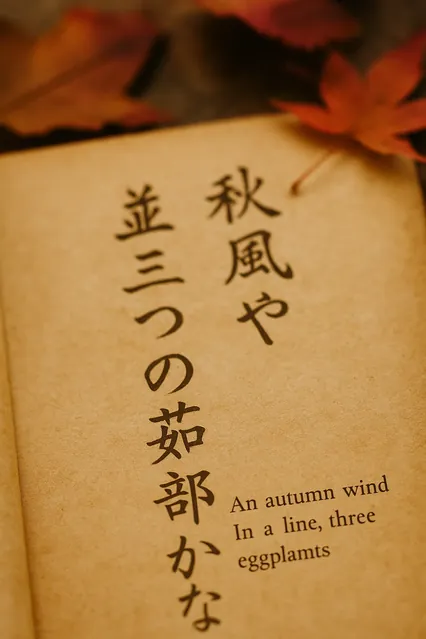
秋風や 並三つの 茄子かな
(An autumn wind / in a line, three eggplants) — Matsuo Bashō
Scene Description
In Bashō’s famous haiku — 「枯枝に 烏のとまりけり 秋の暮」 — we imagine a quiet evening in late autumn. A bare tree stands with no leaves, a single crow perches on the branch, and dusk settles in. The scene conveys solitude, impermanence, and the deep stillness of the season.
English Explanation: This haiku paints a picture of a lonely crow on a withered branch at dusk, symbolizing the quiet solitude and reflective mood of autumn.
How to Enjoy Haiku in Japan
- Garden & Temple Walks: Carry a notebook and write haiku while observing autumn scenery.
- Haiku Workshops: Cultural centers in Kyoto or Tokyo often host beginner-friendly sessions in English.
- Photo & Haiku: Pair photography with a 5–7–5 line that catches a tiny detail—dew, a red leaf, the hush at dusk.
Simple Tips for Writing Your Own Haiku
- Observe one moment. Focus on a small scene in nature.
- Use a seasonal word (kigo). Connect your poem to Japanese tradition.
- Keep it clear. Suggest meaning rather than explain directly.
- Try both English and Japanese. Writing in both languages offers new perspectives.
Related Internal Links
- Autumn Festivals in Japan — Traditions and Customs
- Seasonal Events in Japan
- Rice Harvest in Japan — Season, Customs, and Visitor Tips
- Matsuri & Seasons — Guide to Japanese Festivals
- Traditional Crafts in Japan — Materials, Colors, Seasons
- Membership — Premium cultural guides & perks
External Resources
Want more seasonal culture? Get deeper guides, printable checklists, and member-only tips with WaStory Premium Membership.