
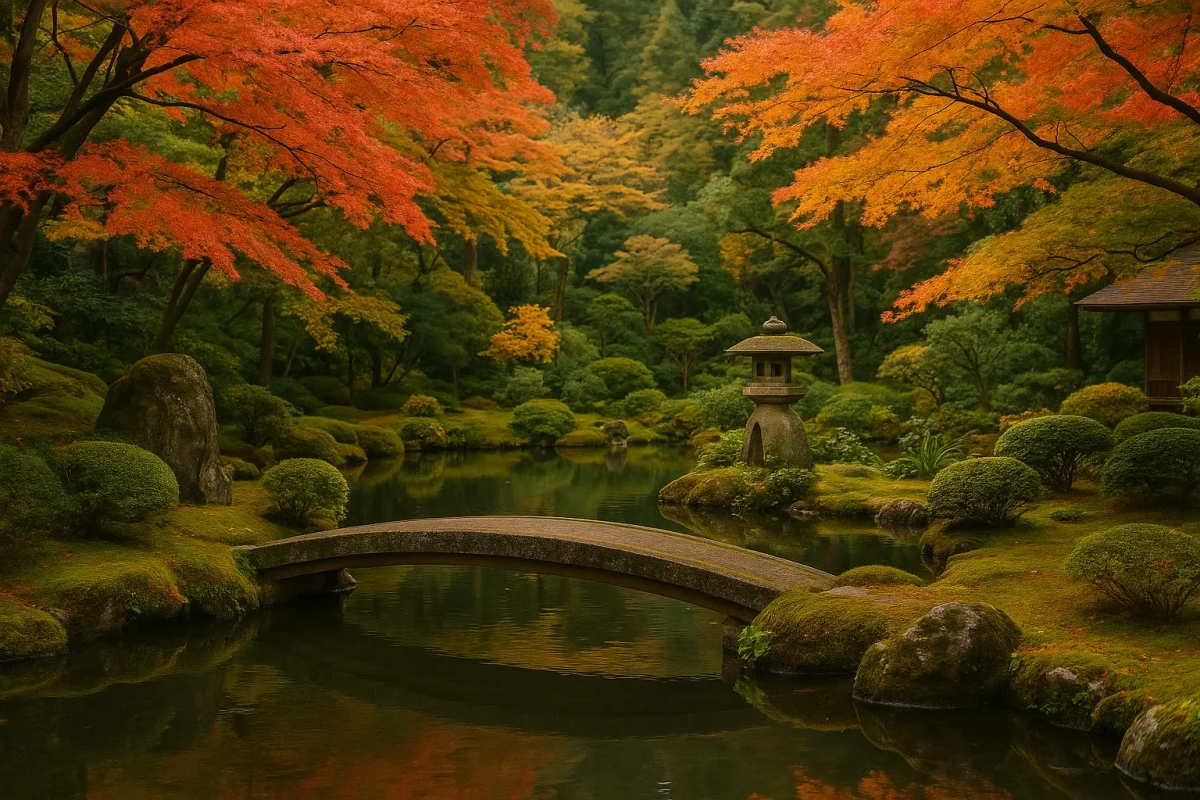

Japanese Garden
Japanese Garden in Autumn — Design, Aesthetics, and Quiet Etiquette
This guide helps you enjoy a Japanese garden in autumn. It explains core design ideas (shakkei, strolling paths, contrast), highlights to notice (water reflections, ginkgo carpets), garden-specific etiquette, and where to visit.
Why Autumn Feels Different in a Japanese Garden
Japanese gardens are designed scenes, not random views. Consequently, autumn color is framed with intent. Red maples and golden ginkgo sit beside stone lanterns, over moss, and across still water. As a result, the season feels composed rather than accidental. In this setting, visitors sense mono no aware—the beauty of transience. Above all, the quiet makes each detail stronger.
Garden Design Principles that Shine in Autumn
- Shakkei (Borrowed Scenery). Designers frame distant hills and treelines. In autumn, these frames capture broad sweeps of color. Therefore, even a compact garden can feel expansive.
- Circulation Paths (回遊式). Paths guide the story: canopy color → water reflection → stone and lantern detail. In practice, each turn offers a fresh angle. Thus, a slow stroll reveals more than a quick glance.
- Contrast and Negative Space. Crimson leaves glow against green moss and dark timber. Meanwhile, pale gravel in dry gardens (枯山水) amplifies fallen leaves. Because of this contrast, colors read cleaner and brighter.
- Water as a Canvas. Ponds collect leaves and mirror the sky. For best results, visit during calm mornings or at dusk. Then the reflections sharpen and the surface looks like glass.
Seasonal Highlights: What to Look For
- Water Reflections. Seek wind-sheltered ponds. In many cases, the “upside-down” view is richer than the direct one.
- Ginkgo Carpets. Golden leaves dust stepping stones and paths. After dry weather, textures stand out more clearly.
- Lanterns and Fallen Leaves. Simple stone forms gain warmth in autumn light. Therefore, step back and compose with space.
- Moss and Maple. Deep greens make reds pop. Moreover, shaded corners keep color longer into the season.
- Evening Light-ups. Some gardens open at night in late autumn. In turn, shadow adds drama and depth.
Must-Visit Gardens & Best Viewing Tips
Focus on garden-specific timing and angles rather than general leaf viewing. This approach reduces crowds and improves photos.
- Tofuku-ji (Kyoto). From the wooden bridge, look across layered valleys of maples. Arrive early; otherwise, foot traffic disturbs water surfaces.
- Rikugien (Tokyo). Strolling paths lead to framed views. At dusk, you can enjoy both natural color and illuminations.
- Kenroku-en (Kanazawa). Ponds act as seasonal mirrors. For clearer reflections, choose still mornings after cool nights.
- Korakuen (Okayama). Broad lawns set color at a distance. First, use a wider lens for context. Then switch to a short telephoto to compress layers.
Photo tip: avoid mid-day glare on water. Instead, try early or late light. Handheld shooting works best on busy days since tripods are often restricted.
Garden-Only Etiquette
- Stay on paths. Routes choreograph views and protect roots. Otherwise, moss and soil suffer.
- Respect moss and gravel. Do not enter roped areas or touch rake patterns in dry gardens.
- Keep voices low. Sound travels in enclosed spaces. Therefore, help maintain the calm.
- Use compact gear. Tripods and selfie sticks are often limited in peak season. When in doubt, check on-site rules.
- Leave leaves. Fallen foliage is part of the composition. Accordingly, please do not pick it up.
Immersive Experiences (Tea, Night Light-ups)
- Tea in a Teahouse. A seasonal bowl of matcha turns color into ritual. Furthermore, windows frame the view like paintings.
- Guided Walks. Learn the meaning of stones, bridges, and plantings. As a result, “pretty scenery” becomes a designed narrative.
- Night Events. Limited-time illuminations blend shadow and hue. Consequently, autumn feels moodier and more intimate.
Key Takeaways
A Japanese garden in autumn offers composed scenes where design meets season. Look for borrowed scenery, clear reflections, and path-by-path choreography. In addition, keep your voice and gear light. If possible, try tea or a night opening. Ultimately, you will leave with more than photos: a calm sense of balance and impermanence.
Related Internal Links
External Resources
- Japanese Garden Society — Background on design and cultural context.
- Kyoto Travel (Official) — Autumn openings and garden information.
- Rikugien Garden (Official) — Seasonal events and light-ups.
- Kenroku-en (Official) — Visitor details and maps.