

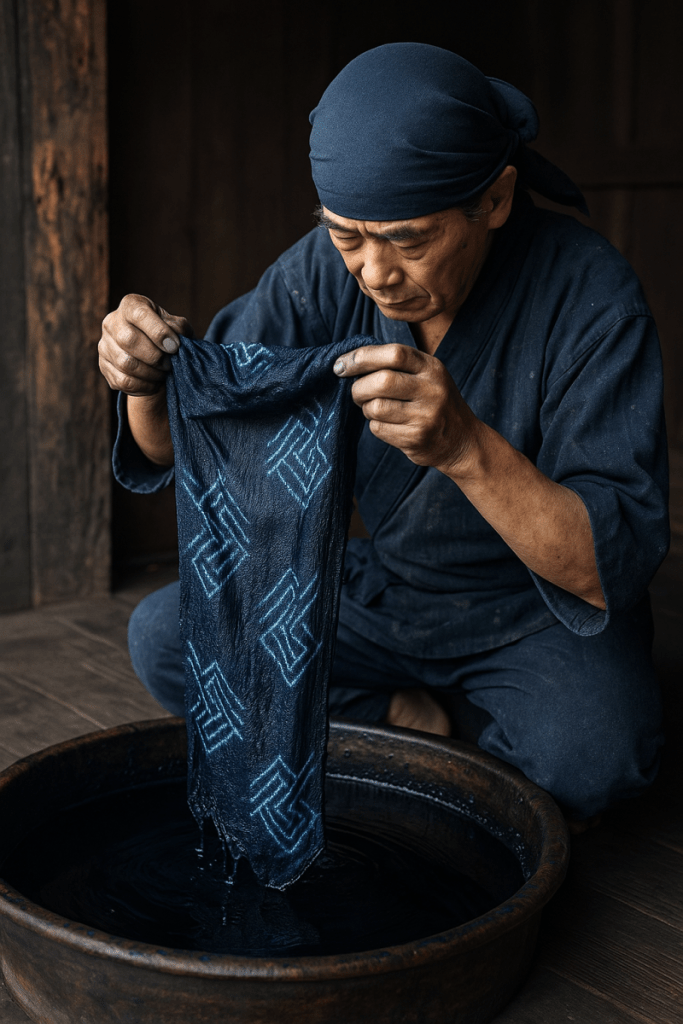
Traditional Crafts in Japan show beauty in everyday use and legacy. From hand-dyed indigo and paper-thin washi to gold-dusted lacquer and smoke-fired pottery, these crafts are made to be used, repaired, and loved over time. Moreover, this guide explains what to look for, where to go, and how to experience crafts hands-on.
From hand-dyed indigo and paper-thin washi to gold-dusted lacquer and smoke-fired pottery, Japanese crafts are designed to be used, repaired, and loved over time. This guide explains what to look for, where to go, and how to experience crafts hands-on.
What Makes Japanese Crafts Unique
- Use first: Objects are made for daily life (tea, food, writing), not just display.
- Season & place: Materials and colors reflect local climate and traditions.
- Repair culture: Kintsugi and visible mending keep beloved items in use.
- Human scale: Subtle irregularities (te-ami, te-nuri) are signs of handwork.
Key idea: Choose one object you will really use. Let it age with you.
Field Guide: Major Craft Families
| Family | Examples | What to Notice |
|---|---|---|
| Paper (Washi) | Echizen, Mino, Tosa | Long fibers, translucency, deckled edges |
| Textiles | Indigo (aizome), kasuri/ikat, Nishijin weaving | Hand-dye depth, crisp selvedge, woven patterns (not prints) |
| Lacquer (Urushi) | Maki-e, Wajima-nuri | Deep gloss, light weight, warm touch; avoid very hot/dishwasher |
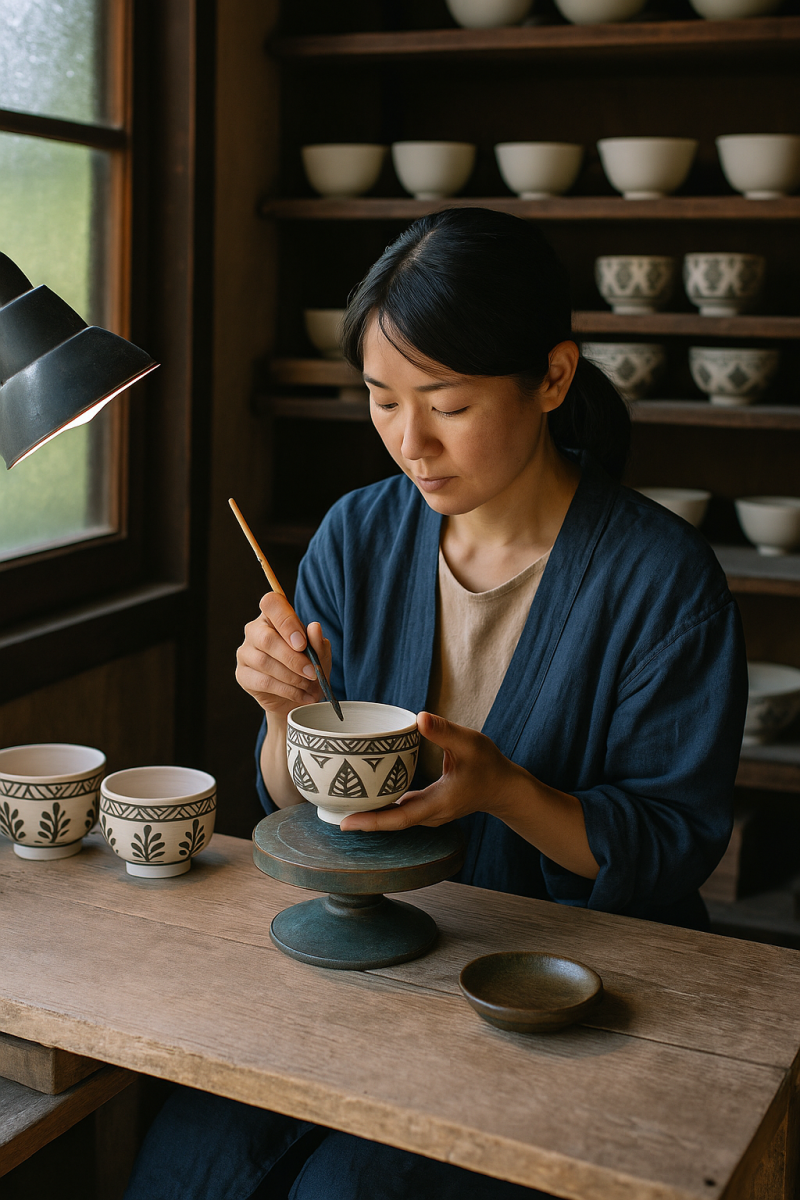
| Ceramics | Arita/Imari, Kutani, Bizen, Mashiko, Shigaraki | Clay body, glaze pooling, foot ring finishing |
| Wood & Bamboo | Kumiko lattice, magewappa, bamboo baskets | Tight joinery, even thickness, quiet fragrance |
| Metalwork | Tsubame-Sanjo copper/stainless, Nanbu cast iron | Weight balance, smooth seams, enamel quality |
| Print & Book Arts | Ukiyo-e woodblock, handmade notebooks | Registration marks, layered colors, paper grain |
Signature Crafts & Where to See Them
Paper & Print
- Echizen Washi (Fukui): papermaking villages, studio tours, postcard workshops.
- Ukiyo-e Printing (Tokyo/Kyoto): hand-carved blocks, multi-color registration demos.
Textiles
- Aizome (Tokushima): natural indigo vats; try dyeing a handkerchief or scarf.
- Nishijin-ori (Kyoto): silk weaving displays; obi fabrics in modern accessories.
Lacquer
- Wajima-nuri (Ishikawa): durable base + multiple lacquer layers; maki-e gold decoration.
- Kintsugi (various cities): visible gold repair workshops for chipped ceramics.
Ceramics
- Arita/Imari (Saga): porcelain with cobalt blue and overglaze enamels.
- Bizen (Okayama): unglazed, fire-marked surfaces; earthy, heavy feel.
- Mashiko (Tochigi): approachable folkware; many studios offer wheel throwing.
Wood & Bamboo
- Kumiko (Nagano/Gifu): geometric lattice panels; light-through patterns.
- Magewappa (Akita): bent cedar lunch boxes; aroma and lightness.
- Bamboo (Kyoto/Oita): baskets, tea scoops; springy strength and fine splits.
Metal
- Tsubame-Sanjo (Niigata): knives, kettles, tableware; factory shops & museums.
- Nanbu Tekki (Iwate): cast-iron kettles; even pour, enamel quality.
Try It Yourself: Hands-On Ideas (60–120 min)
- Indigo dye (scarf or furoshiki)
- Kintsugi-inspired repair (beginner resin/metal powder class)
- Washi papermaking (postcards or lamp shade)
- Wheel-throwing (cup or small bowl; pick up later or ship)
- Woodblock printing (print your own two-color design)
Tip: Small workshops book out on weekends. Reserve in advance; ask about English guidance.
Buying Guide: How to Choose & What to Ask
Checklist
- Touch the surface: does it feel warm (wood/lacquer) or overly plastic?
- Look underneath: foot ring on bowls, tool marks, and signature/atelier label.
- Ask the maker/shop:
- Who made this and where?
- Materials and finish (natural lacquer? lead-free glaze?)
- Care instructions (dishwasher? microwave? heat range?)
Budget Ranges (typical)
- Small washi goods: ¥800–¥3,000
- Indigo scarf, bamboo basket (small): ¥3,000–¥12,000
- Everyday ceramics: ¥2,000–¥8,000 / piece
- Lacquerware bowl: ¥6,000–¥25,000+
- Cast-iron kettle: ¥12,000–¥40,000+
Care & Longevity
- Lacquer: hand-wash, lukewarm water, mild soap; no dishwasher/microwave; avoid 80 °C+ liquids.
- Ceramics: hand-wash; avoid thermal shock; unglazed ware can be pre-soaked before first use.
- Cast iron: dry fully after use; avoid standing water; re-season enamel chips professionally.
- Textiles: cold wash or hand-wash; indigo may bleed—wash separately first.
- Wood/Bamboo: wipe dry; occasional light oiling; avoid long soaks.
Sustainability & Ethics
- Prefer local studios and certified regional crafts.
- Buy fewer, better pieces you will use for years.
- Repair first (kintsugi, sashiko); display age with pride.
Planning by Region (Examples)
| Region | What to Look For | Pair With |
|---|---|---|
| Kyoto | Nishijin weaving, bamboo craft | Tea ceremony, Zen gardens |
| Kanazawa | Lacquer, Kutani porcelain | Modern art museum, geisha district |
| Tohoku | Nanbu iron, kogin/sashiko stitching | Hot springs, snow views |
| Kyushu | Arita porcelain, Hakata textiles | Ceramic routes, local food |
| Shikoku | Indigo dye, washi | River valleys, cycling |
Glossary
- Washi 和紙: handmade Japanese paper
- Aizome 藍染: natural indigo dyeing
- Urushi 漆: natural lacquer sap finish
- Maki-e 蒔絵: sprinkled gold/silver decoration on lacquer
- Kintsugi 金継ぎ: gold-join repair of ceramics
- Kumiko 組子: interlocking wooden lattice
- Nanbu Tekki 南部鉄器: cast-iron ware from Iwate
FAQ (Q/A)
Q: How can I tell if an item is handmade?
A: Look for subtle asymmetry, tool marks, and an atelier’s label or signature. Ask who made it and where.
Q: Can I put lacquerware in the dishwasher?
A: No. Hand-wash only in lukewarm water with mild soap.
Q: Will indigo stain my clothes or skin?
A: Freshly dyed items may bleed. Wash separately the first few times; dye on skin washes off.
Q: Is kintsugi food-safe?
A: Traditional kintsugi uses natural lacquer that cures food-safe, but beginner “kintsugi-style” resins may not be. Ask the studio.
Q: Can I ship purchases abroad?
A: Most craft shops can arrange international shipping; keep receipts and maker details for customs.
Continue Exploring
Tea Ceremony
Prefecture Guides
Harmony, Etiquette & Wa
Zen & Aesthetics
Matsuri & Seasons
Further Reading
- For government-recognized craft designations, visit METI – Traditional Crafts.
- See Wikipedia – Japanese Crafts for history and classification.
Traditional Crafts in Japan – Field Guide & Highlights
Traditional Crafts in Japan are an essential part of Japanese culture. This section summarizes key crafts, artisans, and hands-on workshops for travelers.
Traditional Crafts in Japan: Indigo, Washi & Lacquerware
Discover the beauty of indigo dyeing, paper-thin washi, and lacquerware while learning where to see live demonstrations and shop handmade goods.
When exploring Traditional Crafts in Japan, you’ll notice each region has distinct tools, materials, and stories.
Travelers interested in Traditional Crafts in Japan can book workshops, meet makers, and bring home durable, repairable items.
To plan routes around Traditional Crafts in Japan, combine museum visits with studio tours and local markets.
You must be logged in to post a comment.