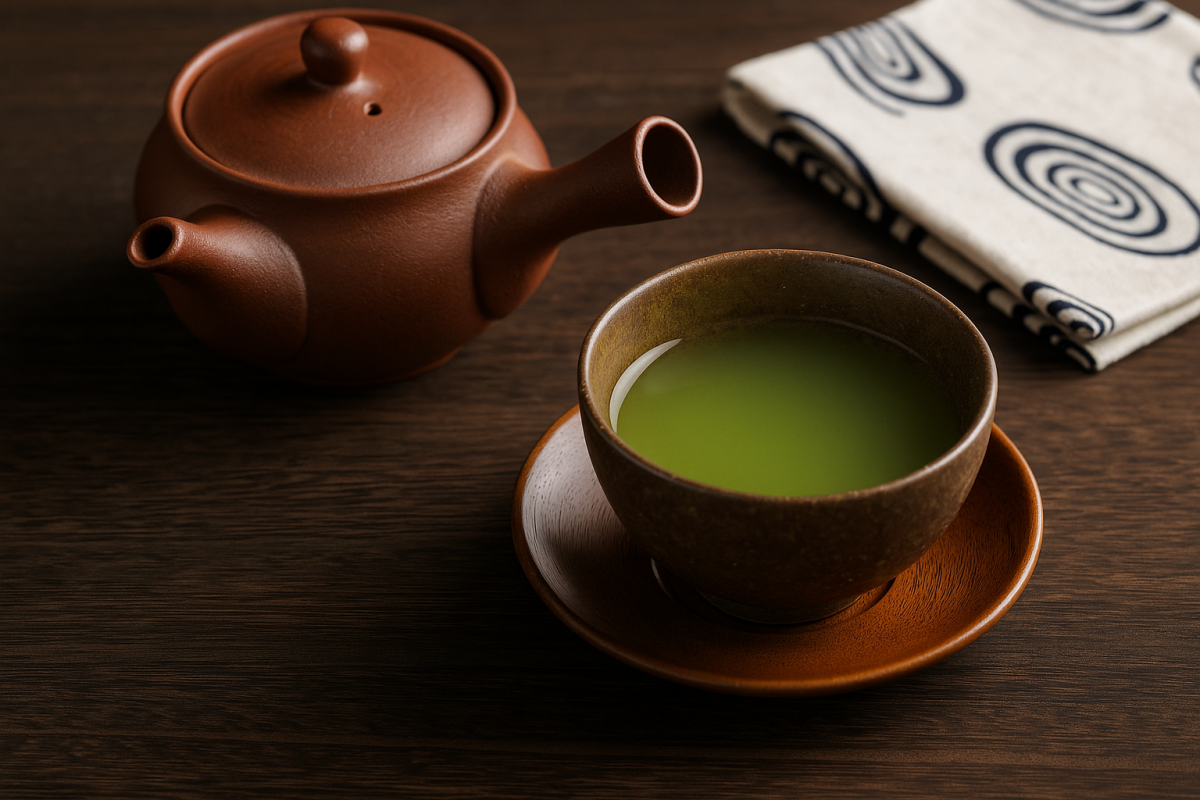

Tea is more than just a drink in Japan — it is a part of daily life, seasonal culture, and even spiritual practice. From a simple cup of sencha at home to the elaborate tea ceremony, Japanese tea culture reflects harmony, mindfulness, and respect.
Types of Japanese Tea
Sencha (煎茶)
The most common green tea, served daily in homes and restaurants. Sencha has a fresh, grassy flavor and is usually brewed at a slightly lower temperature (70–80°C) to avoid bitterness.
Matcha (抹茶)
A finely ground powdered green tea used in the Japanese tea ceremony (茶道). It is whisked into a frothy drink and is known for its vibrant green color and deep umami flavor.
Hōjicha (ほうじ茶)
A roasted green tea with a warm, nutty aroma and lower caffeine content. Popular for evening drinking or for children and the elderly.
Genmaicha (玄米茶)
A blend of green tea and roasted brown rice, giving it a toasty, comforting taste.
Gyokuro (玉露)
A premium shade-grown green tea with an intense sweetness and umami. Brewed with cooler water (50–60°C) for best flavor.
Tea and Daily Life
Tea is offered to guests, enjoyed after meals, and even served in offices. It represents hospitality (おもてなし) and is a simple way to connect with others.
Tea Ceremony (茶道)
The tea ceremony is a formal practice that combines art, architecture, calligraphy, and seasonal aesthetics. Every movement — from preparing utensils to serving tea — is done with mindfulness and respect for the guest.
Health Benefits
Green tea is rich in antioxidants, vitamin C, and catechins, which are believed to support metabolism, focus, and overall health.
Drinking Etiquette
- Hold the cup with both hands when receiving tea.
- Sip quietly and appreciate the aroma before drinking.
- If matcha is served in a tea ceremony, rotate the bowl slightly before drinking as a gesture of respect.
FAQ
Q: Is Japanese tea always green?
A: Mostly yes, but there are also black teas (和紅茶) grown in Japan, especially in Shizuoka and Kagoshima.
Q: Is matcha stronger than coffee?
A: Matcha has less caffeine than coffee but provides a calmer, longer-lasting energy due to L-theanine.
Q: Can I drink tea with meals?
A: Absolutely — green tea pairs well with rice dishes, sushi, and light Japanese meals.
Explore more: