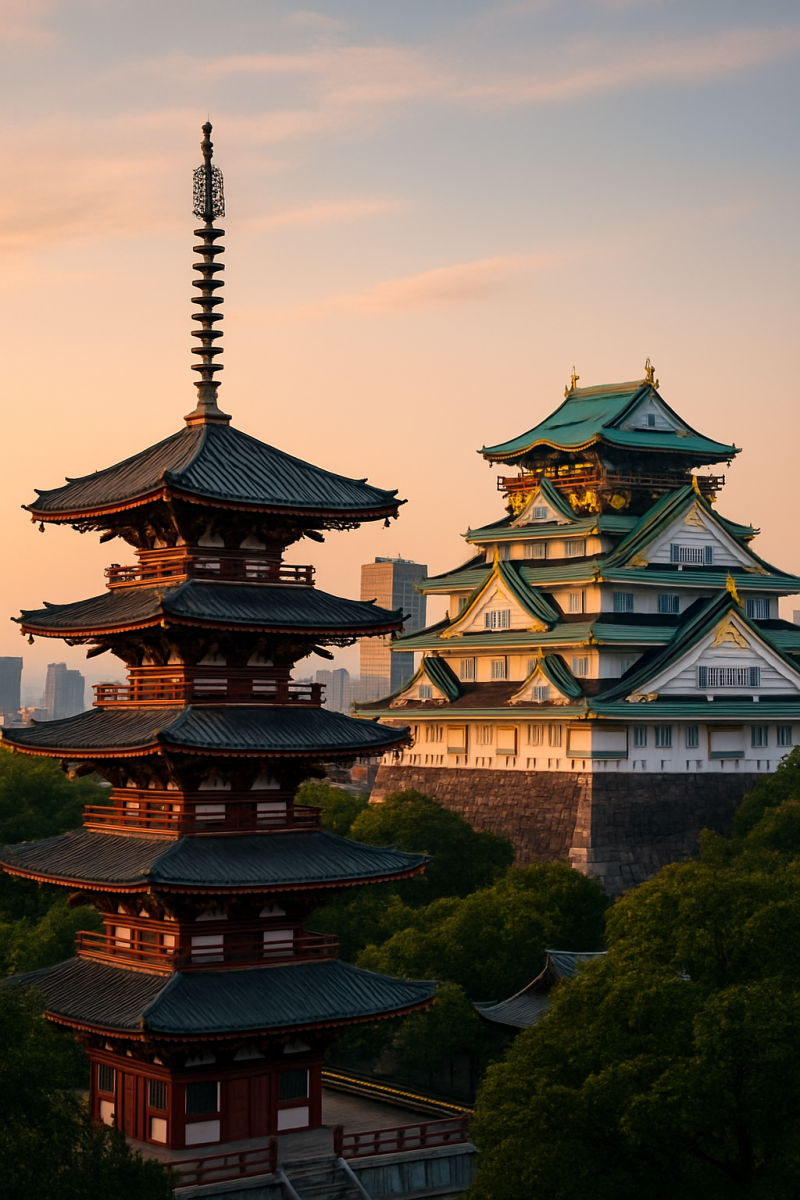

A beginner-friendly timeline of Japanese history — from prehistoric pottery to the Reiwa era.
This page is designed to give you a quick overview before you dive into more detailed topics like crafts, festivals, and architecture.
Prehistoric Japan: Jōmon & Yayoi (–300 CE)
- Jōmon Period (縄文時代) – Known for its cord-marked pottery and hunter-gatherer lifestyle.
- Yayoi Period (弥生時代) – Rice cultivation and bronze tools arrive from the continent, forming the basis of early Japanese society.
Classical Japan: Asuka–Heian (300–1185)
- Asuka & Nara (飛鳥・奈良時代) – Introduction of Buddhism, creation of the first centralized state, building of Todaiji Temple.
- Heian Period (平安時代) – Flourishing of court culture, The Tale of Genji (世界初の長編小説), and kana writing system.
Medieval Japan: Kamakura–Muromachi (1185–1600)
- Kamakura Period (鎌倉時代) – Rise of the samurai class and the first shogunate government.
- Muromachi Period (室町時代) – Growth of Zen Buddhism, ink painting, tea culture, and Noh theater.
Early Modern Japan: Edo (1603–1868)
- Over 250 years of peace under the Tokugawa shogunate.
- Development of ukiyo-e woodblock prints, kabuki theater, and sophisticated urban culture in Edo (modern Tokyo).
- “Sakoku” (closed country) policy limits foreign contact but allows unique cultural growth.
Modernization: Meiji–Showa (1868–1945)
- Meiji Restoration (明治維新) – Rapid westernization, modernization, and industrialization.
- Rise of modern education, railways, and a new constitution.
- Early 20th century sees Japan emerge as a world power, followed by WWII.
Postwar & Contemporary Japan: Heisei–Reiwa (1945–Today)
- Post-1945 reconstruction leads to rapid economic growth and the “Japanese Miracle.”
- Pop culture — anime, video games, design — gains worldwide popularity.
- Today’s Reiwa era continues to blend tradition with innovation.
Key Cultural Highlights
- Continuity over Change: Japanese history is marked by adaptation rather than total breaks.
- Seasonal & Natural Connection: Festivals, architecture, and cuisine still follow the rhythms of nature.
- Blend of Influences: Chinese, Korean, and Western ideas were absorbed but reshaped into something uniquely Japanese.
Visual Timeline (Quick Reference)
| Era | Dates | Highlights |
|---|---|---|
| Jōmon | –300 CE | Cord-marked pottery, hunter-gatherers |
| Yayoi | 300 BCE–300 CE | Rice farming, bronze tools |
| Asuka–Nara | 300–794 | Buddhism, first capital cities |
| Heian | 794–1185 | Court culture, literature |
| Kamakura | 1185–1333 | Rise of the samurai |
| Muromachi | 1336–1600 | Zen, tea, ink art |
| Edo | 1603–1868 | Peace, ukiyo-e, kabuki |
| Meiji | 1868–1912 | Modernization, westernization |
| Taisho–Showa | 1912–1945 | Industrial growth, WWII |
| Heisei–Reiwa | 1989–Today | Pop culture, global influence |
Explore More
- Traditional Crafts – See how historical techniques live on today
- Festivals & Seasons – Experience traditions tied to nature
- Architecture & Cities – From castles to modern skylines
Tip: Read this page first, then explore each era in detail through museums, historic sites, or local festivals.