
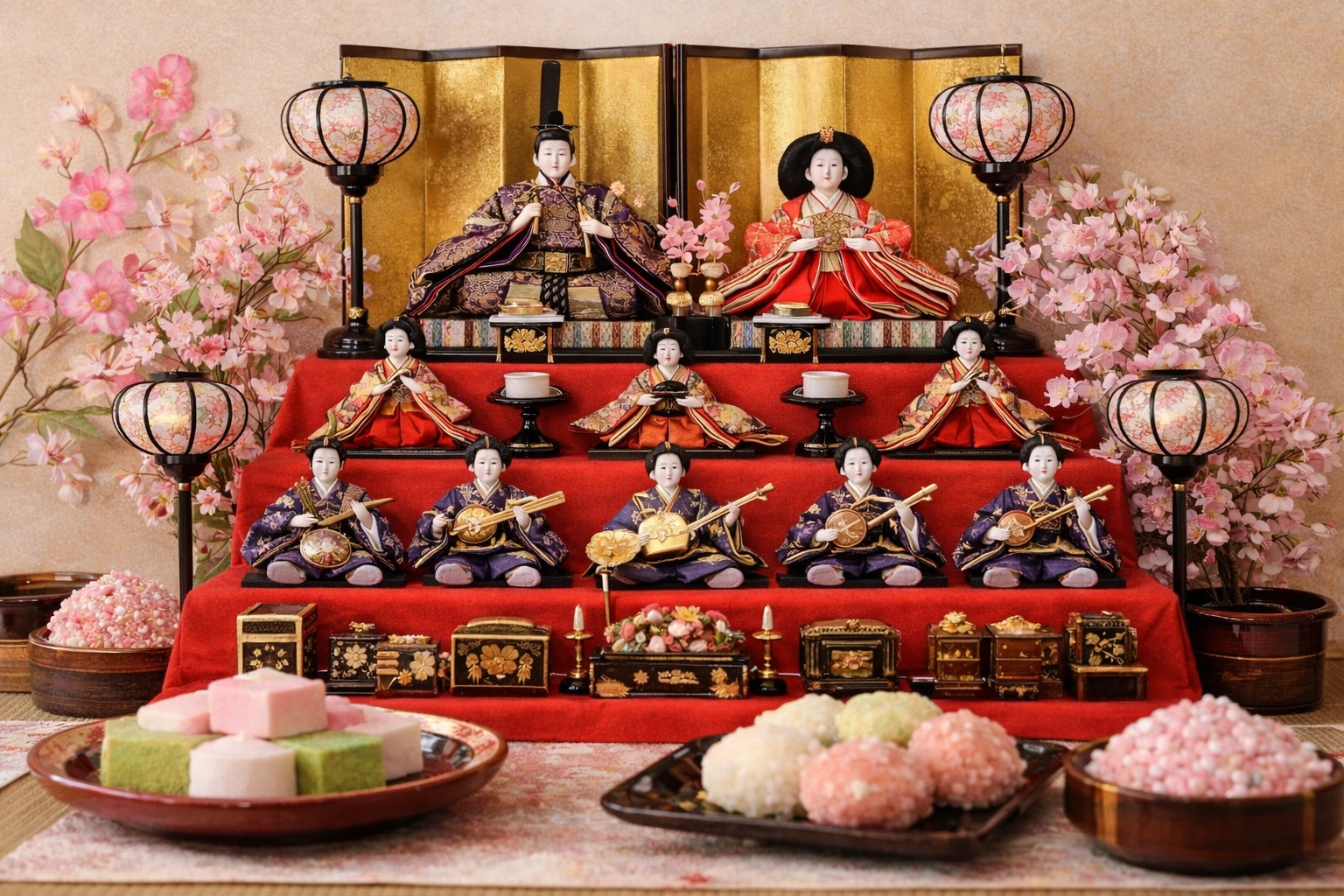

Hina matsuri in japan
Seasonal Culture Guide – Hina Matsuri in Japan
Quick Summary
Hina Matsuri in Japan, often called Girls’ Day or the Dolls’ Festival, is a gentle spring celebration held on 3 March. Families with daughters display beautiful hina dolls on tiered stands, decorate with peach blossoms, and share special foods while wishing for health and happiness. For travelers, it offers a lovely window into family life, seasonal colors, and Japan’s love of detailed craftsmanship.
- Date
- 3 March (Hina Matsuri / Girls’ Day)
- Also known as
- Girls’ Day, Dolls’ Festival
- Main symbols
- Tiered hina dolls, peach blossoms, pastel colors, special rice crackers
- Good for
- Families, culture lovers, visitors interested in traditional crafts
Keep exploring The Wa Story
What is Hina Matsuri in Japan?
Hina Matsuri in Japan is a seasonal festival held on 3 March to pray for the healthy growth and happiness of girls. It belongs to a set of traditional “seasonal turning points” in the Japanese calendar and sits between mid-winter events and the full arrival of spring.
The main image of Hina Matsuri is a tiered stand covered with red cloth, lined with hina dolls that represent the imperial court of the Heian period. Families with daughters usually display the dolls in late February and put them away shortly after the festival day. In everyday life, people enjoy the soft colors, peach blossoms, and small sweets that come with this gentle celebration.
For visitors, Hina Matsuri is a chance to see how seasonal traditions connect to home life. You may not see large street parades, but you can find doll displays in department stores, museums, hotels, and local community centers—especially in regions with strong historical ties to doll-making.
Why it matters: protection, renewal & family wishes
Hina Matsuri can look like “pretty dolls and sweets,” but culturally it sits in a long tradition of marking seasonal thresholds with protective rituals. Early spring was historically seen as a time when health and luck could feel uncertain—so communities created gentle, repeatable ways to wish for safety, growth, and a good year ahead.
- Protection made visible. The dolls and careful arrangement are a way to “watch over” children through symbols. Even today, many families treat the display as a seasonal guardian—quiet, beautiful, and reassuring.
- A reset before spring fully begins. Like other turning-point customs, Hina Matsuri gives families a moment to pause, tidy, decorate, and welcome the season with intention rather than rushing into it.
- Family continuity. Hina sets are often gifts from grandparents and can be kept for generations. Displaying them becomes a yearly reminder that a child’s growth is supported by the wider family, not only parents.
- Craft and care as culture. The festival highlights Japan’s appreciation for fine craftsmanship and presentation—small details that communicate affection, respect, and attentiveness.
- A gentle “wish” culture. Compared with loud festivals, Hina Matsuri is intimate and home-centered. That quiet tone is part of the meaning: care is expressed through small, thoughtful actions repeated each year.
This is also why people often put the dolls away soon after 3 March: it signals that the “seasonal moment” has been completed and the household is ready to move forward into spring.
Hina dolls and tiered displays
The heart of Hina Matsuri is the hinadan, a stepped platform covered with bright red cloth. On this stage, hina dolls are arranged in a fixed order that reflects a stylized imperial court. The details may vary by family and region, but the basic layout is often similar.
The top tier: Emperor and Empress
On the highest tier sit the Emperor and Empress dolls, called obina and mebina. They wear elegant Heian-style robes and often hold ritual objects. In some regions the positions of the dolls are reversed, reflecting different traditions about which side the Emperor should stand on.
The court around them
Lower tiers may include:
- Three court ladies with sake equipment
- Five musicians playing traditional instruments
- Ministers and guards watching over the court
- Small furniture and tools such as boxes, carriages, and chests
Not every family owns a full seven-tier set. Some display only the Emperor and Empress, while others may add a few attendants and miniature furniture. Modern compact sets use soft fabrics, wooden blocks, or even simple illustrations, making it easier for urban families with limited space.
Craftsmanship and regional styles
Traditional hina dolls can be exquisite works of art, made with carefully painted faces, layered silk kimono, and gold-leaf details. Some regions maintain their own styles of doll-making, and local museums sometimes hold special hina exhibitions. If you are interested in crafts, Hina Matsuri is an excellent time to look more closely at Japanese techniques in textiles, lacquer, and woodwork.
Home customs, food & modern family life
In many households, Hina Matsuri is a quiet, family-centered day. There is no strict national rule for how to celebrate, but a few elements appear again and again.
Setting up and putting away the dolls
Families usually set up hina dolls in late February. A common saying warns that if you leave the dolls out too long after 3 March, a daughter might “marry late.” Most people treat this more as a playful reminder to tidy up than a real superstition, but it shows how closely Hina Matsuri is linked to wishes for a bright future.
Foods and drinks for Hina Matsuri
Typical Hina Matsuri foods and drinks include:
- Chirashizushi – scattered sushi rice with colorful toppings
- Hishimochi – diamond-shaped rice cakes in pink, white, and green
- Hina-arare – small puffed rice crackers in pastel colors
- Shirozake or amazake – sweet, low-alcohol or non-alcoholic drinks
The colors often carry meanings: pink for protection and life, white for purity, and green for health and growth. Even if families do not hold a big party, many will at least enjoy hina-arare or a small cake decorated with dolls or peach blossoms.
How modern families experience Hina Matsuri
Today, not every family owns a full hina doll set, especially in urban apartments. Some people display a compact set or a single ornament, while others may simply enjoy seasonal sweets. Grandparents sometimes give hina dolls as a gift when a granddaughter is born, and these sets can be treasured for generations.
For families living abroad, Hina Matsuri can become a way to share Japanese heritage with children, even with improvised displays using paper dolls or simple decorations. The essential idea is the same: to pause and wish for the healthy, happy growth of girls.
Travel tips: where to see Hina Matsuri displays
If you visit Japan in late February or early March, you may be able to enjoy Hina Matsuri in several ways—even if you do not have access to a private home celebration.
- Department stores and shopping malls: Many large stores set up hina displays near their entrances or in seasonal corners, accompanied by peach blossom decorations and sweets.
- Museums and historical houses: Some cities host special exhibitions of antique hina dolls, showing how styles have changed over centuries.
- Traditional townscapes: In certain regions, whole streets take part in “doll tours,” placing hina sets in shop windows and old houses for visitors to explore.
- Hotels and ryokan: Accommodation with a strong sense of season may arrange small hina displays in lobbies or lounges.
When you find a hina display, enjoy it with a little distance and avoid touching the dolls. They are often family treasures or museum pieces. Taking photos is usually fine in public spaces, but check for signs or staff instructions first.
Colors, motifs & cultural meanings
Hina Matsuri is full of soft colors and gentle motifs that quietly tell a story about spring and protection. Understanding these details can deepen your appreciation of the festival.
- Peach blossoms: The festival is sometimes called the Peach Blossom Festival. Peaches are linked with protection and long life in East Asian folklore.
- Pink, white, and green: These colors appear in hishimochi and sweets, symbolizing life and protection (pink), purity (white), and growth or new greenery (green).
- Tiny tools and furniture: The miniature chests, carts, and boxes around the dolls echo a world where everyday items were beautifully crafted and carefully stored.
Overall, Hina Matsuri expresses a wish that girls will grow up safe, healthy, and surrounded by supportive relationships—much like the carefully arranged figures that watch over them from the hinadan.
Trivia: little stories about Hina Matsuri
- Hina Matsuri is linked to older practices of floating paper dolls on rivers to carry away misfortune. Some regions still hold rituals where dolls are set adrift in a controlled, respectful way.
- The phrase “Put the dolls away quickly or you’ll marry late” is often told with a smile. It is more of a playful warning to tidy up on time than a strict belief.
- Some hina sets are carefully adjusted each year as new family stories unfold—adding a small accessory, a new decorative stand, or seasonal flowers nearby.
FAQ: common questions about Hina Matsuri in Japan
Is Hina Matsuri a national holiday?
No, Hina Matsuri is not a public holiday. Schools and offices stay open, and celebrations usually take place at home or in community events.
Do only families with daughters celebrate Hina Matsuri?
Traditionally, Hina Matsuri focuses on girls, but anyone can enjoy the seasonal sweets and displays. Some families simply appreciate the dolls as part of spring decoration, regardless of children.
What should travelers do if they are invited to a Hina Matsuri gathering?
A small gift such as sweets or fruit is a polite gesture. You do not need to bring your own dolls. Simply enjoy the food, conversation, and chance to see the family hina set up close.
Can I buy hina dolls as a souvenir?
Yes, but full-size sets can be large and fragile. Many shops offer compact or modern versions that are easier to bring home. You might also consider hina-themed ornaments, postcards, or sweets.
When are hina dolls usually displayed?
Most families display hina dolls in late February and put them away soon after 3 March. Exact timing varies, but the idea is to enjoy them during the brief early-spring window.
Official resources & event information
For listings of seasonal events around early March, check:
Regional city and prefectural tourism sites often list Hina Matsuri exhibitions and “doll tour” events. If you have a particular area in mind, it is worth checking the local tourism website for March.