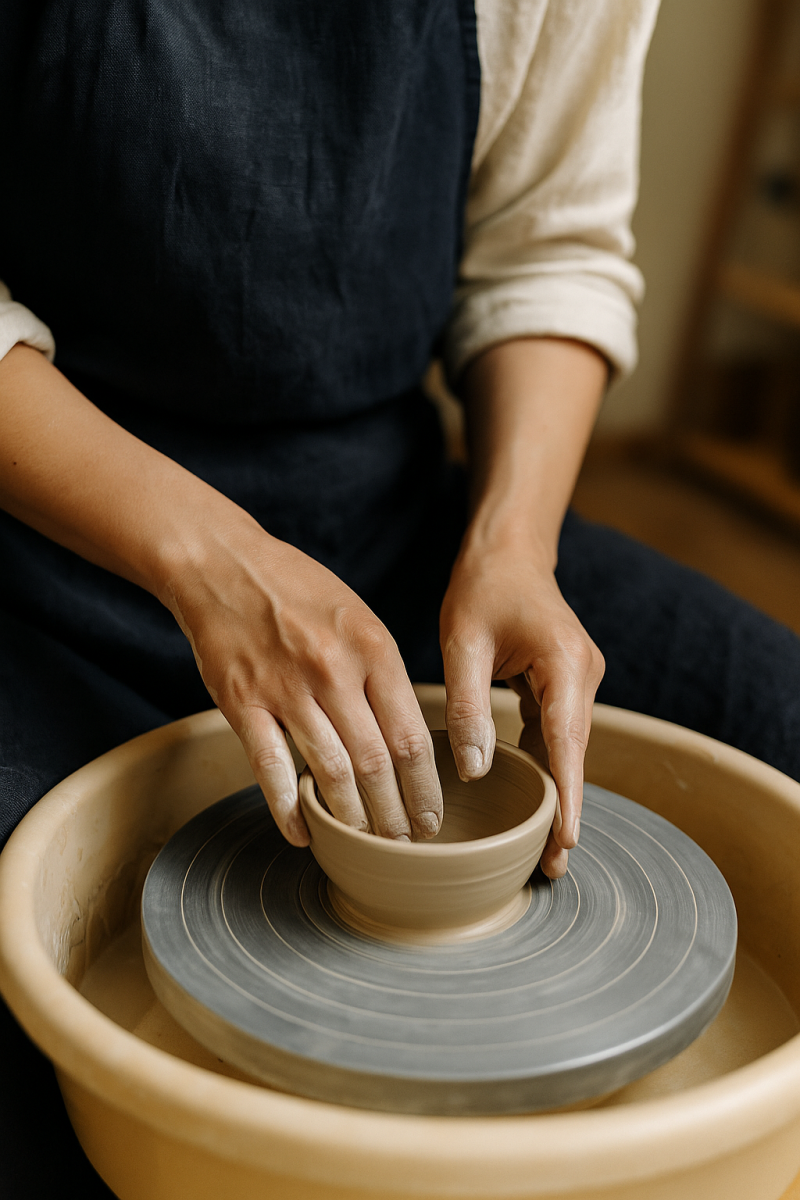

Japan’s crafts are meant to be touched and tried. From clay on a wheel to indigo vats and woodblock ink, hands-on studios welcome beginners and teach techniques you can finish in 1–3 hours. This guide shows what to book, what to bring, and how to behave so you leave with a piece you’re proud of.
What You’ll Experience (At a Glance)
- Beginner-friendly sessions with step-by-step guidance
- Small classes (often 4–10 participants)
- All tools & materials provided
- English support at many urban studios
- Ship-to-home options for fired or finished works
Popular Workshops
Pottery (Ceramics / 陶芸)
Throw a cup or bowl on the wheel, or hand-build with coils and slabs. Choose a glaze; firing takes 2–6 weeks, and many studios ship overseas.
Indigo Dyeing (Aizome / 藍染)
Fold, bind, or stitch fabric to create geometric patterns in deep blue. Short drying time; you can often take items home the same day.
Woodblock Printing (Ukiyo-e style / 木版画)
Carve soft blocks or use pre-carved plates, then ink and print on washi. Learn registration (kento) and layering colors.
Wagashi Sweets (和菓子)
Shape seasonal sweets (nerikiri) from bean paste and mochi. Usually box up to take away; pair with a cup of green tea.
Knife Finishing (包丁・研ぎ体験)
At select smiths or retailers, learn sharpening and handle care. Some workshops allow you to finish a petty knife (safety briefing required).
Lacquer, Paper & More
Short tasters exist for kintsugi-style repairs (often epoxy, not urushi), washi papermaking, bamboo craft, and calligraphy.
How to Choose & Book
- Pick by location: Tokyo/Kyoto/Osaka have the most English-ready studios; rural areas offer deeper tradition but fewer time slots.
- Duration: 60–180 minutes; allow extra time for check-in and cleanup.
- Results timing: Pottery/lacquer need firing/curing → shipping; dyeing/printing/wagashi are typically same-day.
- Booking: Reserve online; weekends and rainy days sell out. Note height/size if using a wheel or apron.
What to Bring
- Clothes you can stain (or use provided aprons)
- Closed-toe shoes for pottery/knife areas
- Cash/IC card for add-ons and shipping
- Reusable bag or tube for prints; spare mask if you’re sensitive to dust
Etiquette & Safety
- Arrive 10 minutes early; listen to the demo before touching tools.
- Keep long hair tied; remove rings/watches for wheel work.
- Ask before filming others; some studios restrict video.
- Clean your station; thank the instructor with a simple “Arigatō gozaimasu.”
Typical Prices (Guide)
- Indigo dyeing: ¥3,000–¥6,000
- Pottery (1 piece): ¥4,000–¥9,000 (+glaze/firing/shipping)
- Woodblock printing: ¥3,500–¥7,000
- Wagashi: ¥3,000–¥5,000
- Knife finishing/sharpening: ¥6,000–¥15,000
Accessibility & Kids
- Many studios are ground-floor; call ahead for wheel height and restroom access.
- Kids’ sessions exist for dyeing, paper, and wagashi (check minimum age).
- Allergy note: lacquer (urushi) and certain dyes can irritate skin — request alternatives.
Seasonal Tips
- Rainy day plan: Workshops book fast when it rains; pre-book morning slots.
- Summer: Hydrate; indigo rooms can be warm.
- Autumn/Winter: Great time for indoor crafts and shipping gifts.
Glossary
- Washi 和紙: Japanese handmade paper
- Aizome 藍染: Indigo dyeing
- Kintsugi 金継ぎ: Gold-like repair technique (traditional uses urushi lacquer)
- Kama 窯: Kiln
- Sensei 先生: Teacher/instructor
FAQ (Q/A)
Q: Can I finish pottery in one day?
A: You can shape it in one session, but firing/glazing needs weeks. Studios can ship your piece later.
Q: Do I need Japanese?
A: No. Instructors demonstrate visually; many studios offer English support and handouts.
Q: Can I bring my own fabric for indigo?
A: Often yes if it’s natural fiber (cotton/linen/silk). Confirm size limits and pre-wash requirements.
Q: Is “kintsugi” safe for beginners?
A: Most tourist classes use modern alternatives to avoid raw urushi allergies; ask which method is used.
Q: What if I break something?
A: Tell the instructor immediately; studios expect accidents and will advise on repairs or re-making.