
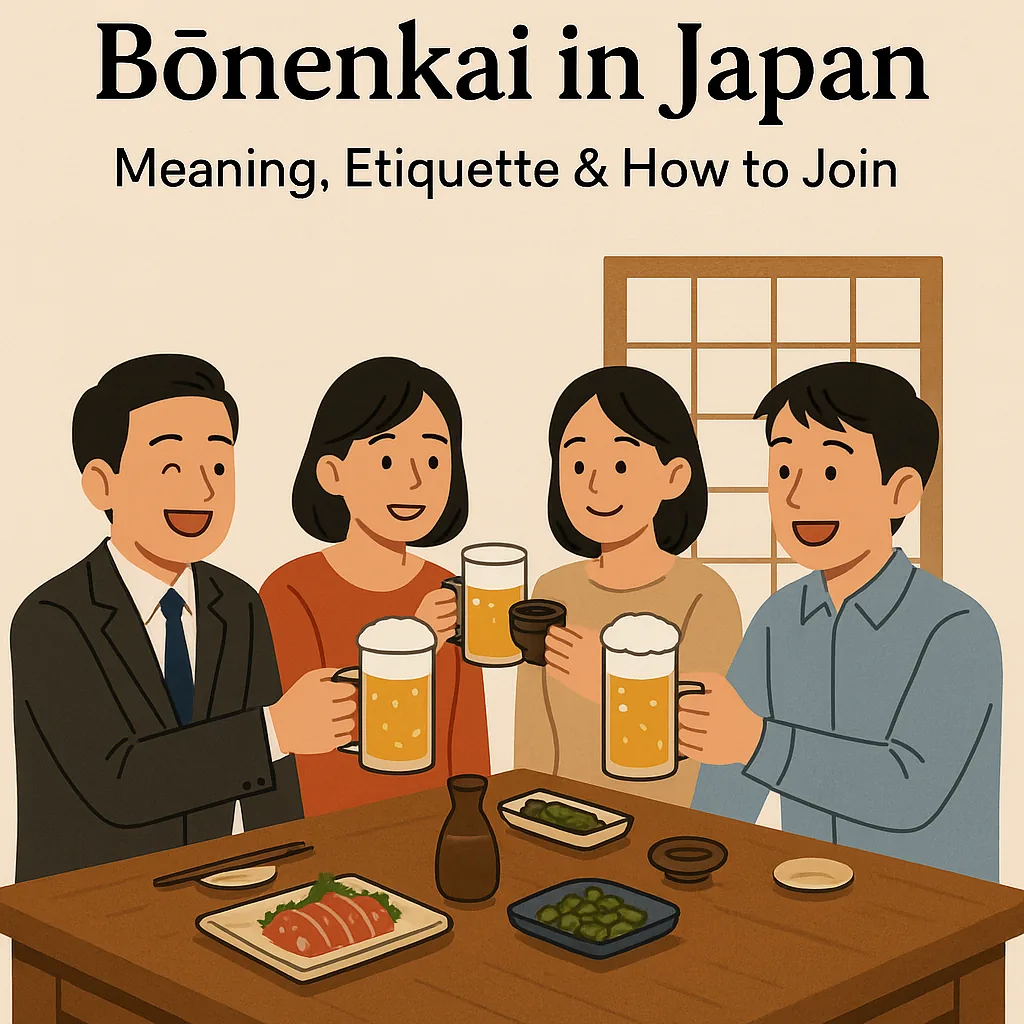

Bonenkai in Japan
Bonenkai in Japan: Meaning, Etiquette & How to Join
Bonenkai in Japan is one of the warmest ways Japanese people close the year. It may look like a simple party, but it’s really a cultural reset—an evening to share gratitude, soften any leftover tension, and step into the New Year feeling lighter. Whether you join coworkers, friends, or a local community group, the spirit is the same: we carried the year together, so we let it go together.
Quick Summary
Bōnenkai (忘年会) are year-end parties held mainly in December across Japan. The idea is to “forget the year” in a kind, communal sense—closing the calendar with thanks, laughter, and a fresh emotional start. Modern bonenkai can be big office events or small, casual dinners. A few etiquette basics and easy phrases are enough to join with confidence.
What is Bōnenkai?
Bōnenkai (忘年会) literally means “a gathering to forget the year.” It’s a year-end party held mainly in December, often at an izakaya or restaurant. While alcohol is common, the deeper purpose is social closure—expressing appreciation, easing small frictions, and sharing a final moment of togetherness before the calendar turns.
You may also hear the January counterpart called Shinnenkai (新年会), a New Year’s gathering that focuses more on welcoming fresh beginnings.
Origins of Bonenkai in Japan
The practice of marking the year’s end with shared food and drink has older roots in Japan’s seasonal rhythm. Over time, these gatherings evolved into the modern bonenkai seen across workplaces, friend groups, and local communities.
Even in today’s casual versions, the emotional logic remains simple and familiar: the year was long; you did your best; now let’s set it down together.
Why it matters culturally
In Japan, seasonal milestones are more than dates—they’re gentle social reset points. A bonenkai offers a kind way to close the year: acknowledging effort, smoothing minor tensions, and reaffirming harmony so the New Year can begin cleanly.
Modern styles of bonenkai
Today’s bonenkai range from large corporate banquets to small, intimate dinners. Many groups now prefer shorter, more relaxed gatherings, including lunch bonenkai or low-alcohol options—without losing the spirit of gratitude and closure.
Common formats
- Office bonenkai: organized by a department or team.
- Friends’ bonenkai: casual reunions, sometimes themed.
- Community bonenkai: neighborhood or hobby-group gatherings.
- Low-key bonenkai: a short meal, dessert, or café meetup.
Etiquette & handy phrases
You don’t need perfect manners to enjoy a bonenkai. These small habits help you blend in—especially in workplace settings.
Easy etiquette basics
- Wait for the toast before drinking at group events.
- Pouring culture is fading, but offering to pour can still feel thoughtful in more traditional groups.
- Non-alcohol choices are normal—order what suits you.
- Thank the organizer before you leave.
Useful phrases
- Kanpai! (乾杯) — Cheers!
- Otsukaresama desu. (お疲れ様です) — Thanks for your hard work.
- Kotoshi mo arigatō gozaimashita. (今年もありがとうございました) — Thank you for this year.
- Rainen mo yoroshiku onegaishimasu. (来年もよろしくお願いします) — I look forward to your support next year.
A gentle way to decline: “Sumimasen, kono hi wa muzukashisō desu.” (I’m sorry, this day seems difficult for me.)
How travelers can join the tradition
Travelers may join bonenkai through local friends, host families, language exchanges, or small cultural dinners. If you’re invited, it’s a warm sign of trust.
- Dress neat and simple unless the group says it’s very casual.
- Consider a small seasonal gift for private gatherings— something modest from your home country can be a lovely conversation starter.
- It’s okay to skip the second stop (nijikai). A polite goodbye is enough.
Trivia
- Bonenkai isn’t only for companies. Friend groups often use the term too.
- “Mandatory” is no longer the default. Many modern workplaces keep it optional.
- Lunch and non-alcohol bonenkai are rising. The culture is getting gentler.
- The true goal is emotional closure. The mood matters more than formality.
FAQ
Do I have to drink at a bonenkai?
No. Ordering a soft drink is widely accepted. The purpose is presence and goodwill, not alcohol. If you want a simple line, try: “I’ll go with a soft drink today.”
What’s a typical budget?
Many gatherings use a fixed course-and-drinks price, especially at izakaya. Office bonenkai may be a little higher than casual friend groups. If you’re unsure, ask the organizer about the expected cost before the day.
What should I wear?
For office events, smart casual is usuall
Is bonenkai still common today?
Yes, but the style has softened. Many workplaces now prefer smaller, shorter gatherings, and attendance is often treated as optional. Friend and community bonenkai remain popular, especially in cozy, low-pressure formats like small dinners or even lunch meetups. Some groups still move on to a casual second stop called nijikai, but joining is usually optional.
Should I bring a gift?
For office bonenkai, a gift is usually not necessary. For private gatherings with friends or a host family, a small seasonal token can be appreciated—but keep it simple and modest. Something easy to share, like sweets, is a safe choice.