


Autumn is one of the best seasons to enjoy hot springs in Japan. Cool air, coloured leaves, and warm water make a perfect mix. At the same time, your first onsen trip of the season can feel confusing if you do not know local rules. In this guide, we explain autumn onsen etiquette step by step, including bathing flow, quiet manners, tattoo and policy tips, nature and wildlife safety, and simple after-bath advice.
Table of Contents
- Why Autumn Onsen Feels Special
- Onsen Etiquette Basics – Step-by-Step Bathing Flow
- Quiet Onsen Etiquette in Shared Spaces
- Tattoos, Health Notes, and Onsen Policies
- Outdoor Onsen Etiquette, Nature & Wildlife Safety
- After-Bath Onsen Etiquette Tips for Autumn Trips
- Onsen Etiquette FAQ
- Related Internal Links
- External Resources
Why Autumn Onsen Feels Special
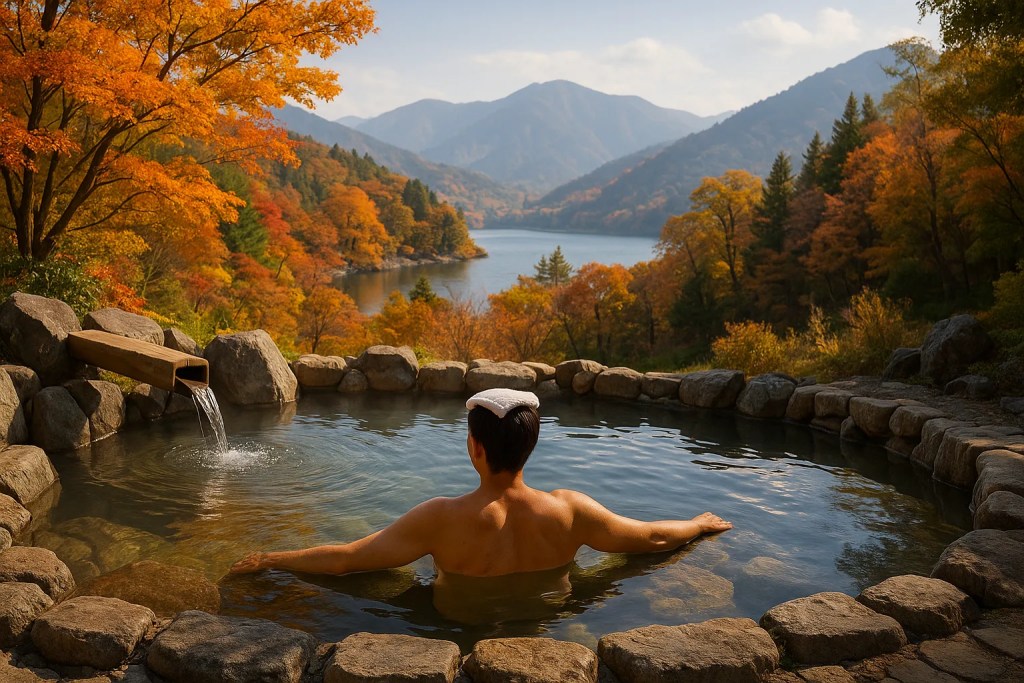
First, autumn onsen trips feel different from winter ones. Outside air is cool but not yet freezing, so you can enjoy walking between indoor and outdoor baths without rushing. Many mountain resorts also light up autumn leaves around the baths, which creates a relaxed, almost dream-like mood.
In addition, autumn is a “reset” time for many people in Japan. The summer heat has passed, and the end of the year is coming. A short break at an onsen ryokan helps you slow down, warm up your body, and prepare for the colder months ahead.
Onsen Etiquette Basics – Step-by-Step Bathing Flow
Changing Room Onsen Etiquette Steps
Next, let us look at the basic flow of onsen etiquette. The exact layout differs by facility, but the first part of the routine usually starts in the changing room.
- Check the signs. At the entrance, you will see separate doors for men and women. Colours often help: blue for men, red or pink for women. Always confirm which is which before you enter.
- Take off shoes and clothes. Remove your shoes where the floor changes, then go into the changing room. Choose an empty basket or locker. Undress completely. Swimsuits and underwear do not go into the bath in most traditional onsens.
- Bring only a small towel. Take a face towel and toiletries to the washing area. Leave your big bath towel in the basket or locker so it stays dry.
Washing & Bathing Onsen Etiquette Steps
After you reach the washing area, onsen etiquette asks you to clean your body before you soak.
- Rinse before sitting down. Use a little warm water from a tub or shower to rinse your body. This quick step helps you adjust to the temperature and keeps the bath water cleaner.
- Wash well while seated. Sit on a stool at a shower station. Wash your whole body and hair with soap and shampoo, then rinse carefully. Make sure no foam remains on your skin or hair.
- Enter the bath slowly. When you finish washing, gently wipe off excess water with your small towel so you do not drip too much. Step into the bath slowly, starting with your feet. Move deeper a little at a time so your body can adjust.
- Keep your towel out of the water. Place the small towel on the edge of the tub or fold it and rest it on your head. Do not soak it in the bath.
- Soak, rest, and take breaks. Short sessions are better than one long soak. Start with three to five minutes, then take a break outside the tub or in a cooler bath.
- Dry off before returning to the changing room. When you leave the bath area, use your small towel to pat your body dry. This keeps the floor in the changing room from becoming slippery.
Overall, if you follow this onsen etiquette flow, staff and other guests will feel comfortable sharing the space with you, even if you are new.
Quiet Onsen Etiquette in Shared Spaces
Good onsen etiquette is not just about washing. It also focuses on how you behave around other people. A few simple habits make a big difference.
- Keep voices low. Light conversation is fine, but shouting or loud laughter can disturb others who want to relax.
- Do not swim or splash. Baths are for soaking, not for exercise. Therefore, move slowly and avoid creating waves.
- Watch where you look. Try not to stare at other guests. If you feel shy, choose a corner or quieter time of day.
- Put phones away. In most onsen areas, photography is completely banned for privacy reasons. Even if no sign is visible, leave your phone in the locker or keep it in a waterproof pouch outside the bath zone.
- Respect personal space. If the bath is busy, leave a little room between you and the next person whenever possible.
In short, think of an onsen as a quiet reading room that happens to be full of hot water. Calm movements and gentle voices are part of polite onsen etiquette.
Tattoos, Health Notes, and Onsen Policies
Many visitors worry about tattoos and health rules. Policies differ widely from place to place, so clear information helps.
- Check tattoo rules before you go. Some onsens fully accept tattoos. Others allow small ones if you cover them with a skin-coloured seal. A few still refuse any visible tattoos. When in doubt, check the facility website or ask your hotel to call.
- Consider private or family baths. If you have large tattoos or simply want more privacy, look for kashikiri (private) baths or family baths that you can reserve by the hour.
- Think about health conditions. Very hot water can stress the heart. If you have heart problems, high blood pressure, or are pregnant, talk with a doctor in advance and choose cooler baths or shorter sessions.
- Avoid bathing when you feel ill. If you have a fever, stomach bug, or open wounds, skip the onsen altogether. Rest in your room and try again when you feel better.
Remember that staff must follow local rules and company policies. Even if a rule feels strict, arguing rarely changes the result. Calm planning before your trip saves you trouble later.
Outdoor Onsen Etiquette, Nature & Wildlife Safety
Many autumn onsens offer beautiful outdoor baths with forest or river views. These rotenburo feel amazing on cool nights. However, they also sit closer to nature. In recent years, some rural areas in Japan have reported more bear sightings, especially in and around mountain resorts and forest trails. Sadly, a few serious attacks and deaths have also occurred in different parts of the country.
Because of this, it is important to treat the surrounding area with care, especially in 2025 when news reports have highlighted increased bear activity in several regions. When you choose an onsen in the countryside, take the following onsen etiquette and safety steps.
Mountain Onsen Etiquette Safety Checklist
- Check recent local information. Before you travel, look at the onsen’s website or local tourism pages for safety notices. Ask your ryokan staff if there have been animal sightings nearby.
- Follow all closure signs. If a walking path, riverbank, or viewing deck is closed due to wildlife, do not enter “just for a quick photo.”
- Avoid walking alone in dark or wild areas. Stay on lit paths between buildings. At night or early morning, do not wander into forests or farm roads behind the onsen.
- Store food carefully. Do not leave snacks on balconies or outside windows. Eat in designated areas instead of on quiet trails.
- Listen to staff instructions. If the onsen or hotel changes access hours or asks guests to avoid certain places, follow these requests even if they feel inconvenient.
Overall, in most popular onsen towns you will never see a bear. Even so, a little caution helps protect both visitors and wildlife. Think of it as part of respectful onsen etiquette toward the natural environment.
After-Bath Onsen Etiquette Tips for Autumn Trips
Good onsen etiquette continues even after you leave the water. With a few extra steps, you can avoid dizziness and enjoy the relaxed feeling for longer.
- Rehydrate. Hot water makes you sweat more than you notice. Therefore, drink water or tea after each soak. Avoid heavy alcohol right away.
- Cool down slowly. Do not jump straight from a very hot bath into cold outdoor air. Sit on a bench for a moment and let your body temperature settle.
- Dress in comfortable layers. Yukata robes are made for this purpose. Tie the robe left side over right (the living person style), and wear socks or slippers on cold floors.
- Respect quiet hours. In ryokans, sound travels easily through walls. After night baths, walk gently in corridors and keep late-night chat low.
Finally, if you stay overnight, you can enjoy several short baths instead of trying to do everything at once. Morning soaks are especially pleasant in autumn, when cool air and soft light wake you up gently.
Onsen Etiquette FAQ
Do I have to wash my hair every time?
You should wash your body carefully before your first soak. For later visits on the same day, a quick rinse may be enough unless your hair or skin is clearly dirty.
Can I wear a swimsuit if I feel shy?
Most traditional onsens do not allow swimsuits in the main baths. However, if you want to wear one, look for mixed-gender spa facilities or private baths that advertise swimsuit use.
What if I make a mistake with onsen etiquette?
Do not panic. If staff correct you, just apologise, smile, and adjust. Most people understand that foreign guests are learning.
Is it okay to bring children?
Yes, many families visit onsens together. Teach children to walk, not run, and to keep voices down. For very small kids, choose quieter times of day.
How can I know if an area has wildlife risks?
Check signs at stations and bus stops, and read notices in the lobby of your ryokan. If you feel unsure, ask staff directly whether it is safe to walk outside early in the morning or at night.
Related Internal Links
External Resources
- Japan National Tourism Organization – Onsen and Bathing Etiquette
- Ministry of the Environment Japan – Nature & Wildlife Information
You must be logged in to post a comment.