

Japanese Etiquette Basics
This guide distills everyday Japanese etiquette basics into practical “Do / Don’t” by scene—then explains the why (origins & philosophy). Use it for shrines, tea rooms, dining, trains, onsen, small studios, and more.
Quick Facts — What to Know First
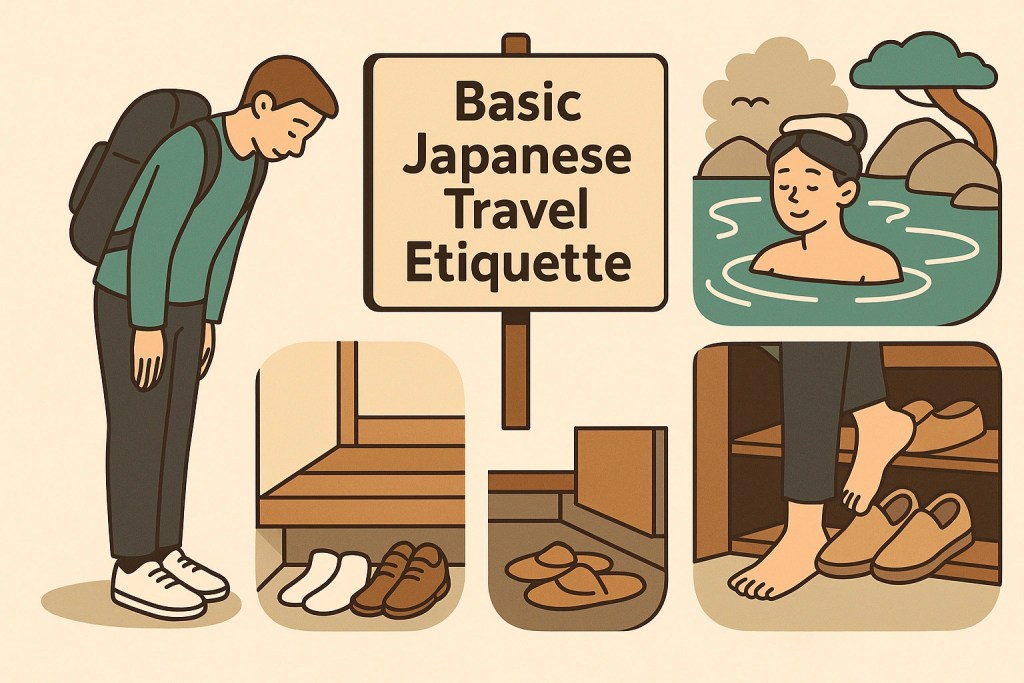
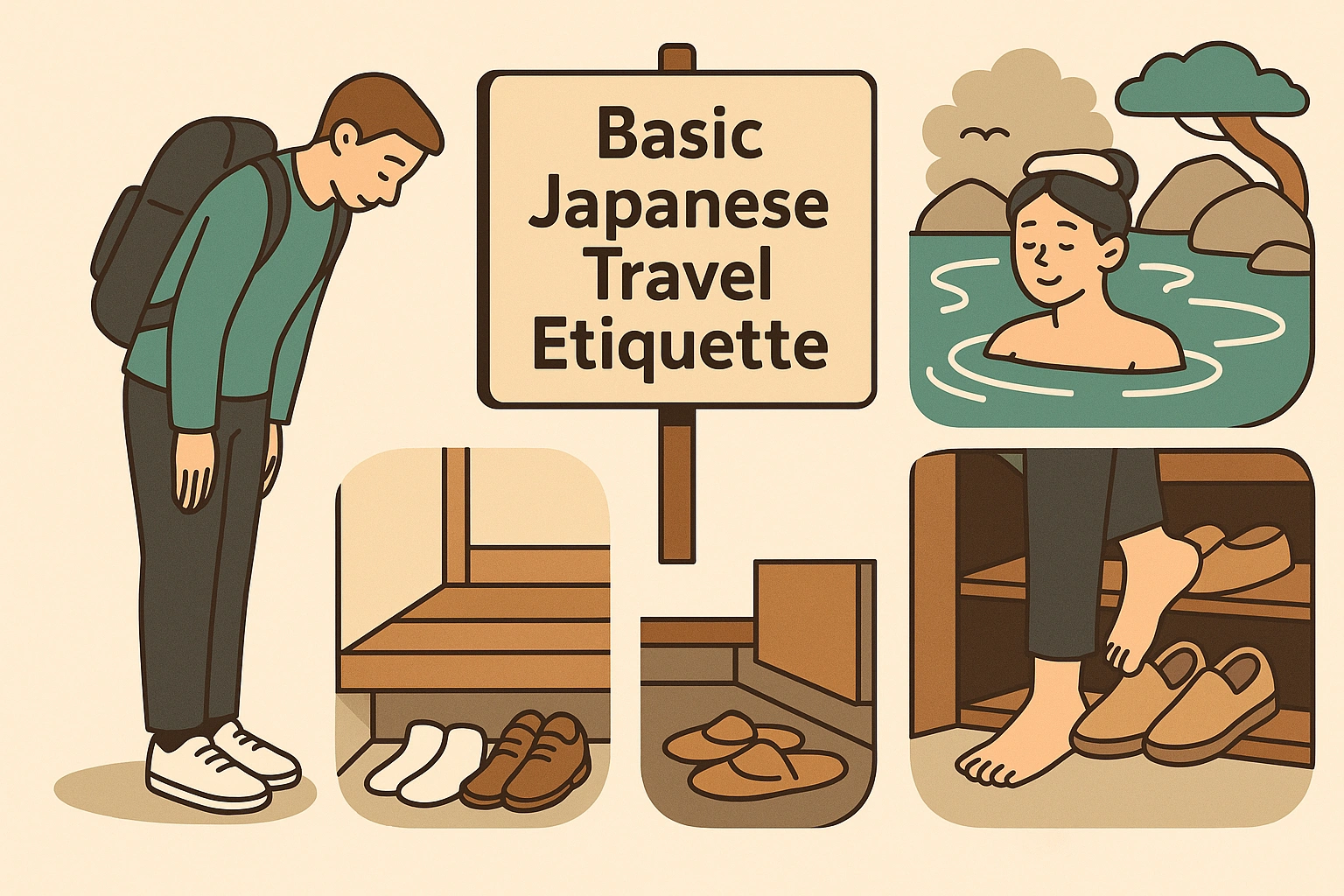
- Shoes off indoors: If there’s a genkan step or slippers, remove shoes.
- Two-handed exchange: Offer/receive money, tickets, or cards with both hands.
- Quiet shared spaces: Phones on silent; short calls outside trains/tea rooms.
- Photo rules: Obey “no photo” strictly; ask people before close portraits.
- Onsen order: Wash first, then soak; towels stay out of the tub.
- Chopsticks: Don’t stick upright in rice or pass food stick-to-stick.
Origins & Philosophy: The genkan marks a clean/unclean threshold—practical and ritual. Two-handed giving signals care and parity in exchange. Quiet conduct preserves wa (social harmony) in dense public life. Photo limits protect sanctity (worship/performance), copyrights, and privacy. Onsen etiquette comes from communal bath culture where water purity is shared. Chopstick taboos mirror funeral rites, keeping daily meals distinct from mourning.
Etiquette by Scene — Do / Don’t / Why
Shrines & Temples
Do
- Keep to the sides on the main approach; bow lightly at a torii.
- Purify at the basin (temizu): left hand → right hand → rinse mouth → rinse handle.
- Offer a small bow before/after prayer; follow donation box etiquette.
- Observe “no photo” zones; move quietly during services.
- Read local instructions; return charms/omamori to designated places.
Don’t
- Stand in the center line of the path or cross sacred ropes.
- Step on thresholds of shrine/temple buildings.
- Use flash or block worshippers during rituals.
- Handle ritual implements without permission.
- Eat/drink in sanctified areas unless allowed.
Why: The center is symbolically reserved; purification and quiet preserve sanctity and others’ devotion.
Origins & Philosophy: Torii mark thresholds; sandō center is for deities. Ablutions reflect ritual purity; temple decorum follows monastic norms.
Tea Rooms & Tatami
Do
- Remove shoes; avoid fragrances; move calmly on tatami edges.
- Receive bowls with two hands; rotate slightly if taught.
- Admire the tokonoma and seasonal flowers quietly.
- Follow host cues; arrive 10 minutes early.
- Keep devices silent and out of sight.
Don’t
- Step on shoji tracks or tatami seams with shoes.
- Point feet at people or the alcove.
- Handle utensils or scrolls uninvited.
- Photograph during service unless explicitly allowed.
- Wear jangly accessories that distract.
Why: Delicate materials and careful choreography express hospitality and focus.
Origins & Philosophy: Chanoyu embodies wabi-sabi and ichigo-ichie (single, unrepeatable meeting).
Dining (Restaurants & Izakaya)
Do
- Arrive on time; wait to be seated; state reservation name/party size.
- Use the oshibori for hands only; keep the table tidy.
- Share plates with serving utensils or reverse ends of chopsticks.
- Keep voices moderate; short calls outside; say “kanpai” before first sip.
- Remove shoes in tatami rooms (zashiki/horigotatsu) when clearly indicated.
- Pay at the register if asked; place cash/card on the tray.
Don’t
- Don’t tip on the table; service charge may be included.
- Don’t wear slippers on tatami (socks/barefoot on tatami).
- Don’t hover/spear food with chopsticks or pass stick-to-stick.
- Don’t place bags on low tables/tatami—use baskets or floor beside you.
- Don’t pressure others to drink; respect preferences.
Why: Calm, orderly dining protects surfaces, staff flow, and other guests’ comfort; money handling on trays standardizes courtesy.
Origins & Philosophy: Shoe customs follow household tatami practices; tray/cash manners blend hygiene with precise accounting.
Table Manners & Chopsticks
Do
- Lift small bowls; return chopsticks to the rest between bites.
- Use soy sauce lightly; for sushi, dip the neta-side lightly.
- Say “itadakimasu” before and “gochisōsama deshita” after eating.
- Keep shared condiments clean; wipe drips with the edge of the dish.
- Place finished chopsticks parallel on the rest or wrapper.
Don’t
- Don’t stick chopsticks upright in rice or pass food stick-to-stick.
- Don’t rub disposable chopsticks together.
- Don’t drown rice in soy; pour a small amount into a side dish.
- Don’t lick chopsticks or use them to point.
- Don’t place chopsticks across bowls at odd angles.
Why: Several taboos echo funeral rites; utensil care signals respect and hygiene.
Origins & Philosophy: Keeping meals distinct from mourning preserves everyday conviviality.
Onsen & Sento
Do
- Rinse → wash seated → rinse fully before soaking.
- Tie hair up; keep towels out of the tub; hydrate after.
- Follow tattoo policy; use modesty towels while moving.
- Dry off lightly before re-entering locker area.
- Respect temperature signs; enter slowly.
Don’t
- Don’t swim/splash or use soap in the tub.
- Don’t speak loudly or reserve spots with towels.
- Don’t photograph bath areas.
- Don’t wring towels over the water.
- Don’t bring glass containers.
Why: Shared water means shared responsibility for comfort and cleanliness.
Origins & Philosophy: Communal bathing emphasizes purity and collective relaxation.
Homes & Small Studios
Do
- Remove shoes at the genkan; use slippers if provided.
- Bring small consumable gifts when appropriate.
- Ask before handling works-in-progress; keep drinks away from materials.
- Align shoes neatly facing the door.
- Use coasters or trays when offered.
Don’t
- Don’t wear house slippers on tatami (socks/barefoot).
- Don’t place bags on low tables or tatami.
- Don’t sit with legs outstretched toward people/alcove.
- Don’t touch displayed tools without permission.
- Don’t photograph private interiors without consent.
Why: Boundaries protect cleanliness and craftwork; considerate posture preserves lines of respect.
Origins & Philosophy: The home’s clean boundary and low-seating layout shaped quiet voices and mindful movement.
Public Transport
Do
- Queue at platform marks; let passengers off first.
- Phones silent; backpacks front/side when crowded.
- Offer priority seats; stow luggage compactly.
- Stand on the customary side of escalators (left Tokyo, right Osaka).
- Move down the car to keep doors clear.
Don’t
- Don’t block doors or play audio aloud.
- Don’t eat strong-smelling food in carriages.
- Don’t trim nails or apply makeup onboard.
- Don’t place bags on seats when crowded.
- Don’t lie across benches.
Why: Quiet and flow keep millions on time.
Origins & Philosophy: Rail culture emphasizes punctuality and wa; manners sustain collective efficiency.
Museums & Performing Arts
Do
- Arrive early; be seated before curtain or timed entry.
- Check photo policy (some galleries require a photo ticket).
- Keep devices dark/silent; applaud at appropriate cues.
- Use cloakrooms to reduce obstruction.
- Follow ushers’ instructions promptly.
Don’t
- Don’t photograph no-photo works or record performances.
- Don’t block views or aisles with bags/tripods.
- Don’t eat/drink where prohibited.
- Don’t lean on cases or touch displays.
- Don’t whisper continuously during shows.
Why: These spaces prioritize contemplation or performance, not recording.
Origins & Philosophy: Respect for artwork/ritual and fellow patrons underpins strict rules.
Streets & Public Spaces
Do
- Walk left/right as posted; keep to the side on busy sidewalks.
- Use smoking areas; carry small trash until a bin appears.
- Queue neatly for elevators/escalators.
- Yield space for strollers and wheelchairs.
- Lower your voice in residential lanes at night.
Don’t
- Don’t eat while walking in crowded areas (unless casual zones).
- Don’t block narrow lanes for photos.
- Don’t litter or feed wildlife in parks/shrines.
- Don’t ride bikes on sidewalks recklessly.
- Don’t leave scooters/bikes across pathways.
Why: Orderly flow reduces friction in dense neighborhoods.
Origins & Philosophy: Urban “micro-manners” protect neighbors’ comfort and cleanliness.
Shopping & Cash
Do
- Use cash trays; place bills/cards flat.
- Accept change with two hands; keep receipts for tax-free counters.
- Queue neatly; pack items aside from the register.
- Ask before opening packaged crafts.
- Wrap fragile items with shop-provided materials.
Don’t
- Don’t hand cash loosely if a tray is present.
- Don’t block small aisles with luggage.
- Don’t photograph shops that prohibit it.
- Don’t haggle aggressively in small ateliers.
- Don’t eat/drink next to delicate goods.
Why: Trays and tidy flow support accuracy and courtesy in tight shops.
Origins & Philosophy: Cash-tray practice blends hygiene, counting clarity, and gift-exchange etiquette.
Gifts & Omiyage
Do
- Bring small consumable gifts when appropriate; present with two hands.
- Say where it’s from; modest wrapping is appreciated.
- Let recipients open later unless invited to open now.
- Include a short note if the context is formal.
- Choose seasonal items when possible.
Don’t
- Don’t give sets of four (unlucky) or sharp items without context.
- Don’t insist they open immediately.
- Don’t draw attention to price or rarity.
- Don’t re-gift within the same circle.
- Don’t skip thanks if receiving—send a brief follow-up.
Why (why gifts aren’t opened immediately): Waiting avoids putting the giver on the spot, prevents comparisons in front of a group, and protects modesty—so everyone stays comfortable.
Origins & Philosophy: Omiyage reflects reciprocity (giri) and group harmony; opening later avoids value judgments in public. Number taboos avoid unlucky homophones (shi=death).
Handy Phrases in Japanese (Romaji)
- Hello : konnichiwa
- Excuse me / Sorry : sumimasen
- Please : onegai shimasu
- Thank you : arigatō gozaimasu
- I don’t understand : wakarimasen
- Where is … ? : … wa doko desu ka?
- Two tickets, please : chiketto futatsu onegai shimasu
- May I take photos? : shashin o totte mo ii desu ka?
- Do you have an English guide? : eigo no gaido wa arimasu ka?
- Is this wheelchair accessible? : kurumaisu de riyō dekimasu ka?
Tip: keep tone soft and add a short bow; it goes a long way.
Related Guides
Official Resources
- JNTO — Travel Etiquette (EN)
- JNTO — Onsen Etiquette (EN)
- Tokyo Metro — Riding Manners (EN)
- Kyoto City — Manners for Visitors (EN)
Local rules vary; always follow on-site instructions if they differ.
You must be logged in to post a comment.